
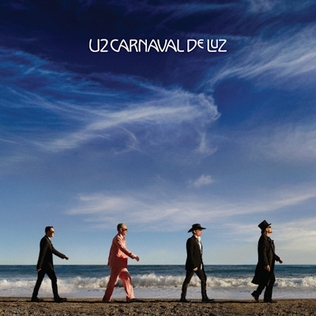
It’s insane to think that U2 have been going for fifty years and have garnered sixteen studio albums. It almost fell apart while recording “The Joshua Tree”, with the band at odds with Brian Eno and each other, but here we are in November 2026, with the band stronger than ever. This time, they return with “Carnaval De Luz”; the title alone suggests a record full of positivity. It’s also been nine years since their proper album “Songs of Experience” was released. Jacknife Lee returns with a record addressing spirituality, relationships, division and hope. Jacknife is also among the guests, alongside Brian Eno, the late Dolly Parton and others, who will appear in the review.
I would describe the album as largely sticking to the early-2000s formula the band found on “All That You Can’t Leave Behind”. Polished production, big, sweeping arrangements, atmospheric guitars, and, of course, Bono’s passionate vocals. The band sometimes dips into a harder rock edge or explores electronic sounds, but they tend to stick to a formula that has become comfortable and served them well.
Anyway, let’s begin the good stuff:
Go (Carnaval De Luz):
As you can see, the intro kind of serves as the title track. An atmospheric opening with electronic sounds that builds anticipation. Brian Eno gives it that experimental feel, but as mentioned before, the opener is more of an intro than a proper song.
La Reina:
A sublime, strong groove that is bursting with colour. Larry Mullen Jr. and Adam Clayton are the highlight, alongside layered production that recalls some of their early-1990s work.
Street of Dreams:
That classic modern U2 sound. Polished sound, uplifting chorus, and The Edge’s shimmering guitars. A catchy track that’s easy on the ear.
The Mirror Maker (Rosalía):
An atmospheric track with new textures and a sense of mystery. The song grows through its simple arrangement, setting it apart from the record’s more typical rock tracks.
Superficiality:
Funky and rhythmic, with sprinkles of electronic sounds. A smoother production takes the edge off, and it’s a more playful song on the album.
If the World Is at War We Better Not Be:
The record’s more experimental tracks. The vocal effect reminded me of what Justin Vernon uses for Bon Iver. The big guitars are absent, and different production ideas come into play.
Silencio:
One of my highlights with a great burst of energy. The strong drums, intense delivery and distorted guitars reminded me of ‘Vertigo’. It may be a short track, but it doesn’t piss around. There is no build-up to a huge chorus.
I love how short, sharp and direct it is. Most of the album is heavily layered, but this has raw energy. You can’t help but admire The Edge’s guitar skill; I also like Larry’s drumming, which helps drive the song. It also proves that U2 can still deliver strong rock numbers without adding a lot of extra production.
The Greatest Show on Earth:
I’ll also go in depth on this one as it’s the most ambitious, which reminded me of ‘Sometimes You Can’t Make It On Your Own’. The Edge’s unique guitar style, alongside Brian Eno on synth, gives it an open feel, while the rhythm section stays steady as the song slowly builds.
One of the longest tracks, it sees the band in no rush to reach the catchy chorus. It has time to grow, and the instruments play an integral part alongside Bono.
It has a big, sweeping sound that makes U2 adored by millions. The way they balance mood and melody to create an anthem is effortless. You may think it’s that unmistakable 21st-century sound, but it still feels fresh. As for the lyrics…well, I am not sure if it’s about a couple, or the band being too modest.
Glorify:
Here is another example of U2 trying something different: an uptempo song co-written with Martin Garrix to give a fresh electronic touch, but still making sure it’s very much U2, with a memorable chorus.
Midnight Sunshine:
One of the more tender and reflective songs, focusing on melody as well as mood. The instruments complement Bono’s vocals and give the listener a breather.
Can’t Stop Us Now:
It’s that guy Brian Eno standing out on the synths again. Electronic sounds collide with a layered, slow build-up and U2’s dramatic style. Classic songwriting while being experimental.
Torn (featuring Dolly Parton):
I mean…this has to be the final highlight for one obvious reason: it’s emotional, and I’ll tell you why. Dolly Parton collaborates with the band, and her vocals’ warmth and tenderness complement Bono’s more dramatic style. And because Dolly is on it, it would be remiss of U2 not to give it a country feel, so you hear Daniel Lanois on pedal steel guitar.
The track focuses on division within broken family relationships, and the instruments are softened to let Bono and Dolly’s vocals shine.
I enjoyed it because you get to hear two different voices from singers with different upbringings. However, it’s a very bittersweet end, knowing this was Dolly’s last recorded appearance. It’s quite sad that her final song is melancholic rather than an upbeat, defiant moment that matched her larger-than-life personality.
The duet was moving and beautiful, and despite its melancholy, it’s fitting that Dolly’s last time on wax is with one of the biggest bands in the world.
Ring Out:
Another strong record added to U2’s collection, even though it mostly treads a well-known path since the early 2000s. The band haven’t lost it; the electronic touches bring variety, and the production is smooth.
‘Silencio’ injects a burst of raw energy; ‘The Greatest Show on Earth’ shows the band’s ability to create a big, atmospheric song, and ‘Torn’ brings an emotional close, which adds more weight as it was Dolly’s last time in the studio.
The album could have been more experimental, but honestly, it’s fucking U2. The record was never going to be shit. Fifty years later and they still make songs that resonate with you. They can play it safe all they like; it still works.
Song recommendations: ‘Silencio’, ‘The Greatest Show on Earth’, ‘Torn’
9/10

