Week Thirty-Eight: Doves-Universal Want

My first experience (Knowingly.) hearing the band from Manchester was while I was playing FIFA 06 in October 2005 when “Black and White Town” came on the official soundtrack. Not my favourite of theirs, but it did pique my interest and made me want to check them out. I was probably intoxicated at the time, but I had heard them three years back on Later…with Jools Holland, even before then, if I am being honest. Their songs “Cedar Room” and “There Goes the Fear” were everywhere, from radio to television adverts. Those two being my personal favourites of theirs. Not forgetting their acid house classic “Ain’t No Love (Ain’t No Use)”. Pardon? Yes, that’s correct. Doves started as Sub Sub in 1991 until 1996, when they worked with New Order’s Bernard Sumner. Since then, the members of Sub Sub decided to change direction with their sound and formed Doves in 1998, just after releasing “Delta Tapes” as Sub Sub.

Anyway, this is their fifth album after eleven years on a break, which initially was supposed to be the end of the band after 2009’s “Kingdom of Rust”. Jimi Goodwin even suggested during a gig in 2010 that it would either be one of their last or their last. But he was constantly dropping hints that maybe it wasn’t the end of Doves, a bit like the Stone Roses (Fucking hell. That’s the fourth Manchester band mentioned so far.) it looks like they have split again, but there is no confirmation on the official site or any announcement made. It’s just like Ian Brown with a cryptic quote, but he wants to concentrate on his solo career now. Jimi had been dropping these hints for six years and leaving cryptic messages via social media that maybe Doves were returning. And this year, they announced a string of gigs supporting various artists, but no mention of a new album that features the production of Dan Austin, who did their previous album. This one has been recorded at Frank Bough 111 Studios.

Now, I will do something different than usual with these reviews and do a short but sweet track-by-track review. Kind of a summary, if you will:

Carousels: Reminiscing about childhood experiences, especially at fairgrounds.

I Will Not Hide: Great vocals with a spine-tingling guitar solo. It’s very psychedelic over chill-out style music.

Broken Eyes: Doves, the Smiths, and Toploader. Save for Toploader, it is that typical Manchester sound.

For Tomorrow: Inspired by Portishead with the trip-hop.

Cathedrals of the Mind: a Hymn-like anthem dedicated to the late David Bowie.

Prisoners: Funk with remnants of “Black and White Town”. One that is ready for their setlist for when they go back on tour.

Cycle of Hurt: Returning to their debut album “Lost Souls” in 2000 with this ballad.

Mother Silverlake: An autumnal track that is very much country funk.

Universal Want: A segmented track that goes from acoustic guitar back to their acid house days and into old-school techno.

Forest House: A mellow ending.

Song recommendations: “Broken Eyes”, “Prisoners”, “Universal Want”

8/10

Week Thirty-Four: Biffy Clyro- a Celebration of Endings

Upon doing my research, I was astonished to discover that the band from Kilmarnock, Ayrshire, has been around since 1995, with their debut album “Blackened Sky” released in 2002. I didn’t know of them when the 2008 single “Mountains” was their first to break into the top ten of the singles chart. I only started to know of them after their 2009 album “Only Revolutions” and singles called “Many of Horror” and “the Captain”. Indeed, I was taking my mind off a particular personal matter and helping out a mate DJing and going clubbing, and Biffy Clyro was played almost anywhere I went back in 2010. They have constantly reminded me of A Day to Remember and Alkaline Trio, albeit with an American sound mixed with original Scottish vocals. Since then, their stock has risen, and they are regulars on the festival scene.

This is their ninth studio album, and they were only well-known in the mainstream after 2008. When you listen to this record, you can recognise straight away that you are listening to Biffy, albeit they have given new hope to budding musicians (Especially guitarists and guitar bands.) to show that guitar music is still alive and, therefore, will encourage people to play the instrument still. They have decided to go experimental, too, which is always a good idea for music; it’s always good to freshen up your ideas and sounds. “Celebration” is a testament to that. I never have and never will believe that guitar-based music is dead. From what I see and hear upon discovering new music, it tells a very different story to what the critics have you believe.

“North of No South” opens the album and is gargantuan in sound. It starts with a ferocious tempo that, for the majority of the record, features heavily with crashing drums, rapid guitar riffs, dramatic orchestral sounds, and angelic choirs. “The Champ” is the only reflective moment with this fable of a relationship falling apart wrapped around a piano ballad, and “Space”, which you can see is the moment the phones are held aloft when the band finally get to tour this album to an audience in packed out arenas, stadiums, and festivals.

As the album ends, we enter “Cop Syrup”, which is six minutes and the longest track on the record, with just seventeen seconds of the hidden track “Less is More”, where Simon Neil sings a bit before the song ends. The first six minutes felt like listening to Tame Impala with its psychedelic and experimental feel. If I didn’t know I was listening to Biffy, I would think it was Tame Impala playing an instrumental track. It’s quite refreshing to hear that material by Biffy because it isn’t what they are known for and might indicate the next project.

Song recommendations: “North of No South”, “Celebration”, “Cop Syrup”

8/10

Week Twenty-Eight: Paul Weller- On Sunset

It is absolutely amazing that the older the Modfather gets, the better his music gets. Before 2005, he had a mini-slump as we entered the 21st century, but not as bad as being almost the forgotten man for a bit in the 1990s. He did jack it all in after 1989 when going through turbulent times since the Style Council split. In 1991, he went back out on the road playing small venues, to begin with, as a solo artist, but it sounded more like a band called the Paul Weller Movement. He then released his self-titled debut album in 1992 and once again was being talked about for the great songwriter that he is. Still, it was his second album “Wild Wood” that really got him back in the limelight, not to mention the praises of a young, fresh-faced songwriter called Noel Gallagher (Who is still his neighbour at present in Little Venice despite Noel trying to sell his London home.) who happened to be in a band called Oasis who were leading the movement back in 1994, which got Paul new fans and at present, the momentum from that year is still carrying Weller through. Yes, he had three disappointing albums to begin the 21st century by his standards, but since “As is Now”, Paul has had the fire in his belly to prove he’s still one of the greatest songwriters in the world.

He has also had a philosophy of not looking back since 2005 and has dared to experiment on every album thereafter. “On Sunset” is no exception. Instead of sticking to the sound he once mastered, he has added vim and zest with his experimental endeavours. They usually say, “If ain’t broke, don’t fix it.” However, in music, you need to change with the times and push yourself to try new ideas rather than stagnate. This is why most songwriters disappear from the radar because they are too comfortable. Weller is willing to try new and exciting things to let everyone know he is still working and stamp his authority all over the industry.

Weller has changed up the tempo for this record; as we all remember, “True Meanings,” his last album from two years ago, was very reflective and simplistic. However, “On Sunset” is a departure from its predecessor and challenged him, but from what I heard, it’ll bear fruit for the Modfather in the long run.

The record begins with “Mirror Ball”, which I would describe as a three-in-one track because of the number of genres included. It goes from psychedelic, experimental, sub-bass and then, as the seven minutes approach, back to how it began. I could see the likes of the Chemical Brothers, Toydrum or Amorphous Androgynous remixing this, but Weller is more than confident of having a go himself as he gets bolder these days.

Most of the album, which was recorded at Black Barn Studios in Surrey, has a very summer feel to it when it was probably recorded during the cold winter of this year and last year. The whole element of funk and bass adds to that summer effect. However, towards the end of the record, we have tracks like “Equanimity” that sound more like he did back in 2000 compared to what he has been doing for the last fifteen years of being very experimental in the studio.

The title track is sound, but I don’t know if the final mix was supposed to have the effect of the Modfather’s vocals being overpowered by the strings to accompany them. It seems odd that Weller’s vocals are very feint.”Bapiste” reminds me of his track “Wild Wood” from the early 1990s when he dared to go solo, and it feels like a song dedicated to his passion.

The production is a bit much, but the lyrical content more than makes up for it. I’ve heard some bullshit in recent years that the Modfather is no longer a force with his songwriting, but after nearly 50 years in the industry, I disagree. He has always retained his ability to write songs; even those first three albums of the 21st century still had gems on them, although fewer. I loved “Rockets” as Weller once again gets political and takes a swipe at the sorry state of current affairs. He was also clearly inspired by the late David Bowie, as it sounded a bit like Bowie’s Ziggy Stardust era.

“More” indicates what Weller plans to do from here on in. “There’s always something else in store, keeps me running down that road.” if that isn’t a clear indication, then I don’t know what is. Weller is not planning to retire any time soon and is still hungry for more accolades among the many others he has received over the decades. 

Once again, the Modfather has stamped his authority all over the industry and is not paying attention to those who think he should be in the garden of his Little Venice mansion, having a cigarette with a pint and reflecting on all the milestones he has reached. I look forward to another experimental album to follow this.

9/10

Song recommendations: “Rockets”, “Mirror Ball”, “More”

Week Forty-Eight: Noel Gallagher’s High Flying Birds- Who Built the Moon?

1

Here is the track-by-track review of the third album:

Fort Knox:

 Noel has gone on record saying that this track was written for Kanye West, but he thought it was so good that he felt he deserved it more than Kanye. Anyway, the track has repeated lyrics and guitar chords, albeit when he starts repeating, “You’ve Gotta Get Yourself Together”. This track would be good as an introduction to the forthcoming concerts or great as an alarm clock (Although I doubt you would wake up to such smooth music.) I like the album after just one track and am pleased that David Holmes has sent Noel far out compared to the trademark Oasis-style wall of sound. Will Oasis fans who are narrow-minded like this? Probably not, but they’re fucking idiots, anyway. More on that in the overall review.

Holy Mountain: 

So, just like what was featured on “Riverman” from the sophomore record, “Chasing Yesterday” from 2015 (Yes, I said, “Sophomore”,. So fucking what? I’m writing this, not you.) We hear a horn section featuring. This is also the lead single used to promote the record. It’s a bit of bubble gum pop but is exceptionally catchy. You will get the chorus stuck into your head.

Keep on Reaching: 

David took Noel out of his comfort zone with this track with some soulful vocals followed by an instrumental section that could only be described as funk inspired. The beginning also features some excellent keyboards and a ballsy kick drum.

It’s a Beautiful World:

 It’s incredible what effects you can use in the studio. Because of the way sound effects are used to make his voice sound muffled, complete with reverb (Is that the word I’m looking for?), I am still waiting to hear this on the live version, in the warm-up concerts or on Later…with Jools Holland last month. Nonetheless, it still worked live. This track could be described as both cosmic pop and psychedelic. You have a breakdown section before the solo where the touring member, Charlotte, speaks in French (Noel had said that it was too late to change the spoken word when Charlotte informed him that she mentions the end of the world. Noel did not like that and would have preferred “It is not the end of the world” to tie in with the feel-good vibes of the record. Also, more on that later.) It is also worth noting she plays the scissors on this track (Yes, that’s correct. The scissors. Fucking mental!).

She Taught Me How to Fly: 

This track is a weird one for me. Although it isn’t my favourite, it certainly is one of my favourites. I love the lyrical content, and I fucking love playing it on the guitar. This ode to his wife, Sara, has a sound that is very close to New Order. Some may disagree, but this track could easily have been made for New Order. It has a bass style similar to that of New Order’s former bassist, Peter Hook. Noel has headed back to the Madchester days with this.

Be Careful What You Wish for: 

This track was written as a message to his three children on what to heed and learn from life as they grow older and more aware of the world. Again, this track is far out for Noel, and it is a continuous melody throughout, albeit with a slight change in the chorus. This is probably the most anti-anthem song he has done since “(Get Off Your)High Horse Lady” with Oasis on their final album from 2008, “Dig Out Yer Soul”. I have heard this song live, which is indeed a song that cools down the audience. I think he will only play this live for the children. The message conveyed is the preaching you would hear in Speakers’ Corner. If I recall correctly, he said this song was born after he walked through Speakers’ Corner in the summer of 2017.

Black & White Sunshine: 

This is my favourite off the record, but that changes every day. Albeit, this track remains at the forefront of my heart and mind. I love the message conveyed and the upbeat feel of the track. The vocals delivered with a punch the air passion. This is Noel’s “Fuck you” track for all those who want to bring evil to the world. Is this as close to the Oasis wall of sound on the album so far? Not for me. It is still a track that Noel would only sometimes do, although in some reviews I have read, they believe that to be the case. No matter what you might think, this track leaves me feeling optimistic and cheerful.

Interlude (Wednesday Part 1): 

Why, oh why, do artists/bands have these? Oasis was very guilty of having interludes, but they are nothing more but throwaway tracks chucked onto a record because, who the fuck knows? Utterly pointless. Just throw on a track that didn’t quite make the cut. At least, it will be a completed song. Noel has said that the interludes featured on the record are, indeed, songs that are uncompleted, that he may revisit at a later date. The song features acoustic guitar, drums and bass before being accompanied by synthesisers. Nothing much else to say.

If Love is the Law: 

The first track to feature another artist on the record in the shape of Noel’s good friend, Johnny Marr, who plays guitar and harmonica. This track has a Smiths sample (I think Johnny is playing “Hand in Glove” on the harmonica, I’m not entirely sure, but it’s definitely from a Smiths track.), so how appropriate Johnny features?

It is worth noting that Noel’s estranged younger brother, Liam co-wrote a song with a similar title with Chris Helme of the Seashorses (It went on to be a hit in 1997 and is one of the songs synonymous with the band.).

the Man Who Built the Moon: 

Wow. This is the title track, albeit the name is slightly changed. I love this track; it is majestic and features haunting keyboards, complete with lyrics that appear to be less of a song and more of Noel narrating a fable. This is very much a departure from Oasis, as I think the song could be used for a Science-Fiction film like Star Trek or some insane film about space by Steven Spielberg. The chorus is littered with horns, which adds to that whole feel about it.

End Credits (Wednesday Part 2): 

Ah, dear. Here we go again. Although it is an improvement from the first part, interludes do not belong on an album. The keyboards are very angelic, though. This is the end of the standard album, but I am reviewing the Deluxe edition, complete with the Japanese bonus track.

Dead in the Water: 

Well, those who yearn for Oasis will love this. This track was recorded off the cuff on air at Rté 2FM Studios in 2015 during an interview and short performance during the “Chasing Yesterday” tour. Is it wholly improvised, as Noel says at the end of the track as the presenter asks him? Well, I don’t believe him. It was far too polished to have been made up there and then, especially when you hear the keyboard solo by Mike Rowe. There’s no way Mike could have done that without getting a feel for the track. This song talks about Noel looking to hold onto a love that seems hard to recover. The standout line, apart from the whole chorus, is where he talks about having no money while looking at a photograph. Now, who can this be about? Because he had plenty of money when he met Sara. Is this Noel reaching out to someone in the past? Was it written for Louise in his Oasis days, and has it been given new life? Whoever it is about, it is very powerful lyrically and reminds me of the sort of song by the Smiths that would have inspired him to write this. This is classic Noel, though. Singing with a tint of melancholy in his voice and laying his soul bare.

God Help us All: 

This track features as the Japanese bonus track and was first discovered in 2007 from a studio session for, I don’t even know. It might have been “Dig Out Yer Soul”. This track was also played in a soundcheck during the ill-fated 2008/09 Tour for “Dig Out Yer Soul” during Noel’s last few years in Oasis. This song has kept much of those two versions, as you get the impression it was recorded in an empty theatre and sounded like a demo. There are rumours it was re-recorded during the “Noel Gallagher’s High Flying Birds” studio sessions in 2010 and 2011 but wasn’t pursued to feature on the final track listing for the 2011 debut album. I forgot to mention that it also re-emerged on the “High Flying Birds” Tour of 2011/12 with a new verse featured on this recording. Anyway, he plays acoustic guitar while singing about what appears to be Armageddon.

Overall: 

It is no secret that it was, indeed, Noel who inspired me to write and pick up a guitar and several other instruments back in the mid-1990s. I also make no secret while everyone else preferred Liam at school, I aspired to be Noel and have been a fan of his from my very first listen to Oasis. Once again, Noel has proved why he is a tremendous songwriter. Even taking him out of his comfort zone while working mainly in David Holmes’ home studio, Noel has made it work. David got Noel listening to some rather obscure music and even got him to play instruments Noel tends to struggle with and would only dare play live once he has played them enough to feel comfortable with. Noel was originally very disheartened and didn’t believe working with David was the right decision. David would tell him time and time again to stop writing songs that sounded like Oasis. Indeed, for “the Man Who Built the Moon”, David got him to write out 26 choruses before he was satisfied with Noel’s 27th attempt. So..back to earlier, the Oasis fans, whom I have referred to as “fucking idiots”, are mainly what I like to call the “Supersonic 2016 Generation”. They appeared after the 2016 film and could not get past how Noel’s singles for this were totally different from Oasis material and therefore proceeded to bash it and generally be narrow-minded. An artist is free to express their music however they want. Something lost on these bunch of twats. Also, going back to another point earlier mentioned during “It’s a Beautiful World”, Noel has made a record that is very much upbeat and spits in the face of the evil people in the world who want to destroy the earth. He has even said that this record was about feeling great and upbeat and taking our minds off all the bad things we hear about in the mainstream media. I would love to score this album perfectly, but the interludes are where it falls down for me. It is also perfect, and even if you don’t get it after a few listens, it will grow on you. 9/10

Week Twenty-Two: the Beatles-Sgt.Pepper’s Lonely Heart Club Band 50th Anniversary Edition Re-mastered by Giles Martin

Sgt._Pepper's_Lonely_Hearts_Club_Band

Sgt.Pepper’s Lonely Hearts Club Band:

This opening song lets the listener know that the album will tell a story as it progresses, with the Beatles accompanying Sgt.Pepper along the way.

With a Little Help from My Friends:

The most famous version of this is by the Scottish band, Wet, Wet, Wet in the early 1990s. Anyway, onto the song. For a change, it is drummer Ringo Starr who takes lead vocals, but not to try to appease the drummer’s fans. This is one of the most uplifting songs ever made by anyone, and here is a fact for you about the mid-tempo groover; it is still performed currently in Ringo’s live shows.

Lucy in the Sky with Diamonds:

Well, this is psychedelic rock with a Beatles twist. Even though the song suggests that it might be about the psychedelic drug known as LSD, there is a strong rumour that John actually wrote it about his son, Julian, after he brought home a picture from nursery (I think.), which had a sky featuring diamonds. John thought that would make an excellent subject for a song. As for “Lucy”? That remains a mystery, but it could have been used for rhyming purposes.

Getting Better:

A double-edge to this track, indeed. On the one hand, it might be very relaxed and let the listener drift off into space, but on the other hand, the song paints a bleak picture of a man who beats his woman up, but he is getting better at cutting this out for good and learning to treat her right.

Fixing a Hole:

Definitely a very psychedelic moment here. What a weird and fucked up story, indeed. It’s basically about the narrator, who is surrounded by people just minding his business and concentrating on fixing his hole, not for anyone’s benefit, but his own.

She’s Leaving Home:

This track talks about the growing generation gap back in that decade when children left home in droves. The track is cloaked with angelic string sections that take the edge off how the story speaks from a family point of view about their daughter leaving home, which makes the family broken.

Being for the Benefit of Mr Kite!:

This can only be described as psychedelic rock and classical combined or, metaphorically, like looking through a kaleidoscope and seeing all kinds of beautifully coloured shapes.

Within You Without You:

A track that draws inspiration from traditional Indian music, and it comes as no surprise that it was written by lead guitarist George Harrison who learnt how to play the sitar with the legendary Ravi Shankar.

When I’m Sixty-Four:

Written by bassist Paul McCartney, this song is very much on the charm offensive, which Paul is so adept at. Although he mentions grandchildren called Vera, Chuck and Dave (sounds like something out of Coronation Street, doesn’t it?), he has no grandchildren with those names.

Lovely Rita:

This is about having a crush on a meter maid (Do you have to ask her name?) and drinking tea.

Good Morning Good Morning:

Ah, another song about this particular time of day makes its way onto a Beatles record. We’ve had “Here Comes the Sun” and “Good Day Sunshine”, to name a few. The most bizarre thing that makes this track stand out is a dog barking on the outro. Fuck knows what that has to do with the morning (dog barking at passers-by or the mail delivery person, maybe?).

Sgt.Pepper’s Lonely Hearts Club Band (Reprise):

This can only be described as the calm before the storm finale—very much an interlude section.

A Day in the Life:

Well, it came as no surprise that on a Psychedelic record, the Beatles would close it with a song about drugs that was written, composed and arranged at the height of what was known as the swinging ’60s. Still, the sound and the vision, which are so fantastic and luxurious, doesn’t bind it to its era. Just like the whole record, it has stood the test of time.

Overall:

I am not a fan of the Beatles, although I probably am indirectly as I am of Oasis, who made it no secret that the Beatles inspired them and let’s not forget that I also like playing Beatles on the guitar. I also like hearing Paul McCartney perform live and am a big fan of John Lennon’s solo material. I feel robbed in that; my generation and generations that will follow missed the opportunity to hear what the Beatles would have sounded like with modern technology (If it was anything like Oasis did then, to quote Noel Gallagher, “Fucking mega!”). Maybe then, I would become a fan, but I have seen all their films and appreciate the marker they laid down for the bands that followed them. I respect their work and chief songwriters, Paul McCartney and John Lennon. Despite not being a fan, I really do like this record, and the re-mastering done by Giles Martin (His father, George Martin was the original arranger of the record and did work with the likes of Oasis) does bring this record to life and into the new age. He certainly does his father and the legacy of the Beatles utter justice. I rate this one of my favourite records of all time, and the eccentric sleeve adds to the vibrant nature. Since I was a child, that sleeve stood out to me. Fifty years on from its original release, the record is still talked about in high regard and upon its re-release, it was no surprise that the album utterly destroyed the competition to sit on top of the charts proving that even in the present day, the Beatles still have a seismic fanbase to topple the formidable, Ed Sheeran.


9/10

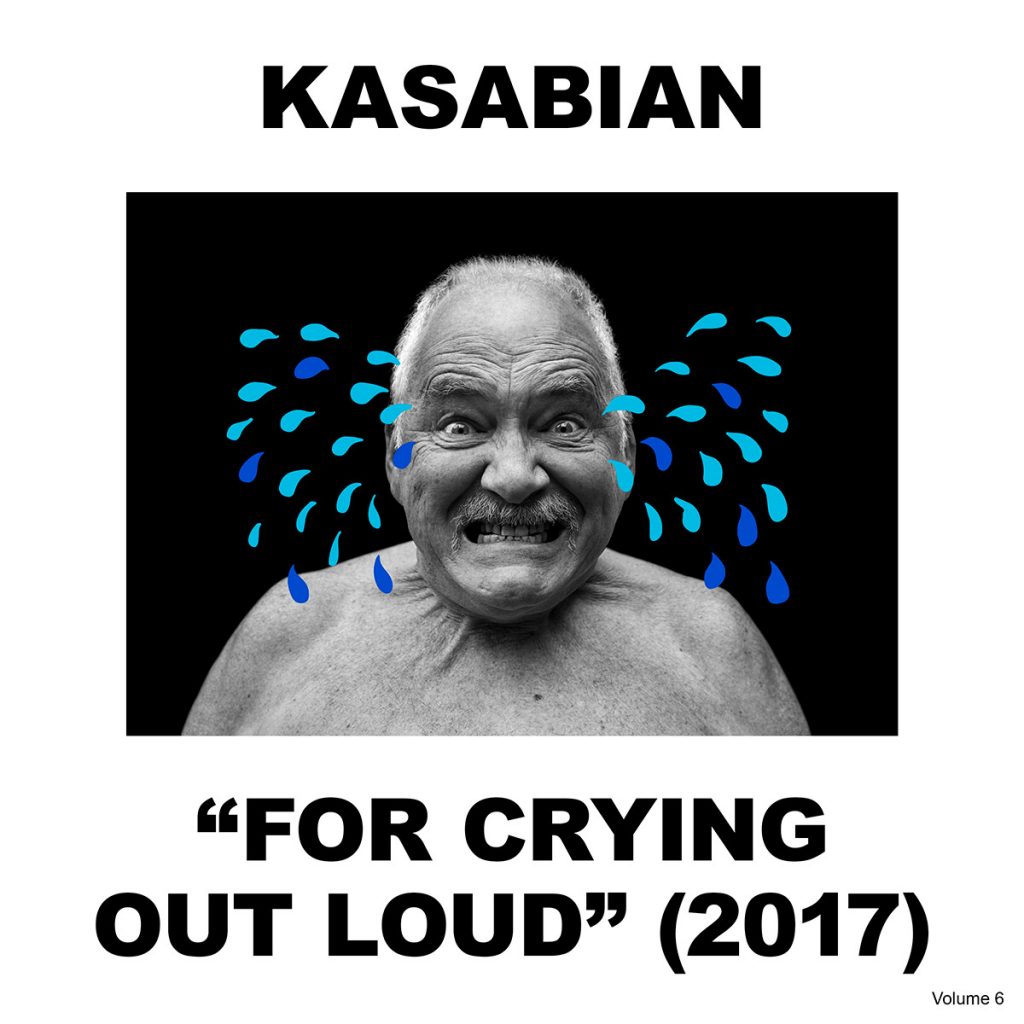
Week Nineteen: Kasabian- For Crying Out Loud

kasabian_crying_out_square

One of the last bands of the pre-social media generation, Kasabian have still kept the fire burning and continue to keep doing rock n roll after their predecessors, Oasis, very much alive and relevant in an era where the singles charts are being saturated with piss poor lyrics and instrumentation. “For Crying Out Loud” shines a light on the whole music industry and makes you punch the air triumphantly, knowing that the likes of Kasabian can still crush the pathetic pop we hear in the singles charts when rock music was supposed to be well and truly on its last legs. I noticed with the record that Serge Pizzorno is heavily influenced by Tamla Motown, which can be heard on the mid-tempo tracks like the opener, “ill Ray(the King)”.

There’s also a nod to a band who benefited from those heady days in the mid-90s that constantly appeared on Thank Four It’s Friday, Mansun with the track “You’re in Love with a Psycho” akin to “Stripper Vicar”.

There’s also a change in attitude from vocalist Tom Meighan who, for the majority of the record, leaves behind his cocksure and sneering delivery. The best thing to happen to Tom in 2016 was that his beloved Leicester City won the Barclays Premier League (2015/16) after surviving relegation the previous season and was unanimously predicted to be relegated. Still, they defied the odds with a squad of rejects led by the charismatic Claudio Ranieri to make a fantasy played out usually in games like FIFA become a reality. Other than that, it was a turgid year for Tom, having to get over a relationship and living out of other people’s pockets, in stark contrast to Serge, who loved every moment of his life. The attitude is still on the record, but as you can imagine, this time around, Tom is displaying the pain of having to move on after a breakup. Although Serge is the chief songwriter for the band, on the track “Put Your Life on it”, which in fact closes the album, you can hear that Serge’s personal lyrics to his wife affect Tom, and you can listen to the emotion quite evidently in his vocals. Is this more humble side a new direction in Tom’s delivery? Only time will tell.

Of course, don’t be fooled by these new tamla motown and psychedelic sounds to the band because we also get the typical Kasabian wall of sound with tracks like “Come Back Kid” and “Are You Looking for Action?”. Credit where it’s due, though, to the band venturing out of their comfort zone and willing to experiment, which can be heard on “All Through the Night”, which appears to be the slowest track they have ever done. Then, you have one that will definitely cause much debate over the whole of the industry, and that’s the reggae themed “Sixteen Blocks”, albeit there’s a very catchy chorus that is so exquisite that it would send chills down your spine hearing it sung by a crowd with their arms aloft at stadiums, arenas and outdoor festivals. Remember this, Oasis thought very highly of Kasabian (to the point where Kasabian wanted Noel Gallagher to join them after Oasis split.), and Noel Gallagher would approve of this being quite a big fan of the legendary reggae star, Bob “Tuff Gong” Marley so, for all you Kasabian hardcore fans readying yourselves to slate this track bare that in mind.

This record has a very gritty production with Tom’s more humble delivery and Serge’s guitar shredding that fit nicely over the top. I can’t tell you if it will get the critics to finally give the band credit they have moaned about not getting over the last few years, but it will make the critics sit up and take notice that Kasabian is more than just stereotypically Indie. The record also proves that Kasabian is not dead in the water and remains relevant with Tom’s more humble delivery and Serge’s guitar shredding. A bit of trivia here to end this review, the guy on the album cover is one of their roadies.

9/10