The duo played a few songs on Later…with Jools Holland back in May, and ‘Mountains’ stood out, which showed that this was an album to look forward to. Contrary to what occurred at BBC’s 1 Big Weekend festival, where Mike and Ben showed their disdain at the crowd for not giving their performance enough attention, their teasing of the record on Jools’ show showed that that would be water under the bridge as the duo still had the sound that everyone fell in love with in the last decade.
This is the Brighton duo’s fourth studio album, and despite being short, I enjoyed it. I have heard indifferent opinions on the record. My only complaint is it was far too short at 31 minutes 22 seconds( Even the bonus tracks see it under 40 minutes.). Still, at the same time, the duo appear to be taking it back to the days when a single played on the radio was extremely short (Usually just under 3 minutes or barely over.). The album is also their debut in producing their music, which has borne fruit. It is not because it has obviously hit the top of the chart, but because the songs are good. One of the factors of Royal Blood experimenting in the studio was there was no one to tell them to play it safe.
There are plenty of influences of the late David Bowie’s Ziggy Stardust-era on ‘the Firing Line’ and the Beatles during their psychedelic phase. We then have funk on ‘High Water’ and the usual metal sound on ‘Shiner in the Dark’. There are even quieter moments with piano ballads—something which we are unfamiliar with the duo.
I loved the guitar solo on ‘There Goes My Cool’. The album is an eclectic mix of sounds that has inspired Mike and Ben at some point in their lives, and we are only starting to hear it now the duo have self-produced. Of course, there is the usual lull, which is found on every record you have ever heard during the middle, but overall, despite its short length, this was an excellent listen.
Song recommendations: ‘the Firing Line’, ‘There Goes My Cool’, ‘Everything’s Fine’
I have decided to do a track-by-track review because it is the legends that are Blur. However, before I get to the review, I will introduce the band, as this is my debut review of them. They were formed in 1988 and initially named Circus before changing to Seymour. Damon Albarn was the sole member until bassist Alex James joined. Drummer Dave Rowntree followed in October before Damon recruited his childhood friend, who met when he moved to Colchester lead guitarist Graham Coxon. They then signed with Food Records in 1989. The label drew a host of names for the band as they were not keen on Seymour. They would decide on the name Blur.
They went on a UK tour in 1990 and released their debut single ‘She’s so High’, which reached 48th in the chart. For their following single, they worked with producer Stephen Street known for working with the Smiths and Morrissey, who the band were fans of. Stephen would produce the Stone Roses-esque ‘There’s No Other Way’, an instant hit with music fans and would peak at no.8 This would propel their status in the industry, but their third single ‘Bang’ was a total disaster peaking at no.24. Their label encouraged the band to keep the sound in line with the music coming out of Manchester at the time, dubbed Madchester. Their debut album, “Leisure”, came out in 1991 and charted at no.7.
Despite their mild success, they found themselves 60,000 pounds in debt and did a US tour in 1992 to clear their debt. They released their 4th single, ‘Popscene’, to promote the tour. It may only have charted at no.32, but the single would cement the Blur wall of sound we can still hear. The US tour was a bomb scare, with the members fighting and arguing.
When they returned, they worked on their second album, “Modern Life is Rubbish”, released in December, but then rejected by the label and wasn’t ready for release until May 1993. ‘For Tomorrow’ was 28th, and the record charted lower(15th)than their debut.
Their third album, “Parklife”, released the following year, got Blur the recognition they finally deserved. It helped that Oasis was being talked about and revived the Indie scene. For Blur, ‘Girls & Boys’ went in at no.5, their highest entry, but even better was “Parklife’, which became their maiden no.1 album. The band would win four awards at the 1995 Britannia Music Brit Awards.
The band would release “the Great Escape” the following year, which also went in at no.1, and they also went head-to-head with Oasis summer when they pitted their ‘Country House’ against the Mancunian’s ‘Roll with it’. Blur would beat Oasis to the no.1 single spot, and in the process, the media made up a bullshit ‘war” between the two bands, which saw fucking brainwashed idiots taking sides instead of appreciating both bands’ music.
Blur released their self-titled the following year, departing from the “Britpop” sound. Especially with the heavy rock song ‘Song 2’. Their first single, ‘Beetlebum’, a song that Noel Gallagher recently confessed that he thought was their best song and wished he had written.
Blur gave themselves a bit of a break and released “13” in 1999, which spawned the hits ‘Tender’, and ‘Coffee & TV’. “13” was yet another no.1 record. The next album would be in 2003 without their lead guitarist Graham Coxon and would be replaced by the Verve’s Simon Tong (Yes, his brother was the drummer for Bloc Party). “Think Tank” would also at chart no.1. There were several rumours in 2004-07 of the band working on extended plays, but these never happened, and without knowing it, the band disbanded.
They would reform in 2009 for a Hyde Park show, but it was Glastonbury, which would prove successful, and the fans hoped the band would stay together. They also headlined Oxegen and Tennents in the Park the same year. The band released their second greatest hits album after the successful reunion shows.
There would be several accolades and documentaries released before 2015 when the band announced they were back with their original lineup and released “the Magic Whip”, recorded in Hong Kong during a five-day visit in 2013. The band would hibernate after touring “the Magic Whip” until 2019 doing a special gig in London.
This brings us up to the present, where the band played EE Stadium, Wembley last month, and then played “the Ballad of Darren” in its entirety at AventimApollo last month. This will be the only time the new album will be played in its entirety live. The event was broadcasted online via a paywall, and of course, those who got tickets to witness it at the venue. Now, let’s get on with the review. I have given a long enough introduction to the band. I will also add that the album is named after their late security guard Darren “Smog” Evans:
the Ballad:
The opener begins with a drum machine that sounds tinny over minor keys and reflective vocals. This appears to be a hallmark of Damon’s solo material, but luckily for him and the listener, his bandmates from Blur are there to give the track more life akin to Blur. Graham Coxon especially rescues the song with his unique guitar playing and his backing vocals, then Alex James with his signature basslines. It is like Blur hasn’t had to shake off the rust of being absent from the studio for a decade.
St Charles Square:
For me, this track was the quintessential sound of Blur from the 90s and reminded me of tracks such as ‘Girls & Boys’ and ‘Charmless Man’. Again, Graham takes centre stage with his overdrive guitar tones.
Barbaric:
This is Damon putting the Gorillaz sound onto Blur. The subject, though, is not of the kind associated with the Gorillaz, as it is about a relationship falling apart and one of the lovers being hopeful yet bitter about it. However, they adopt something that Damon’s now friend Noel Gallagher is exceptionally good at blending melancholia lyrics over upbeat instrumentation. Staying with the Manchester thing, this track has an instrumentation that Morrissey and Johnny Marr excelled at within and outwit the Smiths. Graham Coxon’s intricate guitar playing gives the melancholia of Damon Albarn hope.
Russian Strings:
A more delicate side to the band, which sounds like ‘the End’ with overlaying guitars slow fading on the outro.
the Everglades:
So far, ‘St Charles Square’ is the only track that has resembled Blur’s 90s sound, and this track doesn’t give us a glimpse of it happening anytime soon. In fact, with the plodding acoustic guitar, this is more Simon and Garfunkel, complete with strings.
the Narcissist:
This was the track that everyone heard before the album was announced, and it was safe to say that it was an instant hit with their fans, but also music fans in general. Again, another track with melancholia but enveloped in 80s pop and 90s American Indie, so an example would be the kind of music associated with Pavement. There is also that tinny drum machine featured at the beginning of the record with Dave’s stomping drums to save the percussion element. Who wants to listen to a cheap drum machine without an actual drummer? This song is already featured in the band’s encores of their “the Ballad of Darren” tour, which shows that this track is already on its way to becoming a Blur classic.
Goodbye Albert:
Graham’s axemanship shines through as he blends aggressive with tender playing through the use of the pedal effects, so there is a lot of distortion. Alex hasn’t gone for his rapid playing on this, but rather a sense of delicacy with the bass. The lyrics delivered by Damon are him departing from his youth and entering into a more mature yet darker side of getting older. Also, as he confessed to Zane Lowe recently, he finds it difficult to sing the early Blur songs because his vocals were more youthful then, and now his vocals are a lot more bassy as he has got older. This song may be about Damon letting go of his youthful vocals and adopting the bass vocals he has acquired with age.
Far Away Island:
Damon has done many far-out projects outwith of Blur, and this one is a Brian Eno-esque experimental track. A psychedelic track over strings, with Damon adopting the vocals of a junior school kid. Will it go down well with the fans? Why not? Brian Eno makes far-out songs, but it works. You have to look at U2’s “the Joshua Tree” as a good example.
Avalon:
As we approach the end of the record, you can sense a more upbeat vibe as ‘Avalon’ opens with horns. The track itself hints towards uplifting moments, which is briefly interrupted by the sound of fighter jets ready to engage in aerial combat. The lyrics reflect the fighter jets in aerial combat, but there is a particular sinister lyric where Damon says, ‘Then I overdo my dose, and I don’t even know I’m here anymore’, which could also mean that the fighter jets are a metaphor for one taking an overdose to end their life. However, after that verse, Damon utters the line, ‘but the glass is still half-full. As mentioned earlier, the track, on the whole, is uplifting and full of optimism, then countered with the fighter jets sample. This could well be Damon feeling in turmoil about the future. I am unsure why he would feel this, as he is among the great songwriters.
the Heights:
A nod to the late David Bowie with an acoustic guitar at the intro that sounds like David’s tenure as Ziggy Stardust and the classic ‘Space Oddity’. Damon’s vocals follow. Then, of course, the rhythm section consisting of Alex and Dave brings the uplifting element. Graham had a backseat over this Sgt Pepper’s-esque track, or their counterparts Oasis who had the Beatles-esque ‘All Around the World’. Unfortunately, although they tried to element that exquisite sound of the Beatles, or Oasis, it didn’t work. The track has far too much going on, so it sounds like a mess. The band should have finished on ‘Avalon’. Yes, it had brief melancholic moments, but the rest was bombastic and uplifting.
Overall:
I will add an overall summary because you might look at the track-by-track review and think, “Fuck that. It sounds shit”. However, that is not the case at all. Yes, it is an experimental laced with Ziggy Stardust, Brian Eno, and Pink Floyd, but that adds to the mystery of Blur. They shouldn’t be known as an Indie outfit, but that is willing to evolve, and that’s the case here. I sincerely hope the band do not call it a day after the current tour because they are working as a unit in the studio and onstage. Damon and Graham have had strong chemistry since the band reformed in 2009, and the music is better for it.
Song recommendations: ‘St Charles Square’, ‘Avalon’, ‘Far Away Island’
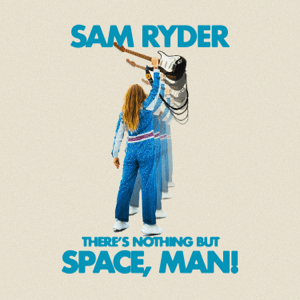
Now, my family have always been one to watch Eurovision, no matter how crass the songs are. However, I became hooked in 2014. I felt the competition had upped its game. You were now getting more house and RnB-type songs. One year, there was even a drum n bass track by Austria or something like that. Anyway, Sam Ryder finished second (Should have been first.) behind Ukraine, who had a fucking awful song that wouldn’t have got a sympathy vote from the public if it wasn’t for the current situation. It would have finished last. ‘Space Man’ was by far the best song there. I don’t root for any nation, but Sam Ryder was robbed.
So, where did Sam come from? I didn’t know of him until he showcased his ” Space Man” song on BBC’s One Show. Friends of mine, particularly from Glasgow, filled me in on Sam and his popularity. Sam uploaded covers of popular songs to TikTok, where he gathered an off-the-scale following. I enjoyed the song, so I was looking forward to what his album would be like.
Despite his recent rise, Sam has been familiar with music. He fronted some bands, did busking and wedding receptions. He also had his own Juice bar business.
What I liked about this record is the number of influences in his songs from Sam Fender, David Bowie, Elton John, Sum 41, AC/DC and club music. The opener is ‘Deep Blue Doubt’, and I couldn’t help but feel a Sam Fender-Esque vibe going on. The song could easily be mistaken for Geordie Sam from the instrumentation to the vocal delivery. It is my personal favourite off the album. Already a solid start and a twist of what to expect. This certainly sounds different from ‘Space Man’. The Fender horn section was missing from ‘Deep Blue Doubt’. ‘Somebody’ taps into Sam’s inspiration for funk. If I remember rightly, I thought while listening to the track; it reminded me of Nile Rodgers and Chic.
‘Tiny Riot’ is aptly named and an intriguing listen. You have the presence of Bring me the Horizon, but if they performed soul. I do not remember Bring Me the Horizon ever doing that, but this would be the result. Olly Sykes could also carry it off because of his vocal range.
‘All the Way Over’ is the first real reflective moment as he performs a piano ballad, which showcases his vast vocal range, complete with a bombastic outro featuring an orchestra. He then goes into A Day to Remember mode. Not the band at their rockiest, but more the quiet and gentle acoustic moments for his mid-tempo ‘OK’, so even though he does pick the tempo up, it is only slightly.
You may be wondering why I mentioned the late David Bowie; it’s more to do with ‘Space Man’ and Sam’s fascination with all things in the cosmos. The song is laden with space references, and David did this during his Ziggy Stardust period.
Once again, Sam has added another layer to the album. ‘Put a Light on Me’ gives you a false impression as you hear the guitar at the intro before bursting into a club dance floor filler. I, for one, was surprised to find club tracks to feature. Even if this isn’t your cup of green tea, the hook alone will suck you in.
‘Whirlwind’ wouldn’t look out of place at the Grand Ole Opry. We go from one extreme to the other as Sam brings the tempo down to a folk ballad with excellent fingerpicking on the guitar, either by him or a session musician (We will have to wait for the tour to find out.). He slightly ups the tempo with ‘Ten Tons’, where he blends funk with a piano. The vocals appear to be Sam channelling the late George Michael. The song goes in the blues direction during the guitar solo. Again, who performs that? We know Sam can play the guitar, as witnessed at Eurovision.
Sam shows even more vocal versatility as he taps into the Lumineers/Mumford and Sons/Of Monsters and Men section with the uptempo and country pop ‘More’. The tempo then drops to another folk ballad, this time with ‘Crashing Down’, which is quite apt when you consider the title, and the context. He follows that with ‘This Time’, an upbeat blues number.
I will close this review with ‘Living without You’, my second favourite, and the record closer Sam goes full-on club with this. David Guetta and Sigala feature, and I cannot see this not filling the dance floors whenever it is played. It is so uplifting—a brilliant way to end a versatile album. Sam may have been on Eurovision and a TikTok star, but he is no passing fad. Sam has proven now he is in the door; he plans to stay around for a long time.
Song recommendations: ‘Deep Blue Doubt’, ‘Living without You’, ‘More’
It is absolutely amazing that the older the Modfather gets, the better his music gets. Before 2005, he had a mini-slump as we entered the 21st century, but not as bad as being almost the forgotten man for a bit in the 1990s. He did jack it all in after 1989 when going through turbulent times since the Style Council split. In 1991, he went back out on the road playing small venues, to begin with, as a solo artist, but it sounded more like a band called the Paul Weller Movement. He then released his self-titled debut album in 1992 and once again was being talked about for the great songwriter that he is. Still, it was his second album “Wild Wood” that really got him back in the limelight, not tomention the praises of a young, fresh-faced songwriter called Noel Gallagher (Who is still his neighbour at present in Little Venice despite Noel trying to sell his London home.) who happened to be in a band called Oasis who were leading the movement back in 1994, which got Paul new fans and at present, the momentum from that year is still carrying Weller through. Yes, hehad three disappointing albums to begin the 21st century by his standards, but since “As is Now”, Paul has had the fire in his belly to prove he’s still one of the greatest songwriters in the world.
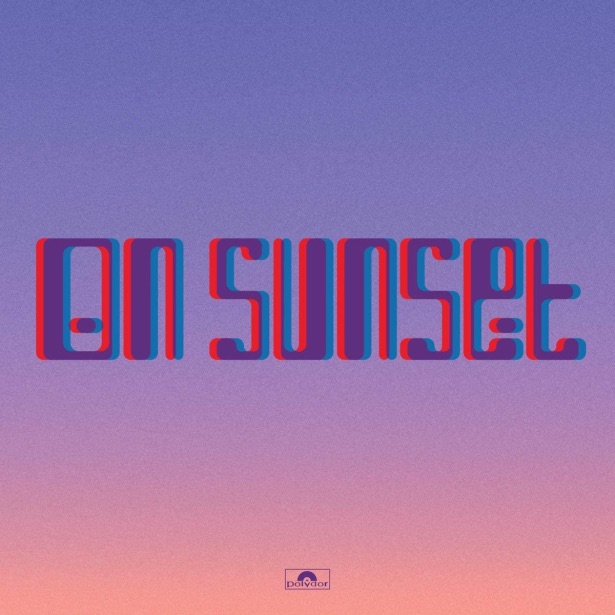
He has also had a philosophy of not looking back since 2005 and has dared to experiment on every album thereafter. “On Sunset” is no exception. Instead of sticking to the sound he once mastered, he has added vim and zest with his experimental endeavours. They usually say, “If ain’t broke, don’t fix it.” However, in music, you need to change with the times and push yourself to try new ideas rather than stagnate. This is why most songwriters disappear from the radar because they are too comfortable. Weller is willing to try new and exciting things to let everyone know he is still working and stamp his authority all over the industry.
Weller has changed up the tempo for this record; as we all remember, “True Meanings,” his last album from two years ago, was very reflective and simplistic. However, “On Sunset” is a departure from its predecessor and challenged him, but from what I heard, it’ll bear fruit for the Modfather in the long run.
The record begins with “Mirror Ball”, which I would describe as a three-in-one track because of the number of genres included. It goes from psychedelic, experimental, sub-bass and then, as the seven minutes approach, back to how it began. I could see the likes of the Chemical Brothers, Toydrum or Amorphous Androgynous remixing this, but Weller is more than confident of having a go himself as he gets bolder these days.
Most of the album, which was recorded at Black Barn Studios in Surrey, has a very summer feel to it when it was probably recorded during the cold winter of this year and last year. The whole element of funk and bass adds to that summer effect. However, towards the end of the record, we have tracks like “Equanimity” that sound more like he did back in 2000 compared to what he has been doing for the last fifteen years of being very experimental in the studio.
The title track is sound, but I don’t know if the final mix was supposed to have the effect of the Modfather’s vocals being overpowered by the strings to accompany them. It seems odd that Weller’s vocals are very feint.”Bapiste” reminds me of his track “Wild Wood” from the early 1990s when he dared to go solo, and it feels like a song dedicated to his passion.
The production is a bit much, but the lyrical content more than makes up for it. I’ve heard some bullshit in recent years that the Modfather is no longer a force with his songwriting, but after nearly 50 years in the industry, I disagree. He has always retained his ability to write songs; even those first three albums of the 21st century still had gems on them, although fewer. I loved “Rockets” as Weller once again gets political and takes a swipe at the sorry state of current affairs. He was also clearly inspired by the late David Bowie, as it sounded a bit like Bowie’s Ziggy Stardust era.
“More” indicates what Weller plans to do from here on in. “There’s always something else in store, keeps me running down that road.” if that isn’t a clear indication, then I don’t know what is. Weller is not planning to retire any time soon and is still hungry for more accolades among the many others he has received over the decades.
Once again, the Modfather has stamped his authority all over the industry and is not paying attention to those who think he should be in the garden of his Little Venice mansion, having a cigarette with a pint and reflecting on all the milestones he has reached. I look forward to another experimental album to follow this.
9/10
Song recommendations: “Rockets”, “Mirror Ball”, “More”

 Honest Opinions