A track-by-track review with a bonus track thrown in:
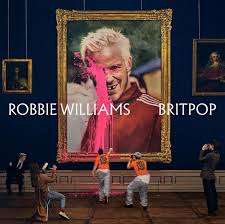
Rocket (feat. Tony Iommi):
This punchy, guitar-driven opener is the leading single featuring ex-Black Sabbath lead guitarist Tony Iommi. The track reminds me of Joan Jett and the Blackhearts tracks. It’s raw, full of rock attitude, and has anthemic energy. Tony’s solo is the standout moment.
Spies:
The song has a jangly guitar and is mid-tempo Britpop with nostalgic chords.
Pretty Face:
Didn’t like it. Too poppy for me.
Bite Your Tongue:
An alternative rock track with spoken word. It may feel odd, but it is playful, adding something different to the album.
Cocky:
Stomping glam-rock energy that’s fun with plenty of swagger.
All My Life:
An Oasis-inspired reflective ballad discussing dreams. Providing one of the more emotional moments on the record.
Human (feat. Jesse & Joy):
Another reflective ballad.
Morrissey:
Co-written with Take That’s Gary Barlow, this tongue-in-cheek track is about Morrissey’s legacy. It’ll certainly divide opinion. The lyrics also might suggest he’s playing the role of someone in love with the former Smiths frontman.
You:
Same attributes as ‘Bite Your Tongue’.
It’s OK Until the Drugs Stop Working:
I loved this track, and it certainly provided something different. This reflective, self-aware addressing of his past is Divine Comedy-esque.
Pocket Rocket:
An ethereal and dreamy closer of the standard edition.
G.E.M.B:
I included this track from the deluxe edition because it is my favourite. Robbie’s bold, tongue-in-cheek energy is captured perfectly over sublime indie rock, with his cocksure lyricism. It’s fun, bold, and catchy.
Coda:
“Britpop” is not about reinventing the wheel. It’s Robbie showing off to a sound he loved during the 90s, and that influenced him. The record is catchy, energetic, and fun, with songs that’ll become anthems. The lyricism may divide opinion, but this is one of his best albums to date. The title does what it says on the tin.
Song recommendations: ‘G.E.M.B.’, ‘It’s OK Until the Drugs Stop Working’, ‘Cocky’
No need for an introduction, as I already did “CALM”, the album named after all the members’ first names. So, onto 5 Seconds of Summer’s sixth studio record, “Everyone’s a Star!”. This effort features pop-rock, electronica, and electro-punk over reflective lyrics. The album screams confidence with its identity. It may be modern, but it still has the emotional element of the band and their melodic instincts. Now, I listened to the “Full Evolved” version, which is the equivalent of a deluxe edition, featuring songs centred around specific members and therefore giving it an even more personal listen.
As you know, I reviewed ‘CALM” and this album feels like a combination between that and “5SOS5”. Why? because “CALM” had atmospheric experimentation, and “5SOS5” was more crispy pop. The production features tight percussion, clean vocal layering, synth-heavy soundscapes, and is wrapped in personal subjects such as burnout, insomnia, self-image, and vulnerability.
The emotional element is what makes the record strong. Although there are upbeat tracks, they still have undertones of reflection. The likes of The Smiths and Oasis are known for putting melancholic lyricism over upbeat instrumentation, so they have adopted this approach.
Let us have a look at the standout tracks and give them a kind of track-by-track review. I will also include my standouts from the “Fully Evolved” section, but not explain why. I will leave it up to you to figure out:
NOT OK:
The key track that blends vulnerability with a cinematic hook. The listener will resonate with the theme, as the lyrics express… well. The title says it all.
Boyband:
The lads take a comedic approach to being labelled a boy band since they first burst onto the scene with pop-punk, which is a welcome break from the melancholy on the album.
Telephone Busy:
One of my complaints, which I will highlight in due course, is how short the tracks are, and this is a case in point. A pop track aimed at TikTok viewers, who, let us face it, have a short attention span. A polished earmworm track to say the least.
I’m Scared I’ll Never Sleep Again:
A track addressing the band’s struggle with insomnia, and a slower pace to the majority of the rest of the record. This vulnerable, atmospheric track features a sublime arrangement over emotionally powerful lyrics that will move the listener.
The Rocks:
Gritty and raw, and a great way to end the album. A quintessential 5SOS track.
The “Fully Evolved” edition is the most intimate . The tracks, as I mentioned earlier, are specific to each member and therefore more personal, and sound less polished than the majority of the tracks, which, in my opinion, works as a healthy balance. It is also great to see each member tell their own personal stories.
Now, onto something else I mentioned before, and that is how short the tracks are:
Yes, I am impressed by how the themes all tie into the album, but the shortness of the tracks is an obvious drawback.
The standard edition is just over 36 minutes, whereas the “Fully Evolved” edition weighs in at just over 49 minutes, making the listening time that little bit longer. However, most of the tracks are just finding their feet before they come to an end. Bridges, and outros are too short, and some of the songs never reach their entire journeys. This could be achieved by adding more verses or extending the bridges.
Yeah, it does not ruin the listening experience, but on certain tracks, they could have been extended to enhance it. “Fully Evolved” compensates for the brief listen of the standard edition, so I would recommend opting for the “Fully Evolved” edition.
So, my recommendation for ‘Everyone’s a Star!” is the “Fully Evolved” edition. It is emotionally honest, polished, and fits into their wall-of-sound aesthetic. The standard edition is a mixture of pop and vulnerability, and the “Fully Evolved” edition tracks are far from filler, as they take you on a genuinely personal journey of each member.
And once again, let us talk about where the record falls down. The shortness of the tracks. You want to hear more lyricism or instrumentation before they reach their conclusion. The tracks deserve more space to breathe over the quality on display.
The album as a whole is tightly produced, thought-provoking, with melancholic lyrics over upbeat instrumentation, and bonus tracks that act as more than filler,which some records tend to fall foul of.
Song recommendations: ‘Cool as Dad’, ‘NOT OK’, ‘The Rocks’
Before their stroke of fortune of being bumped up to Glastonbury headliners in 1995, and of course, the success of ‘Common People, Pulp had been plying their trade for over a decade with little success. However, their rise from playing pokey venues in Sheffield to performing in stadiums, and of course, being on the iconic 1996 Knebworth Oasis gigs, shows that with a little patience, you can get to where you want to be. The band finally found their home in the 90s, thanks largely to their counterparts Oasis making indie rock cool again. Jarvis was seen as an elder statesman of the scene despite still being relatively young in his early 30s. The band emerged from post-punk in the 1970s and began with a teenage Jarvis Cocker inspired by David Bowie, and Roxy Music formed the band in 1978 using the original name Arabicus Pulp. The band flirted with various sounds and had frequent lineup changes while trying to search for their identity that began to take shape in the late 80s.
Before the hedonistic days of the 90s, the band, despite their indie status, had a strong connection with their fanbase, which remained small but loyal. They released several singles and albums that explored themes such as adolescence, boredom, and sex, all tinged with melancholy. Interestingly, tracks like ‘Babies’, now a regular feature in their setlists, were born during this period, showcasing frontman Jarvis Cocker’s storytelling talent, lyrical prowess, and knack for crafting a hit that vividly depicts life in Sheffield and his time at St Martin’s College in London, where the iconic ‘Common People’ story began.
Then came the breakthrough years in the 1990s. Jarvis had changed the lineup during the mid-80s and brought guitarist Russell Senior, keyboardist Candida Doyle, drummer Nick Banks, and the late bassist Steve Mackey. Pulp finally found their wall of sound that would bear fruit in the following decade. That sound would include glam rock, art-pop, and lyrical storytelling, all delivered with charisma by frontman Jarvis Cocker, the band’s founder in 1978.
The band’s 1992 single, ‘O.U.’, marked the beginning of their success and appealed to a broader audience. This success paved the way for their 1994 album “His n Hers”, a collection of songs that featured relatable storytelling. Popular songs such as ‘Do You Remember the First Time?’ let the audience feel a personal connection to the band’s music. This is where frontman Jarvis, a witty storyteller, arrived, further enhancing the emotional connection between the band and their fans. “Different Class” followed a year later, and this is when things really took off for the band. ‘Common People’, which had a dig at the class divide, was fast becoming a frequently played song and evolving into an anthem for the band. ‘Disco 2000’ and the controversial ’Sorted for E’s & Wizz’ showed Jarvis’ witty and comedic storytelling over unforgettable melodies. The album would beat Oasis, among others, for the Mercury Prize in September 1996. It is also worth noting that their fan club president, Mark Webber, joined them as a guitarist/keyboardist in 1995 when they commenced recording the now legendary record.
Guitarist Richard Hawley became a touring member in the late 90s and early 2000s. The band appealed more to the misfits and quiet ones compared to the brashness and laddishness of the Oasis fanbase.
If you are new to Pulp, I would start with the iconic “Different Class”, but after, give “His n Hers” a listen to experience Jarvis’s lyricism with the band’s raw energy. You will realise why Pulp, even during their hibernation, has always been relevant in music conversations. Jarvis’ lyricism is like the poetry of everyday life accompanied by instrumentation. It also shows why they are still adored internationally—enough of the introduction. Yes, I could have mentioned the indie rock departure of “This is Hardcore”, but I was in danger of boring you. So, let us move on to the long-awaited record.
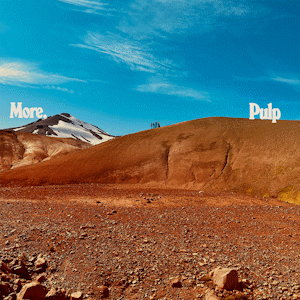
Pulp has finally completed its eighth album after a gap of twenty-four years between 2001’s “We Love Life” and now. It is also, sadly, the first record without their bassist, Steve Mackey. Although “More” addresses middle age daily life, compared to their iconic 1995 album “Different Class”, Pulp has not lost the magic that made them so popular in the 1990s.
From wanting to be noticed in their heyday, this album is more based on nostalgia than in the future. There are two tracks where enigmatic characters appear in ’Tina’ and ‘Grown Ups’ who seem to be individuals from Jarvis’ past.
Do not be fooled by the notion you are just listening to songs because with Pulp, it is more than merely instrumentation with nonsensical lyricism. The songs have always been poetic lyricism, and this record is no different. The tracks all formulate a meaningful story; sometimes, Jarvis delivers these in spoken word. Be it through the interludes or breakdowns during the tracks. Pulp is not aiming for chart success with “More” but is looking to structure the songs however they see fit while keeping the listener interested with the storytelling over various genres. This is not your typical pop-friendly album.
Despite not aiming for chart success, the band maintains a unique and unmistakable identity firmly embedded in their record. Each element contributes to the band’s distinct style, from Nick Banks’ driving drums to Mark Webber and Candida Doyle’s elan and Jarvis Cocker’s exemplary storytelling and witty lyricism. The band’s dynamic combination of these factors, however, is what truly excites and engages the audience.
The album explores several phases of human emotion. ‘Got to Have Love’ is what I would describe as a Smiths/Oasis/Killers song laced with melancholy over uplifting instrumentation. In this case, it is more indie-disco, like a fair few of their hits were in those heady days. ‘Farmers Market’ swings the mood with a romantic story encased by a piano and violins to bring it to life.
’Spike Island’ opens the record with a short, amusing story, setting a feel-good tone. ‘Hymn of the North’, the penultimate track, is a heartfelt tribute to their beloved Sheffield. The closer ‘A Sunset’ wraps up the album on a note of tranquillity, leaving you calm. Unfortunately, I haven’t had the chance to listen to the bonus track ‘Open Strings’ to see how it might alter the album’s ending. The verses in ‘A Sunset’ resemble the late Johnny Cash’s rendition of ‘Hurt’. Whether this was a deliberate homage from Jarvis or a happy coincidence, I can’t say.
“More”, for me, has something for everyone. It is not based in one genre. The lyricism and storytelling are outstanding, and I am excited about what comes next because it was worth the twenty-four-year wait. Despite the tragic loss of Steve Mackey, the band has not lost their touch, aided by their old friend Richard Hawley. Pulp is in rude health, and the impending tour will be fantastic. The magic is still there; they deserved to be at the top of the chart. Form is temporary, but class never fades.
Song recommendations: ‘Farmers Market’, ‘Hymn of the North’. ‘Got to Have Love’
Take That came to dominance in the 1990s and drove teenage girls and young women wild. The band split in late 1996 before reforming again in late 2005 without Jason Orange and Robbie Williams. Robbie would rejoin the band in 2011 (I think) before once again leaving and recommencing his successful solo career. During the band’s 9-year hiatus, Mark Owen had a brief solo career. Howard Donald became a DJ after his debut album was shelved, and Gary Barlow released about four solo albums but had more success as a songwriter. The band reunited for a Channel 5 early-2000s documentary at a country manor to talk about the band without Robbie, who did leave a video message addressing each member. As we know, from there, the band reformed to release material and perform live again. The band is more democratic nowadays, with each member taking the lead vocals.
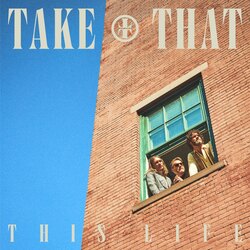
They made their debut appearance recently on Later…with Jools Holland, where they played two songs off “This Life” and said that the album, which was recorded in Nashville, was inspired by the country scene. I will later explain what I thought it sounded like.
“This Life” comes six years after “Wonderland”. Of course, there has been a greatest hits collection, a live album of their greatest hits, and surprisingly, a musical, which became a film released in the summer starring the Irish comedian Aisling Bea. The band have already sold out a staggering six-night residence at London’s O2 in April next year for the upcoming “This Life” tour. We are currently in the era of nostalgia, so this is no surprise. Take That, as we know, has a fantastic song catalogue, making recording new material a challenge because it will always be challenging to match those world-renowned hits.
One thing you will notice with this album is that it needs the singalong anthems we know the band for. I don’t know what chief songwriter Gary Barlow’s thinking is behind this, but he did tell Jools that this is a record that the band wanted to do rather than what the singles chart would dictate. ‘We Got All Day’ is one of the rare anthems on the album that will see the crowd waving their arms or holding their phones/lighters aloft. The final track, ‘Where We Are’, is more of the band revisiting their past glories by making this the record’s ‘Never Forget’ moment, where they sing about how far they have come over a bombastic production.
The album is quite eclectic for the band; the title track is something different. It sounds like a 1970s soap-themed tune with a jaunty piano. As you can imagine, it didn’t chart upon its release. The next track I will highlight is ‘Windows’, one of the songs featured on Later…with Jools Holland, an acoustic track more akin to their fellow Mancunians, the Smiths. They said the song is country, but I got a Smiths-esque sound instead. ‘Time and Time Again’ is the closest I came to hearing anything resembling country music with its relaxed acoustic strumming. ‘Brand New Sun’ was another song played on Later…with Jools Holland, and this one, with its electric guitar solo, reminded me of, once again, fellow Mancunians New Order. If I recall correctly, there is a Peter Hook-esque bassline. Although “This Life” differs entirely from anything they have done previously, you must feel it lacks the anthems we are accustomed to from the band. Despite that, this low-key album will not stop hardcore fans from flocking to their upcoming shows, and therefore, the band can enjoy themselves in the studio and have autonomy over what they want to record.
Song recommendations: ‘Windows’, ‘Brand New Sun, ‘We Got All Day’
Here is a track-by-track review of the band’s new material for a very long time:
Angry:
The teaser for the record is undoubtedly up-tempo and effortless. It reminded me of some of their songs from the 80s. More so with the riffs rather than Mick’s vocals, which never seem to change.
Get Close:
What I liked about this track is the band went rogue with this one and added a saxophone solo and harmonies that are hardly “a la mode”. However, I like all that avant-garde stuff, so fair play to them for not trying to follow the trend—the first of two tracks to feaure Elton John.
Depending on You:
It is a radio-friendly country ballad complete with soaring strings.
Bite My Head Off:
Paul McCartney (Who recommended they return to the studio for the first time in over a decade.) features on this punk-fuelled track. You wouldn’t know his presence on the track until Mick bellows, “Come on, Paul!”.
Whole Wide World:
Another high-energy track that discusses Mick and Keith addressing youngsters about the things to look out for before they grow old and wise.
Dreamy Skies:
This is the halfway point and the end of the A-side of the vinyl (if you happen to purchase it.). As you can imagine, as it is the final track on the A-side of the vinyl, the tempo eases to a plodding country ballad, yet instead of lulling you to sleep, it still maintains the energy enough to grab your concentration.
Mess it up:
The vinyl’s flip side, or the second half of the record, begins with an outro/intro to give you the sense of being involved in the recording process in the studio with the band. Disco is not their most robust genre for experimenting, but it works with the stomping piano thrown in at the breakdown—this is one of the final tracks to feature their late drummer, Charle Watts.
Live by the Sword:
This is the final track to feature his drumming, leading off from the Charlie Watts thing. It is fitting, then, that this is also another uplifting track with a vibrant piano riff. However, this one is less disco and more what can only be described as a nod to the late Elvis Presley with Elton John(second and final track.) providing the aforementioned vibrant piano riff. Although not lyrically strong, it is surpassed by Mick’s vocal skills and Elton’s dazzling piano playing. Don Was from Was(Not Was) is on production. Ex-bassist Bill Wyman also makes a cameo.
Driving Me too Hard:
It’s a quintessential Stones track with recycled riffs. One for the purists rather than the casuals who might find this “safe” and just a filler.
Tell Me Straight:
It was the first track to have guitarist Keith Richards take over vocal duties. His vocals suit this melancholic ballad. Surprisingly, you want this one to last longer because there appears to be beauty in listening to this. I like melancholic songs, which the Smiths and Noel Gallagher have mastered, so I’ll let you cast your aspersions here.
Sweet Sounds of Heaven:
A sublime track. With Lady Gaga singing and the great Stevie Wonder working his magic on the keys, it doesn’t feel like the Rolling Bones(Deliberate.)are on this in any way, shape or form. It’s quite surreal seeing the band cede control of their track. It is the longest, weighing in at over seven minutes. Although Lady Gaga soars with her vocal performance, what happens when Mick returns to duet is beyond words. This gospel-inspired song is just exquisite. My favourite by far.
Rolling Stone Blues:
We end the album with the cover ‘Rolling Stone Blues’ by the legendary and late Muddy Waters. This is the first time the band have recorded the cover, despite it inspiring their name. It is a comedown after celestial ‘Sweet Sounds of Heaven’, but it doesn’t feel inferior in the slightest.
Song recommendations: ‘Sweet Sounds of Heaven’, ‘Angry’, ‘Mess it up’
I have decided to do a track-by-track review because it is the legends that are Blur. However, before I get to the review, I will introduce the band, as this is my debut review of them. They were formed in 1988 and initially named Circus before changing to Seymour. Damon Albarn was the sole member until bassist Alex James joined. Drummer Dave Rowntree followed in October before Damon recruited his childhood friend, who met when he moved to Colchester lead guitarist Graham Coxon. They then signed with Food Records in 1989. The label drew a host of names for the band as they were not keen on Seymour. They would decide on the name Blur.
They went on a UK tour in 1990 and released their debut single ‘She’s so High’, which reached 48th in the chart. For their following single, they worked with producer Stephen Street known for working with the Smiths and Morrissey, who the band were fans of. Stephen would produce the Stone Roses-esque ‘There’s No Other Way’, an instant hit with music fans and would peak at no.8 This would propel their status in the industry, but their third single ‘Bang’ was a total disaster peaking at no.24. Their label encouraged the band to keep the sound in line with the music coming out of Manchester at the time, dubbed Madchester. Their debut album, “Leisure”, came out in 1991 and charted at no.7.
Despite their mild success, they found themselves 60,000 pounds in debt and did a US tour in 1992 to clear their debt. They released their 4th single, ‘Popscene’, to promote the tour. It may only have charted at no.32, but the single would cement the Blur wall of sound we can still hear. The US tour was a bomb scare, with the members fighting and arguing.
When they returned, they worked on their second album, “Modern Life is Rubbish”, released in December, but then rejected by the label and wasn’t ready for release until May 1993. ‘For Tomorrow’ was 28th, and the record charted lower(15th)than their debut.
Their third album, “Parklife”, released the following year, got Blur the recognition they finally deserved. It helped that Oasis was being talked about and revived the Indie scene. For Blur, ‘Girls & Boys’ went in at no.5, their highest entry, but even better was “Parklife’, which became their maiden no.1 album. The band would win four awards at the 1995 Britannia Music Brit Awards.
The band would release “the Great Escape” the following year, which also went in at no.1, and they also went head-to-head with Oasis summer when they pitted their ‘Country House’ against the Mancunian’s ‘Roll with it’. Blur would beat Oasis to the no.1 single spot, and in the process, the media made up a bullshit ‘war” between the two bands, which saw fucking brainwashed idiots taking sides instead of appreciating both bands’ music.
Blur released their self-titled the following year, departing from the “Britpop” sound. Especially with the heavy rock song ‘Song 2’. Their first single, ‘Beetlebum’, a song that Noel Gallagher recently confessed that he thought was their best song and wished he had written.
Blur gave themselves a bit of a break and released “13” in 1999, which spawned the hits ‘Tender’, and ‘Coffee & TV’. “13” was yet another no.1 record. The next album would be in 2003 without their lead guitarist Graham Coxon and would be replaced by the Verve’s Simon Tong (Yes, his brother was the drummer for Bloc Party). “Think Tank” would also at chart no.1. There were several rumours in 2004-07 of the band working on extended plays, but these never happened, and without knowing it, the band disbanded.
They would reform in 2009 for a Hyde Park show, but it was Glastonbury, which would prove successful, and the fans hoped the band would stay together. They also headlined Oxegen and Tennents in the Park the same year. The band released their second greatest hits album after the successful reunion shows.
There would be several accolades and documentaries released before 2015 when the band announced they were back with their original lineup and released “the Magic Whip”, recorded in Hong Kong during a five-day visit in 2013. The band would hibernate after touring “the Magic Whip” until 2019 doing a special gig in London.
This brings us up to the present, where the band played EE Stadium, Wembley last month, and then played “the Ballad of Darren” in its entirety at AventimApollo last month. This will be the only time the new album will be played in its entirety live. The event was broadcasted online via a paywall, and of course, those who got tickets to witness it at the venue. Now, let’s get on with the review. I have given a long enough introduction to the band. I will also add that the album is named after their late security guard Darren “Smog” Evans:
the Ballad:
The opener begins with a drum machine that sounds tinny over minor keys and reflective vocals. This appears to be a hallmark of Damon’s solo material, but luckily for him and the listener, his bandmates from Blur are there to give the track more life akin to Blur. Graham Coxon especially rescues the song with his unique guitar playing and his backing vocals, then Alex James with his signature basslines. It is like Blur hasn’t had to shake off the rust of being absent from the studio for a decade.
St Charles Square:
For me, this track was the quintessential sound of Blur from the 90s and reminded me of tracks such as ‘Girls & Boys’ and ‘Charmless Man’. Again, Graham takes centre stage with his overdrive guitar tones.
Barbaric:
This is Damon putting the Gorillaz sound onto Blur. The subject, though, is not of the kind associated with the Gorillaz, as it is about a relationship falling apart and one of the lovers being hopeful yet bitter about it. However, they adopt something that Damon’s now friend Noel Gallagher is exceptionally good at blending melancholia lyrics over upbeat instrumentation. Staying with the Manchester thing, this track has an instrumentation that Morrissey and Johnny Marr excelled at within and outwit the Smiths. Graham Coxon’s intricate guitar playing gives the melancholia of Damon Albarn hope.
Russian Strings:
A more delicate side to the band, which sounds like ‘the End’ with overlaying guitars slow fading on the outro.
the Everglades:
So far, ‘St Charles Square’ is the only track that has resembled Blur’s 90s sound, and this track doesn’t give us a glimpse of it happening anytime soon. In fact, with the plodding acoustic guitar, this is more Simon and Garfunkel, complete with strings.
the Narcissist:
This was the track that everyone heard before the album was announced, and it was safe to say that it was an instant hit with their fans, but also music fans in general. Again, another track with melancholia but enveloped in 80s pop and 90s American Indie, so an example would be the kind of music associated with Pavement. There is also that tinny drum machine featured at the beginning of the record with Dave’s stomping drums to save the percussion element. Who wants to listen to a cheap drum machine without an actual drummer? This song is already featured in the band’s encores of their “the Ballad of Darren” tour, which shows that this track is already on its way to becoming a Blur classic.
Goodbye Albert:
Graham’s axemanship shines through as he blends aggressive with tender playing through the use of the pedal effects, so there is a lot of distortion. Alex hasn’t gone for his rapid playing on this, but rather a sense of delicacy with the bass. The lyrics delivered by Damon are him departing from his youth and entering into a more mature yet darker side of getting older. Also, as he confessed to Zane Lowe recently, he finds it difficult to sing the early Blur songs because his vocals were more youthful then, and now his vocals are a lot more bassy as he has got older. This song may be about Damon letting go of his youthful vocals and adopting the bass vocals he has acquired with age.
Far Away Island:
Damon has done many far-out projects outwith of Blur, and this one is a Brian Eno-esque experimental track. A psychedelic track over strings, with Damon adopting the vocals of a junior school kid. Will it go down well with the fans? Why not? Brian Eno makes far-out songs, but it works. You have to look at U2’s “the Joshua Tree” as a good example.
Avalon:
As we approach the end of the record, you can sense a more upbeat vibe as ‘Avalon’ opens with horns. The track itself hints towards uplifting moments, which is briefly interrupted by the sound of fighter jets ready to engage in aerial combat. The lyrics reflect the fighter jets in aerial combat, but there is a particular sinister lyric where Damon says, ‘Then I overdo my dose, and I don’t even know I’m here anymore’, which could also mean that the fighter jets are a metaphor for one taking an overdose to end their life. However, after that verse, Damon utters the line, ‘but the glass is still half-full. As mentioned earlier, the track, on the whole, is uplifting and full of optimism, then countered with the fighter jets sample. This could well be Damon feeling in turmoil about the future. I am unsure why he would feel this, as he is among the great songwriters.
the Heights:
A nod to the late David Bowie with an acoustic guitar at the intro that sounds like David’s tenure as Ziggy Stardust and the classic ‘Space Oddity’. Damon’s vocals follow. Then, of course, the rhythm section consisting of Alex and Dave brings the uplifting element. Graham had a backseat over this Sgt Pepper’s-esque track, or their counterparts Oasis who had the Beatles-esque ‘All Around the World’. Unfortunately, although they tried to element that exquisite sound of the Beatles, or Oasis, it didn’t work. The track has far too much going on, so it sounds like a mess. The band should have finished on ‘Avalon’. Yes, it had brief melancholic moments, but the rest was bombastic and uplifting.
Overall:
I will add an overall summary because you might look at the track-by-track review and think, “Fuck that. It sounds shit”. However, that is not the case at all. Yes, it is an experimental laced with Ziggy Stardust, Brian Eno, and Pink Floyd, but that adds to the mystery of Blur. They shouldn’t be known as an Indie outfit, but that is willing to evolve, and that’s the case here. I sincerely hope the band do not call it a day after the current tour because they are working as a unit in the studio and onstage. Damon and Graham have had strong chemistry since the band reformed in 2009, and the music is better for it.
Song recommendations: ‘St Charles Square’, ‘Avalon’, ‘Far Away Island’
After the 2017 album, “Beautiful Trauma”, this one would always have to raise its standards. P!nk has not had much success with her critics, who have mostly given mixed reviews, saying that her records lack the Punk we were introduced to in the early 2000s. That happened quite rapidly, as the first time we heard her, she was doing RnB, which attracted a fair few Garage producers to remix her songs. She has also been criticised for having children over ten years ago, being told that would ruin her career; P!nk believes that having children has made her more tender as an individual and changed her music style somewhat. As some people within her circle told her, it certainly didn’t end her career. She said before she had children, she felt alone in an industry where you spend most of your time in your presence out with the studio and touring.
“Beautiful Trauma” was given a challenging ride by her critics for being too conscious, the production, and her all-round maturity. Her previous album, “Hurts 2B Human”, which wasn’t as good as “Beautiful Trauma, was also panned by the critics because she spoke about her life as a mother and lacked a new perspective regarding the subject matters and the wall of the sound. They felt it was a typical P!nk record back in 2019.
“Trustfall” removes the chance of the critics jumping all over it because it is pretty experimental, ranging from ballads to dance. The record is quite reflective of her life so far. The opener is a track called ‘When I Get There’, which is a piano ballad, and her reflecting on her late father. It is my personal favourite on the album. Yes, it may be melancholic, but the tender notes and her delicate vocals make this a beautifully tragic song. A term I often use to describe my favourite Smiths song, ‘There is a Light That Never Goes Out’. P!nk released a teaser for the record called ‘Never Gonna Not Dance Again’, which takes us into the dance with an element of pop. The critics favour it, but for me, it shows a fun side to her. It’s Katy Perry-esque. The title track sounds like a club track that will fill the floor and get a pull-up. I recently heard Noel Gallagher talking about, as you get older within music, you have to try not to do “dialling it in”. He means it gets more difficult to do the kind of music you could do when you had nothing. P!nk hasn’t “dialled it in”, and you can tell she cared about this album and was dedicated to ensuring it was more than good enough to release.
‘Feel Something’ is another highlight of the album where she questions whether she was ever ready to be married and start a family and how all your demons don’t just disappear once you do. Another of my favourites features the Swedish sister duo First Aid Kit. The track is called ‘Kids in Love’. A country ballad where P!nk does the first verse, followed by Klara in the second, with sister Johanna providing backing vocals on the chorus. The song is quite reflective as she looks back on the innocence of youth and the naïvety of falling in love. There are a few more emotional moments from P!nk with ‘Our Song’ and the ill-tempered ‘Hate Me’. The latter is just a “fuck you. I don’t care what you think. This is who I am” track. Bringing it back to the days of ‘So What’.
I also enjoyed ‘Long Way to Go’ featuring the Lumineers. Quite an unusual song for the country band, as it is entirely out of their comfort zone, but the combination works. I have seen this record getting panned (No surprise there.), but I am in utter disagreement with the critics, because the album is incredibly diverse, and not your generic P!nk record. There is a lot of maturity on display, and she has proven she isn’t just the polar opposite of her rivals in the early 2000s. She leaves you pondering about life and issues based on reality.
Song recommendations: ‘When I Get There’, ‘Kids in Love’, ‘Long Way to Go’
Blimey, where to start with this? I am not an enormous admirer of Steps, but needs must. I will try and be as professional as I can. I must first confess that some of their songs are a guilty pleasure for me, and their wedding reception-friendly music is…well, uplifting. A young lad I know slaughtered me for even daring to review this. However, it was necessary for you, my wonderful readers and followers.
So…Steps have been going since the mid-90s and first burst onto the scene with their line dance smash ‘5,6,7,8’. Since then, they have had a string of hits, and among them were some reimagined covers. Quite funny when you consider many thought their first single was going to consign them to the one-hit wonder category. It is also worth noting that the band members contemplated joining due to that possibility. Don’t forget, they split up after their third album, and we saw a documentary on Claire Richards’s struggles coming to terms with that, but she did form a duo with her fellow band member Ian “H” Watkins. The band returned in 2011, complete with a four-part documentary on Sky Living giving an insight into the reunion. The documentary would get a second series in 2012 co-titled ‘Steps: On the Road Again’, and after that, they announced they would release their fourth studio album, “Light up the World”, with a six-date Christmas tour to follow upon its release.
What’s funny about this album is you would think it is another greatest hits compilation (They have done an eye-watering six!), but no. There are plenty of new tracks (Remixes included), which I discovered upon listening (I skipped most of the old ones because I have heard them before, and some of them on countless occasions. Be it at the supermarket, weddings or parties.) However, the band would just be dismissed as a nostalgia act until 2016, when they would again be taken as the serious act they were during the mid-90s to early 2000s.
I happen to listen to the deluxe edition, which has an astounding 43 tracks, complete with solo releases by the members and remixes. You have songs with uplifting production and melancholic lyrics for balance over Nile Rodgers and Chic-inspired melodies. Now, you have no fucking idea how hard this is to break down in a review because I could still be writing this this time next year. You will have to listen to the deluxe edition and decide what you enjoy and don’t.
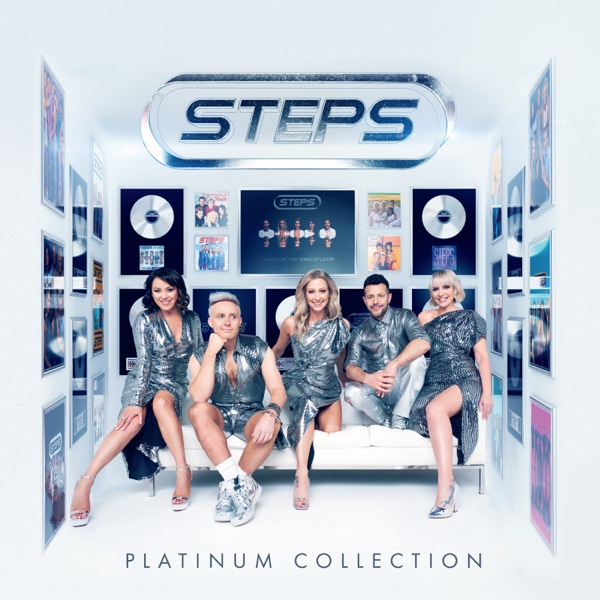
So, you probably wonder if I have any personal favourites, and the answer is yes. Mainly the remixes of ‘Stomp’ and ‘the Runner’. The former has a slight variation on their Nile Rodgers and Chic-Esque original, which samples ‘Everybody Dance’. ABBA drives the latter, and who doesn’t mind a bit of ABBA? My third choice would have to be ‘the Slightest Touch’. Again, it has that classic Steps hallmark to it with its uplifting instrumentation over melancholic lyrics—something mastered by the likes of the Smiths and Oasis when they were around. “Platinum Collection” is a journey from then until now, and you can see how they have evolved and managed to maintain their status. Not bad for potential one-hit wonders.
Song recommendations: ‘Stomp(Steps 25)’, ‘the Runner’, ‘the Slightest Touch’
I remember becoming a fan of their music after their mid-2000 songs ‘Let’s Dance to Joy Division’ and ‘I’m Moving to New York’. I heard the latter during the Christmas months while working at a supermarket.
Anyway, there’s something unique about this album. Only a few artists have done this, from what I recall. Queen, David Bowie, Eminem and Ed Sheeran. The ability to record while not in the same studio as other band members or collaborators. That is what the Wombats have achieved with this record. The band members are in three different countries. Usually, it is just the one, but no.
Wombats did it with band members in three! Which makes “Fix Yourself, Not the World” quite spectacular. The concept is quite good as well. I mean, the title rings true. Some things are beyond our control, for example, the shit state the world is in currently. I am from the British Isles, so I can see how shit it is now and probably foreseeable. However, even though we can’t fix the world, we can indeed fix ourselves. Primarily, that should be our top priority. As they say, don’t sweat the small stuff. If we can look after ourselves mentally, our well-being is better. So, an exciting title catches your attention and makes you wonder what the album’s premise will be. I heard many experimental sounds and the band trying to reinvent themselves from that “typical indie” with which they had been labelled and saw them stagnate somewhat. I’ve always liked their music, but they did get relatively comfortable staying in one direction.
Be patient with some tracks they have experimented with because they might appear dull or alien to what you usually expect from them. For example, the title track is weird. You cannot tell it is a title track because it seems like a regular track on the album. It doesn’t scream title track. I loved the lyrical content within and the harsh message it delivered. There are plenty that are ready for the upcoming tour.
However, the title track was not supposed to stand out judging by the length. It acts more like an outro. Some tracks are gloomy, like ‘Everything I Love is Going to Die’, a Smiths-esque title with the content and melody to fit in. The front cover was attractive. Funnily enough, I was looking for Wally among the artwork. I wish I could write more, but after being quite excited to hear it, it was an anti-climax.
Song recommendations: ‘Ready for the High’, ‘People Don’t Change People, Times Does’, ‘Everything I Love is Going to Die’
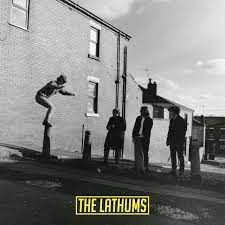
I have heard of this four-piece band from Wigan (Yes, the same place as the Verve.)since 2016. So, I know an awful lot about them through followers on Twitter. They used to post videos of the bandand do polls on the next up-and-coming talent. Indeed, I wasn’t unfamiliar with the Lathums when listening, but I was excited to hear what their album would be like. It was like I did with the Snuts I mentioned before; I also knew of them before their debut record was released. Frontman Alex Moore has also worked with someone else I knew through Twitter followers, and I have personally engaged with the highly talented Rianne Downey (Look out for her. She’s only just getting started in the mainstream.).
Unfortunately, the Lathums signed just before the pandemic hit, so instead of spending most of 2020 touring,they had to find other ways to get their music across. The band hadn’t been out on the road doing arenas and festivals before this year save for their 2019 appearance at Kendal Calling at the request of the Charlatans frontman, Tim Burgess. The band played in small venues like public houses before this year. The biggest being their local called the Crown.
One pro from the pandemic, and with everything locked down, was that the band could focus entirely on the writing and the sound without any distractions. The title has a hint of irony about it because the record is quite melancholic. Of course, that is alright because the likes of the Smiths and Oasis pulled it off well. They made the melancholy blend into relatively upbeat instrumentals. Alex has said that sadness encourages him to write because it is hard for him to write when he isn’t feeling sad. He believes that writing while feeling down in the early days gave him the ability to connect emotionally once turned into a song. It wouldn’t surprise me ifAlex were a fan of the Smiths.
Coral’s frontman, James Skelly,is on production, and of course, James brings his band into the sound, but I can also hear the Smiths, the Libertines, and Space, who are from Skelly’s native Liverpool. Alex looks like Ragnar “Raggi” Þórhallsson from of Monsters and Men, but they also sound vocally alike in some ways. However, Alex has his unique style and is more soulful than Raggi. You could also assume Alex sounds a bit like Marcus Mumford because Raggi does, too.
The album opens with ‘Circles of Faith’, and despite its upbeat nature, my ear was immediately drawn to how much it soundedlike the Smiths. Some might argue it is more like the Stone Roses, but I do not share that opinion. I also felt the same on ‘Fight on’ and several more on the record. The latter is full of heart-wrenching lyrics like, “There are tears in my eyes as I am forced to fight against an occupation. One greater than I”. This is a pop at the establishment, and many of us in the arts feel this way. I also found the band got political on ‘the Great Escape’ as well.
Things start to get calmer on ‘I’ll Get By’ as the acoustic guitar appears and the Lathums go more folk. As usual with that genre, the song reflects on mistakes made during a relationship and how you need your significant other to save you from feeling pain. ‘I Won’t Lie’ reminded me of the Libertines. Can I elaborate? I am not sure I can because the Libertines have always played at that tempo most of the time. It sounds like the kind of song associated with the Libertines. Then, ‘I See Your Ghost’…well, from a band from Wigan, it has its roots in Liverpool. It’s uncanny how much it sounds like them. As I mentioned earlier, there is an element of Space somewhere in the record, and this is it.
Again, you have heard that adage, “Where is all the guitar music?” as mentioned in the Snuts review, it is here.It’s all here: the Lathums, the Snuts, Citylightz, Skylights, HoneyMotel, the Crooks, Rivieras. Even Rianne Downey is goingto take the British folk scene by storm. Just open your ears, and you will find that guitar music isn’t dead.
Song recommendations: ‘the Great Escape’, ‘I Won’t Lie’, ‘I See Your Ghost’






 Honest Opinions