WAHEY! It’s Christmas! Where most people are cheerful, and that is very infectious. Anyway, it is no surprise that a Christmas album sits atop of the chart. Usually, Michael Bublé does. At the moment, it is Kylie with an expanded edition of her 2015 record “Christmas (Fully Wrapped)”. The new edition is Kylie stamping her style over new songs and covers. We have effortless vocals that are both warm and playful.
Let’s look at some highlights from the album. I have excluded ’Santa Baby’ and ‘Let it Snow’. I will explain my reasoning in due course:
It’s the Most Wonderful Time of the Year:
As you will discover, most of the songs are like supernovas. Mainly the covers, because they were written in a time when radio plays were extremely short. Kylie does this justice, delivering an upbeat, polished, celebratory tone without going too cheesy.
XMAS:
I guarantee that if you have been near a radio. You would have heard this new track, as it is being played to death, and with good reason, too. Rhythmic, quintessentially Kylie, that blends her modern pop sound into a Christmas theme with ease. This one will be on a future Christmas compilation; it is that good.
Hot in December:
Another new addition, and another standout alongside the previous one. Cheeky, playful, and of course, Kylie stamped. Not your usual Christmas track. I thought the title hinted at the weather in her native Australia during this period, but the lyrics talk about being free and flirting.
At Christmas:
Time for a reflective and tender refrain. Her vocals really sell the story.
Santa Claus Is Coming to Town ft. Frank Sinatra:
I was uneasy seeing that the late Frank Sinatra was included as it can often disrespect the memory, but this felt tasteful. Of course, Kylie’s vocals were exemplary.
This Time of Year:
Another new track, warm and gentle. Another refrain from the upbeat tempo.
100 Degrees ft Dannii Minogue:
The chemistry between the sisters is a sound to behold. You might think there might be a sense of bitter rivalry, but this disco-inspired track is delightful. The sisters give the album a colourful array of fireworks.
Office Party:
Another favourite of mine. A silly, fun, and light track. The title says it all. If you know the chaos at the office Christmas party, you will know.
White December:
Melancholic and unmistakably wintry.
Christmas Isn’t Christmas ’Til You Get Here:
An intimate and heartfelt track. Again. Kylie’s vocals shine.
Have Yourself a Merry Little Christmas:
Restrained yet elegant vocals, and that cozy feeling of being by a logfire with mulled wine.
Now, earlier I mentioned why I do not like ’Santa Baby’ and ‘Let it Snow’, and now I will explain my reasoning as to why the record works without them:
More mature
There is no novelty fatigue
Flows better
Showcases more of Kylie’s artistry
Why? Because there is a better balance between playfulness, tasteful covers, and modern originals that serve a purpose rather than overloading the album.
Encore:
What a sublime listen this was. I much prefer this to the original released ten years ago. The record doesn’t have its polished sound when it gets playful, remains stylish, and has that Christmas feel without going over the top. One of the best Christmas albums I have ever had the pleasure of listening to.
Song recommendations: ‘XMAS’, ‘Office Party’, ‘100 Degrees’
I was stunned to discover that Dave hasn’t released an album in over four years, but as the review progresses, you will see why the wait was worth it.
You are probably wondering about why that title? Well, it is a biblical reference from the book of Samuel foretelling the story of King David. Quite funny, really, when the artist in question shares the same name.
The production doesn’t lean towards hip-hop and anything that might resemble a banging tune. Instead, it is more introspective, featuring piano, spaciousness, and ethereal tones. Occasionally, the harp features, and Dave even picks up the guitar on the 6th track.
In regard ot the themes, he focuses on dealing with fame, identity, legacy, being a man, faith, and how he has a sense of duty to his listeners and society. Rather than basking in his achievements, he questions what his roleand voice is doing to lead by example.
Now, part of the summary is out of the way; let’s look at the songs that caught my ear:
History:
The opener sets up the rest of the record. Dave addresses everything about himself. James Blake not only features on the track but also produced it, creating a typical atmospheric soundscape that he adopts, complete with tender piano and reverb space that allows the words to land, allowing the listener to engage with the thought-provoking lyricism from Dave, which is always interesting. I have never found him at a loss for words. In fact, let’s look at that on here. Dave refers back to King David, and as the record progresses, you hear why he uses this biblical figure to illustrate power, vulnerability, and how music heals the soul. Never mind, if the track is not for the commercial market, but rather the lyricism and the matching mood of the music.
Chapter 16:
What more can you say? It features the amazing Kano. I have been a fan of Kane since the early days of grime, so this track was never going to be skipped. The pair trade verses, discussing their legacies, the rap game, and how they feel burdened by representing the scene. Once again, James goes for a minimalist sound with his trademark piano chords and a beat that allows for reflection. Dave pays tribute to Kano, stating that he has been a fan of his since he was 14 years old. Kano also praises his younger counterpart. The song connects all timelines of UK rap, with Dave accepting his role in its future, while also questioning what he wants and what he owes. The track could have easily been one of pure egotism, but Dave shows humility alongside ambition, and, of course, what his legacy is.
Raindance:
Unless you follow her closely, have seen her at major festivals, or watched Later… with Jools Holland, the Nigerian vocalist Tems, who features, will probably have escaped your attention. The Afrobeats-inspired track, over reflective piano riffs, is more light-hearted than the previous tracks. Dave is more playful with Tems. The lyricism focuses on Dave enjoying a night out, where he meets someone, apologises for future relationship struggles, and references the concepts of marriage and property. This track takes him out of his comfort zone with Afrobeats, but it works well with Tems, nonetheless. A bit of a breather from the heavier songs so far.
Selfish:
James Blake returns from the control room with a heavy, moody, introspective, and self-confessional collaboration. Dave examines what fame has cost him in life, including narcissism, and what his ambition entails. Dave also highlights how his bravado is often laced with self-doubt. A typical James Blake production, leaving Dave’s wordplay time to breathe. Another heavy, but lyrically intriguing track.
My 27th Birthday:
This nearly eight-minute track focuses on self-reflection, with Dave looking inward at his legacy, expectations, age, and how he has evolved. Again, the production is more of the same, with a blues-inspired piano riff with looping vocals. The lyrics are used as a metaphor for a day/year that’s in motion or standing still. Dave once again examines his role in society and considers how he can utilise his voice to create a positive change in the world. He also examines how fame can be a burden rather than a blessing, as he feels that people are being cynical about the messages he is trying to convey. They are using his fame as a weapon against him when he is less likely to return to a life of poverty. A very deep listen.
Fairchild:
Dave gives a chance to the upcoming talent of Nicole Blakk and lets her showcase her views, where she discusses being the unfortunate victim of assault, which has triggered a fear of men, and her experience of misogyny. This evokes emotions in Dave about how incels behave, and he questions why his fellow men more often than not turn a blind eye to this unacceptable behaviour. Dave even questions if sometimes he, too, has shown misogynistic traits, which is perfectly portrayed in the line “All know a victim, don’t know a perpetrator, am I one of them?” It may be a heavy listen, but it is what you would expect from him. It’s a deep track with substance. It is refreshing to see a male address violent behaviour towards, whether he has unknowingly done it himself, and how he feels a sense of responsibility to make his fellow man aware of this abhorrent behaviour.
The Boy Who Played the Harp:
The closing and title track uses a sample from The Beatles. The track’s name eludes me at the moment. This track makes the premise of the album all make sense. The name, the purpose, the record’s identity, the burden he feels, and the activism displayed. I love the premise behind the lyrics, as he places himself within historical moments, such as world wars and the civil rights movements. He ponders if, like in those moments, he can speak up, act, and lead when necessary. The title track, like the rest of the album, ends strongly, leaving the listener to ask themselves the very questions he did throughout. Bizarrely, though, there is no harp. Just a piano.
Strengths & Weaknesses
Now let’s address where the record is good, and where it falls down:
Strengths
Of course, it has to be his lyricism. I mean, after all, that is what he primarily is. Dave started as a spoken word artist before moving into rap. I love his wordplay, detail, reflection, and how he uses metaphors.
The album is streamlined rather than a mishmash of songs. There is a constant string of themes that remain consistent.
He isn’t coy about asking himself challenging questions, rather than doing a record that focuses on his success.
If you ask me, what are the highlights of the album? Well, it’s all of the tracks above.
When I get to the song recommendations, I’m going to have a think about what three stood out.
This is up there with his best work to date.
Weaknesses / criticisms
This is not my opinion, but looking at it from a critical point of view, you have to say that James Blake’s production is too moody and lacks dynamism.
The tracks are not chart-friendly, both in terms of lyricism and production. There is also a lack of hooks, which may hinder the number of plays he receives in the mainstream.
Some listeners will feel that the themes are more of the same, and doesn’t bring anything new to the table.
Coda
Although the album may not be that chart-friendly, it is full of thought-provoking tracks, which to me, is always better than sacrificing for the sake of the singles chart. It is up there with his best work so far. You just have to look at songs like ‘Fairchild’, ‘Chapter 16, and ‘My 27th Birthday’ to see the maturity in his writing, and how they all have a purpose. It may not have the hits that have featured on past records, but this is one for the deep thinkers, who will appreciate Dave’s approach. My personal opinon is, I love it. A very strong record that cuts through all the bullshit.
Song recommendations: ‘Chapter 16’, ‘Fairchild’, ‘The Boy Who Played the Harp’
Mumford & Sons. The name alone has me picturing folk and Americana and the familiarity of the banjo. It took me a while to come around to their music. I didn’t dislike them; I found “Sigh No More” ideal as background music. But they never quite captured my full attention, remaining a band I politely tolerated rather than passionately embraced.
However, over time, their music began to seep into my consciousness, altering my perception and kindling a newfound appreciation.
It was 2015, and I was settling in to watch “Later…with Jools Holland,” expecting the usual mix of established acts and rising indie darlings. When Mumford & Sons performed, I expected to hear the usual. I was utterly taken aback by what I heard.
What followed was a sonic jolt. The band launched into “The Wolf,” a track that shed the banjos and acoustic guitars in favour of distorted electric guitars, driving drums, and a raw, almost primal energy. That folk element everyone had been accustomed to was replaced by a full-blown rock attitude. I was completely taken aback. This was the side of the band I had yet to have heard.
It was a revelation. The track was powerful. Signalling a significant shift in the band’s sound. It was a risk that paid off. After that appearance on Later, I decided to give the band a proper chance, diving deeper into “Wilder Mind” and re-evaluating their entire discography. I particularly enjoy watching/listening to their live shows.
Now, let’s delve into some background on this West London ensemble. Mumford & Sons, formed in 2007, comprising of members Marcus Mumford (vocals, guitar, drums, mandolin), Ben Lovett (vocals, keyboards, accordion, drums), Winston Marshall (vocals, banjo, guitar, dobro. Winston left the band in 2021), and Ted Dwane (vocals, bass guitar, double bass, drums, guitar). They quickly and impressively rose to prominence with their distinctive blend of folk, Americana, rock, and bluegrass, characterised by their soaring vocals, intricate instrumentation, and introspective lyrics. Their early albums, including “Sigh No More” and “Babel,” were massive commercial successes, cementing their place as one of the most popular bands of the decade.
However, with “Wilder Mind,” they consciously moved away from their signature sound, embracing a more electric and expansive sonic palette. While the change would inevitably divide fans, it opened them up to a broader audience and allowed them to explore new creative avenues.
What followed was the 2018 album, “Delta”. Another record showing their ambition and their willingness to experiment with various sounds, and connect with a global audience. Their collaboration with African musicians such as Baaba Maal seemed to have inspired this direction, making their music resonate with a wider, global audience. It may not have sounded like their first two albums, but it proved that they could push the creative boundaries. Now we are up-to-date on what the band released and Winston Marshall’s departure amid controversy in 2021; we will crack on with the review “Rushmere”—their first record in a staggering seven years.
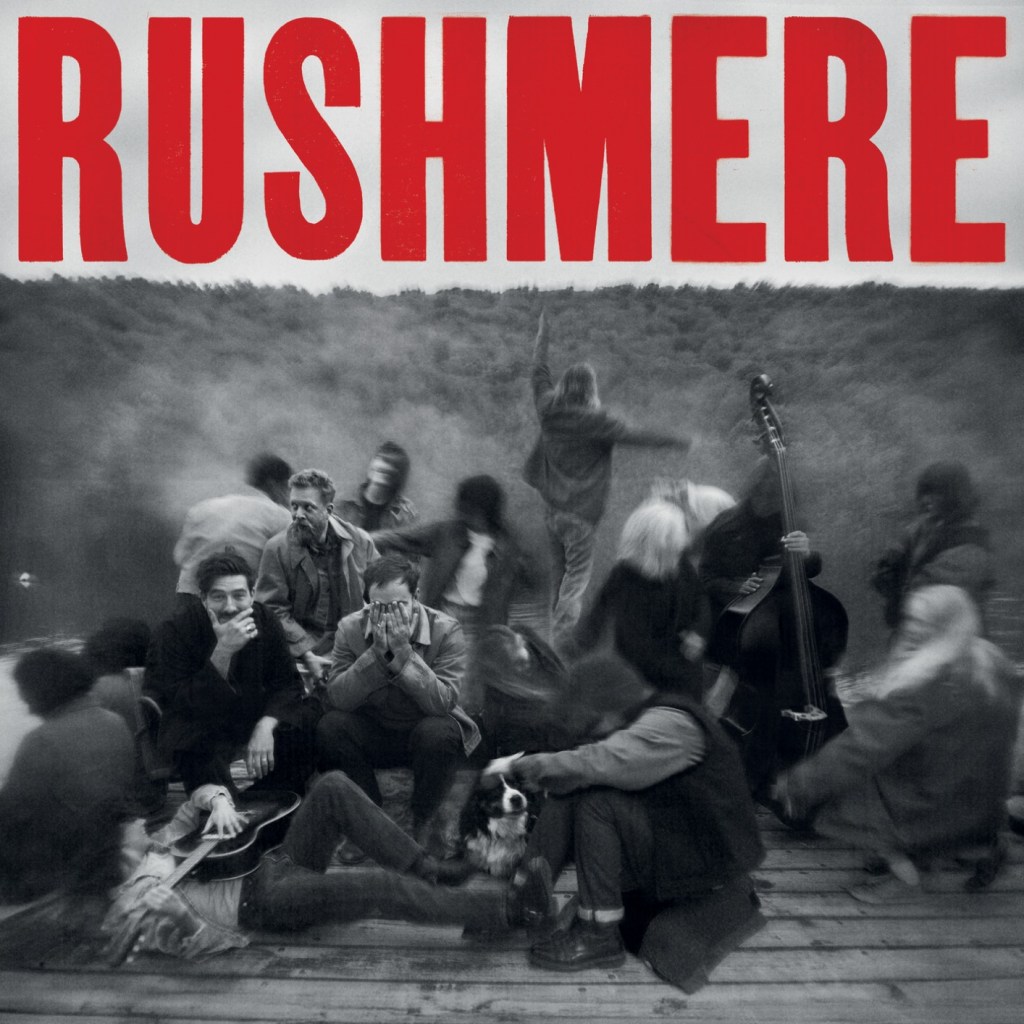
Why “Rushmere”? The title carries a double meaning. Rushmere, a lake in Wimbledon, South-West London, is where the band formed, and this record is a return to their roots. The album, therefore, is reflective. Recorded in RCA Studio A, Nashville, and their home studio in Devon, this period from 2022 to 2024 was their most productive. Interestingly, frontman Marcus Mumford released a solo album the same year the band returned to the studio. This decision might have been influenced by a conversation with Noel Gallagher in a London pub, where he challenged Marcus to fully utilise his songwriting talent, both as a solo artist and with the band.
As usual, the songs ease your soul and are just the tonic when you feel the world’s weight on your shoulders. The album itself has a confessional lyricism and offers hope as the record goes on. So stick with it, even though the beginning is downcast.
Despite the melancholic verses, the opener ‘Malibu’, also their latest single, starts with that unmistakable rousing chorus.
It’s intriguing that others, rather than just the band, wrote a few songs. Adele and Liam Gallagher songwriter Greg Kurstin is one of them. He writes the title track and sends it in a Fleetwood Mac direction. The band’s adaptation of Fleetwood Mac on ‘Caroline’ is a fascinating development, suggesting a new direction for their music. More than likely drawing inspiration from Greg’s song. Returning to the title track, it was the teaser and leading single. It is a song that is the quintessential folk side of the band enveloped with Fleetwood Mac. ‘Monochrome’ is a romantic ballad that somewhat lightens the mood.
’Truth’ is when the mood shifts, with Marcus radiating confidence over the track. However, this confidence is short-lived, as we soon arrive at the fittingly titled ’ Surrender’. While I believe this is the piano ballad, it’s been a few days since I last heard it, so my memory might not be entirely accurate. In the early section of the song, you can hear his vocals breaking, a clear sign of the emotional depth he’s delving into. Marcus’s performance is a masterclass in emotional expression as he transitions from powerful vocals to tender ones, reflecting a profound ache and a heart struggling to heal.
As I mentioned earlier, the album is reflective, and the lyricism mirrors that. You believe every heart-shredding vocal that Marcus delivers. It’s the same as when he delivers vocals displaying optimism. While the band has always been known for their jovial and forthright songs, this album marks a significant evolution, showcasing a level of maturity we haven’t seen before. The record harks back to the heady days, a nostalgic treat for those who appreciate it. As for me, I’m still processing my feelings about it. However, I can’t help but admire the depth of the lyricism. The album’s conclusion with ‘Carry on’, a song brimming with hope, is a fitting end.
Song recommedations: ’Carry on’, ’Truth’, ‘Malibu’
It is absolute nonsense that this will be the last album by the Weeknd. He has hinted that he might “kill” his alter ego and start again as Abel Tesfaye. He has also hinted that he might retire from music altogether, and I simply ain’t buying it despite what it says on the opening track ‘Wake Me Up’ on the intro. The album is the trilogy’s final part that includes “After Hours” and “Dawn FM”, both of which I have previously reviewed. Once again, the record is full of synthesisers and nods to that 80s retro sound, a style that has been a defining feature of his music of late. The only plausible reason this might be the final album is that he lost his voice onstage during a concert in 2022. He believes that it was some sign to tell him to stop while he was at his peak.
Abel went into acting in 2023 when he starred in The Idol, which could be another reason he wants to leave music behind. However, after hearing about the drama, it appears he should stick to music. Of course, on his previous album, “Dawn FM,” which was about a radio station in the afterlife, he talked about the end of his alter ego, but this time, he does appear to be hinting at leaving music.
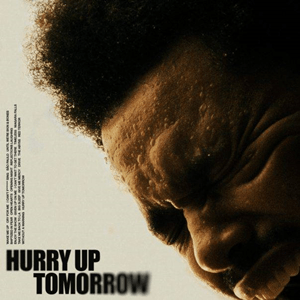
His latest instalment, “Hurry up Tomorrow”, kind of acts as a film as it lasts 88 minutes. He has the legendary Giorgio Moroder on ‘Big Sleep’, which features the score from Scarface, and there is a nod to the film Eraserhead. I heard Abel also wrote a film to accompany the record. It is not your usual short film for an artist, but a full-length film starring him. There are several covers for the sleeve, and the used for streaming platforms looks like a film poster. Again, with these two things alone, Abel is hinting that his heart now belongs on screen.
Unlike his previous albums, where his alter ego’s malevolent nature was a dominant theme, this album presents a more nuanced perspective. The evil side of his alter ego is a rare occurrence, adding an element of intrigue and curiosity for the audience.
While the production is mostly enjoyable, the lyrics and subject matter fall short. If this is the artist’s final work, it’s a departure that lacks his usual style. The constant lamenting about wealth and fame becomes tiresome. Is it a great shame that this is how he has chosen to exit the music scene? The title track that concludes the record holds a surprise-a hidden track featuring a section of his legendary ‘The Hills’. This hidden gem serves as a reminder of the artist’s legacy, but it’s a bittersweet note to end on.
Song recommendations: ‘Big Sleep’, ‘Wake me up’, ‘Hurry up Tomorrow”
Who doesn’t like Madness? I mean, you have ‘Baggy Trousers’, ‘Our House’, ‘House of Fun’, Midnight Boat to Cairo’, ‘Lovestruck’ and ‘One Step Beyond’ to name a few classics by the collective. Of course, there is a more serious side to the band with songs such as ‘Must be Love’ and ‘Johnny the Horse’. They are not all full-on ska and uplifting sing-a-longs.
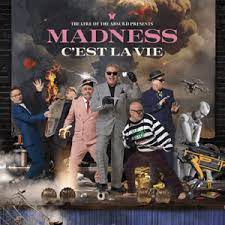
I recall a film that came out via BT and AMC during one of the lockdowns called “Before We Was We”, featuring the current members and the former member Chas Smash (if it wasn’t for him being the hype man, to begin with, I am not sure Madness would have been signed.) and this album kind of follows that theatre vibe. You have an introduction, prologue, acts, and, of course, the finish.
Leading off from the opening paragraph, this record is not your typical lively Madness album, but one that is quite reflective and discusses the current climate of world affairs. What is refreshing about the record is the band has made it the way they want it. Some fans might have got over-excited when the band announced a new album, clearly expecting the usual knees-up anthems. People like me, on the other hand, welcome this. It is quite an eclectic listen; for example, ‘Run for Your Life’ is rock, ‘If I Go Mad’ is funk, and ‘Set Me Free’ brings melancholy. Thommo takes over from Suggs to lead vocals on ‘What on Earth is it (You Take Me For?’ and ‘the Law According to Dr. Kippah’ with Suggs backing him on the latter. Thommo also does what is really the opening track (If you exclude the pointless prologue.), ‘Theatre of the Absurd’, where he does it in spoken word.
The prologue appears to be in a crowded place, more than likely a public house, because you can hear hubbub. I didn’t pay that much attention to that, the acts, and the finish because they are pointless fillers. They are short and add nothing except to give it a “theatre” feel. These are all narrated by the actor Martin Freeman. ‘In My Street’ has the familiarity of their classic ‘Our House’, and trust me, when you hear it, you will immediately come to the same conclusion.
I suggest the clowns who voted leave give this a miss because the band are unapologetic as they rip to shreds the sorry state Britain is in due to the consequences. They aim at racists and politicians and how the country is on its knees. Despite the raw subject matters, they are cleverly concealed among love, humour, catchy hooks, and optimism. It’s not your quintessential Madness record, and I am surprised this is their first ever No.1 album when they had some vibrant ones out during their pomp. It is worthy of its place and shows their more sincere and political side. It’ll be interesting to see if it becomes timeless due to the nature of the record.
Song recommendations: ‘In My Street’, ‘Set Me Free’, ‘Theatre of the Absurd’
What is this? His seventh album to get to number one? He’s only three behind Noel Gallagher in that respect. This time, Ed returns with a folky and reflective record that is quite apt this time of year, given the season we are about to enter. The title even reflects that by being called “Autumn Variations”. I couldn’t care less if this is Ed returning to what he knows best; it works for him.
The opener is called ‘Magical’, the title is apt, and the lyrical content, which you will notice throughout, is autobiographical and thought-provoking. Most of the album has this as a constant with some slight, excuse the pun, variations. The subjects include his birth, patriotism, pub talk, et cetera.
The album’s second half gets more adventurous, with Ed being more creative and deviating slightly from the folky first half. ‘ When Will I be Alright’ is a prime example where Ed shows his vulnerability and melancholy and adds a violin to match that emotion. ‘the Day I Was Born’ was also another favourite of mine. Wonderfully autobiographical.
If you like Ed at its simplest, baring his soul on the acoustic, this album is for you. I loved it and the reflective nature. Quite a few people I have spoken to about it do not like “Autumn Variations” and called it “boring”. I’m afraid I have to disagree with them.
Song recommendations: ‘ When Will I be Alright’, ‘the Day I Was Born’, ‘Magical’
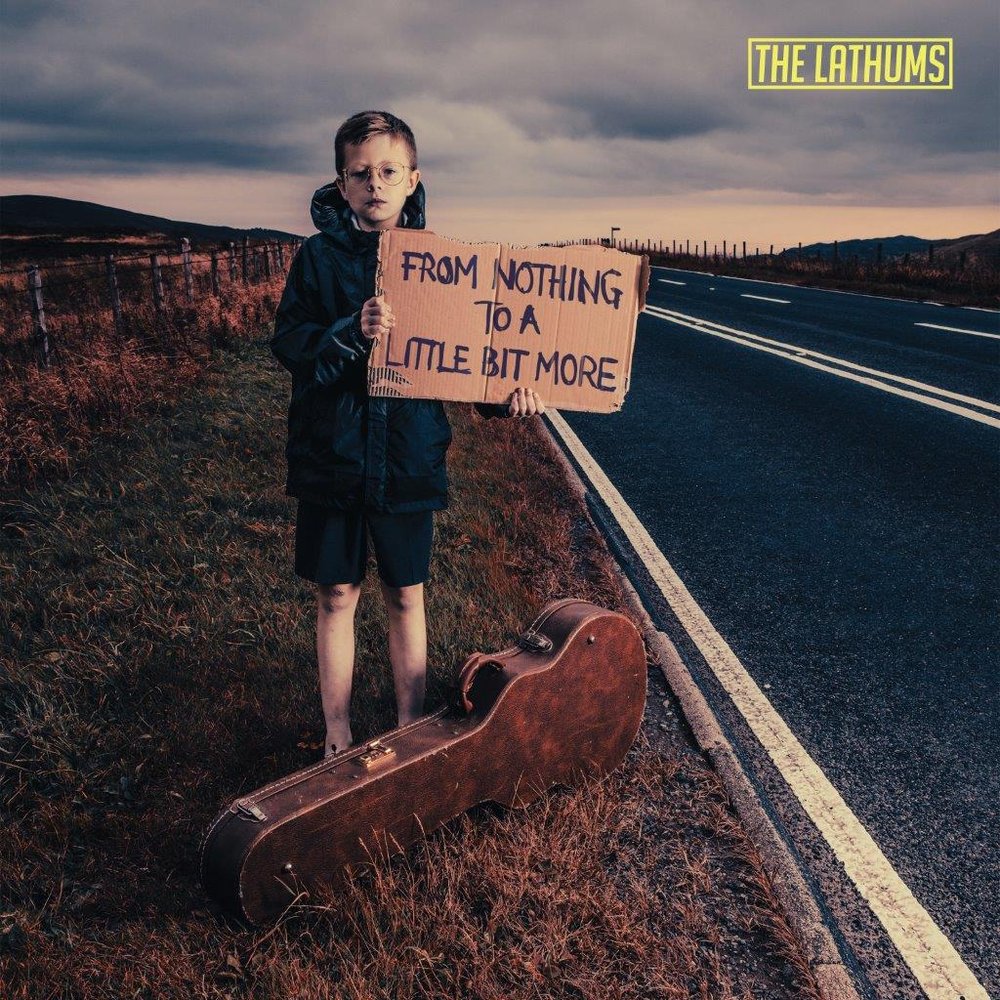
After the success of their debut album, it was always going to be a complex task to make the second record just as good or better than the debut. So many have yet to live up to the expectations of their debut because they gave everything to ensure they would spark instant attention, so they appear to fall short either through sheer panic or loss of creativity. Unfortunately, if the second album is a miss, the attention seems to dwindle, and you fall down the pecking order on the festival bill. After “How Beautiful Life Can Be”, could “From Nothing to a Little Bit More” live up to the expectations the fans and listeners demanded?
Well, although the album is more in-your-face this time. There is still that formula the band used from the debut. The biggest shock, despite being signed to his label, is the band hasn’t brought in the Coral’s James Kelly on production and opted for Jim Abiss, who produced the Artic Monkeys record “Whatever People Say I am, That’s What I’m Not” and of course “19” and “21” by Adele. As you can see from the albums mentioned that Jim has a good track record of producing brilliant records. The opener ‘the Struggle’ further proves Jim’s pedigree.
The song is about a relationship split, where once again, just like he did on the reflective tracks on the debut, Alex Moore bares his soul. It may be a slow song, but the tempo goes up in the chorus fit for the arenas and festivals they will be playing in shortly. A few fans think this is when Alex is at his best.
Four teasers were released before the album, and the consensus appears that the former is the best. However, I beg to differ. ‘Sad Face Baby’ sounds similar to the Stereophonics and a bombastic chorus where Alex belts it out. The same goes for ‘Say My Name’. Yes, reflective songs are good from time to time, but it is the energetic ones that get the crowd going, like the two mentioned above.
You would have noticed upon listening that the album is packed with attitude and full-on rock. Still, as with any record and during live performances, the tempo inevitably drops to settle everyone down. ‘I Know Pt 1’ is a slow-tempo track with a plodding soft electric guitar, which reminded me of 50 rock or ‘Unchained Melody’ by the Righteous Brothers. It surprised me because I wasn’t expecting a band full of 20-somethings to use that concept. Many would struggle to know who Buddy Holly is, yet alone be able to know the kind of melodies adopted in that era. Then another slow one is ‘Lucky Bean’, and I could hear ‘Rotterdam’ by the Beautiful South.
Their albums are pretty balanced in their career so far. The attitude and reflective tracks share them. I do not see any issue with this, but some out there would rather have a record packed with energy and less reflective moments. It could be what the band is known for when they go into the studio. As long as it makes a live performance flow, who cares?
It was a surprise when fan favourite ‘Crying Out’ didn’t make it on the debut, and it is even more of a surprise that the band included it on this album when the four-year-old song was not considered good enough before. The track in question is part acoustic, part electric. The song begins with Alex singing softly over an acoustic guitar before the song explodes, with Alex screaming out the vocals to match the tempo. Because the fans class it as their favourite, and it was well received on the ‘How Beautiful Life Can Be’ tour, I imagine the band only felt it was right to include it on their second record.
Alex’s songwriting has improved since the debut, evident on the closer ‘Undeserving’, their ‘Champagne Supernova’ moment. The song is eight minutes. I prefer this to the debut. The songwriting is better, and the overall production will be brilliant when they promote on the road.
9/10
Song recommendations: ‘Sad Face Baby, ‘Lucky Bean’, ‘Crying out’



 Honest Opinions