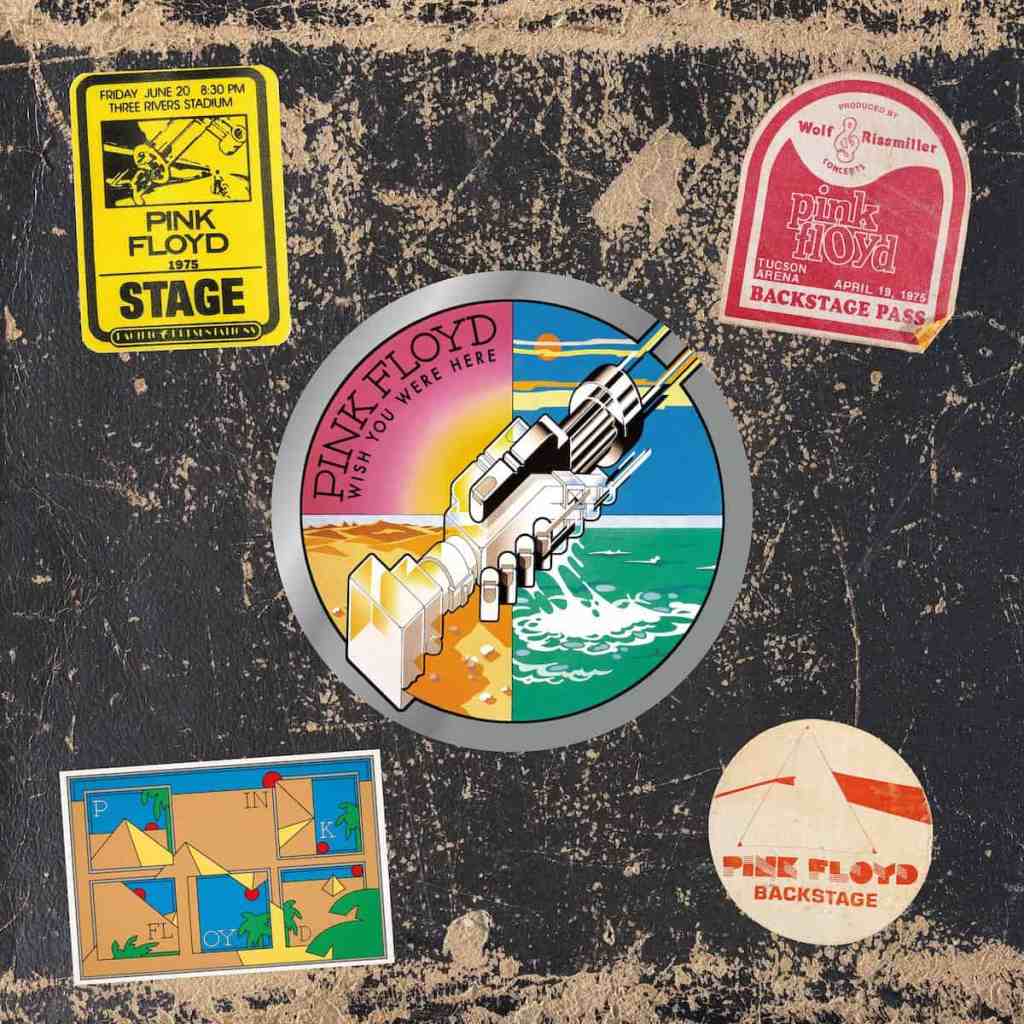
This Dolby Atmos 50th anniversary edition of “Wish You Were Here” may appear to be a cash grab, but underneath the surface, that isn’t the case. The bonus material, which I will discuss later, has been carefully selected. The album’s emotional weight has been enhanced by the clarity and space, so all the emotions expressed with newly resonant without losing the original spirit.
My highlights from the new version include ’Shine on You Crazy Diamond (Parts 1-4)’, which benefits from the expanded soundstage, with its synths and guitar lines gradually blossoming, making it more immersive. I also like the new version of the title track, which brings the acoustic textures closer to the track’s emotion. ‘Welcome to the Machine’ is precise and more imposing, with the mechanical elements more defined, and the final track I will mention is ‘Have a Cigar’ because the use of the improved separation gives it more bite.
I feel the bonus material only enhances the latest edition of the album. We have a new mix of the record, remastered and using Dolby Atmos, and unreleased tracks from a live concert at the LA Arena in 1975, that offers a raw edge of the band improvising onstage. There are also alternate and early versions that show how the sound has progressed throughout the years. This helps take away the idea that this edition is just a “cash grab” or “filler,” because every version has substance.
“Wish You Were Here 50” celebrates the anniversary respectfully. The new versions brighten the tracks, and the bonus material adds texture and context. It is a must-have for Pink Floyd connoisseurs, and Dolby Atmos will introduce a younger generation of listeners to the band. My one gripe with it, and to be honest, it is to be expected of them, is that the songs are very long. There are Dolby Atmos versions and live tracks that run over 25 minutes. Pink Floyd connoisseurs will adore it because it shows off the band’s prowess, whereas a casual or new listener may find it a bit too much. There are also long intros, where the first lyrics are sometimes delivered at the 8-minute mark. As for the record, the songs remain the same, but with the element of Dolby Atmos, they have never been more clearer. You hear everything, and it’s glorious.
Song recommendations: ‘Have a Cigar’, ’Shine on You Crazy Diamond (Parts 1-4)’, ‘Wish You Were Here’
I had never heard of James Marriott when I first embarked on listening to his second album for the review. I discovered he was a YouTuber, and I honestly had a look of utter disdain when I heard that because most of their music is terrible. However, that expression quickly changed. Apparently, his debut record, “Are We There Yet?’ is also worth a listen, and I will find a window at some point. The indie artist is constantly up against it as he is labelled a “YouTube musician, ” but “Don’t Tell the Dog” might send him on the road to being respected as a serious musician in the indie scene.
Upon my first listen, I was greeted by ‘Ventriloquist’, and the minute I heard autotune, I had to skip to the next track. My eyes already rolling, expecting the album to be fucking shit. But I found myself pleasantly surprised from then on as I heard indie music that kept my interest.
Songs like ‘It’s Only Love’ showcase his vocal ability and knack for writing hooks, and I disagree that it sounds like The 1975, a band he is heavily influenced by.
Save for the opener ‘Ventriloquist’, the only other weak tracks are ’Toothache’ and ‘Food Poisoning’, which lack that earworm chorus that would turn these tracks into setlist anthems. The guitars also lack drive in ’Toothache. ‘Food Poisoning’ is lyrically brilliant, foretelling the story of a rocky relationship, but as mentioned before, it lacks that chorus, which can be found on tracks like ’Something’s Wrong’, and on that subject, let me discuss that one in the following paragraph.
It is the standout track, with a clean yet driven bassline over the verse and James’ ability to use falsetto.
Another highlight from the album is ‘Plasticine, which showcases how catchy Marriott’s songs are. This one reminded me of Liverpool outfit The Wombats during their heyday. The Wombats have a knack for doing metaphorical lyricism and dance infused with indie rock, in case you were wondering how ‘Plasticine’ is reminiscent of their sound.
Of course, like any record, there are moments of reflection and downtempo, but the album shines through when James ups the tempo and turns up the volume controls. ‘Pillow Fight’ adopts elements of Pink Floyd in the chorus, where the track picks up. Of course, like most records, the closer is reflective. James pulls out the acoustic for ‘Limbs’.
“Don’t Tell the Dog” showcases James growing as a musician, and he might be around for much longer than expected. A serious musician within him is building a strong song catalogue. It will not be long before he loses that social media tag.
Song recommendations: ‘Something’s Wrong’, ‘Plasticine’, ‘Pillow Fight’
I must confess that due to the band’s rich history, it is difficult to write a brief introduction to Pink Floyd. So strap yourselves in because this is going to be a long one before I finally get to the review.
When you think of Pink Floyd, you think of more than psychedelia and progressive rock, deep lyricism, and sonic innovation. You think of extravagant light shows, brilliant cover art, and far-out films. Despite the band being currently dormant, their music still resonates to the present day.
Pink Floyd’s journey begins in the swinging 60s(1965 to be precise)in London, with the original members consisting of the late Syd Barrett, Nick Mason, Roger Waters, and the late Richard Wright. The band’s sound was a product of the psychedelic experimental era, with Syd’s whimsical lyricism capturing the essence of the time. The perfect example of this influence was ‘Arnold Layne’ and ’See Emily Play. The band was already setting itself apart from anyone else, creating a deeply nostalgic sound of the 60s era.
Of course, as most bands will experience, they were faced with adversity when their chief songwriter, Syd Barrett, who had his demons, departed in 1968. However, his departure became a key moment in the band’s wall of sound that would follow. David Gilmour would be recruited, and his blues-inspired guitar work and soulful vocals would send the band on a more progressive rock trajectory, and the songwriting would also become structured.
The band’s best period would be the 1970s, with a string of iconic albums, such as the masterpiece “The Dark Side of the Moon”, which fearlessly addressed subjects such as madness, greed, and mortality. The thought-provoking lyricism, soulful vocals and ambient soundscapes hooked listeners in, and it is not hard to see why it became a best-selling album. This was followed by “Wish You Were Here”, a tribute to the departed Syd Barrett and a critique of the music industry. “Animals” was next. A record inspired by the late George Orwell’s Animal Farm novella, with the band becoming more political. Each album showed the band’s courage in addressing more complex and controversial themes.
The final album released from this period would be 1979’s “The Wall”, a rock opera thought up by Roger Waters that explored controversial themes like dictatorship. The record would be a stage show, and a film that featured Boomtown Rats’ frontman Bob Geldof taking the lead. It showed that the band were more than just music.
The band would face more adversity when the late Richard Wright departed, and Waters would be embroiled in a legal battle with the remaining members. Even though the band appeared to be in turmoil, Gilmour would become the leader for 1987’s “A Momentary Lapse of Reason” and 1994’s “The Division Bell” Waters and Gilmour would become bitter enemies for several years while the legal battles swirled.
It wasn’t until 2014 that the band set aside their differences and returned to the studio to record “The Endless River”, an album focusing on instrumentation that remained unreleased from “The Division Bell” session during the early 1990s. It is their final album to date.
As mentioned earlier, the sleeping giant is more than just a band. They are innovators who pushed the boundaries of their use of sound and technology; they are films and embody the concept of art. Their music still resonates with listeners regardless of their age. The reason being not only for their progressive rock, but also for their ability to address complex and controversial issues. From the beginnings of psychedelic rock to being more experimental during their later records, they remain one of the most influential bands in music history and their legacy is cemented.
Now, let us begin the track-by-track review:
Pompeii:
Not much to explore here. Just a brief instrumental.
Echoes Part I:
As you can imagine, there is more room to play with live, so the band makes the live performance last more than ten minutes. The second verse stands out with David Gilmour’s axemanship, which sends shivers down your spine. The song ends abruptly after an extended guitar solo from Gilmour, and later on, you will find out why.
Careful with that Axe, Eugene:
The song has a lot of keyboard noodling by the late Richard Wright, but it goes from mellow to Roger Waters letting out a bloodcurdling scream during the frenetic section, before returning to mellow ambience.
A Saucerful of Secrets:
We encounter a unique melodic complexity as we reach the midpoint of the live album remix. While it may seem discordant, this very element is what piques the listener’s interest, turning the experience into a journey into the avant-garde nature of the song. Gilmour’s heart-wrenching wordless harmony over the final organ chords is not just a standout; it’s a moment that genuinely moves the listener. And let’s not forget Nick Mason’s drumming on the live version, which is equally captivating.
One of These Days:
It may lack the polished crescendo of the studio version, but the live version shows their ability to translate the complex soundscape onstage. Once again, Nick Mason is the standout performer, with David Gilmour dominating the second half with his effortless guitar playing.
Set the Controls for the Heart of the Sun:
The highlight of the concert. It perfectly captures their spooky and hypnotic vibe. Their dynamic soundscapes are fully displayed, showing quiet introspection into those intense and powerful crescendos.
Madomoiselle Nobs:
It seems out of place with the concert so far, despite Gilmour’s harmonica.
Echoes Part II:
As mentioned earlier, the song is split into two sections, and after the abrupt end comes the cosmic seagull section. The standout is Gilmour’s guitar performance leading into the final verse. It seems odd to split this one because it sounds much better and makes more sense in full.
The remastered 2025 version concludes with an alternate take of ‘Careful with that Axe, Eugene’, and the unedited version of ‘A Saucerful of Secrets’
Overall:
Despite the inevitable flaws of live performances, this album perfectly encapsulates the band’s experimental spirit, extended instrumental jams, and dynamic soundscapes. It’s an album that would truly come alive under the influence of a hallucinogen, with the instrumental jams conjuring up some truly eccentric images. This record will undoubtedly resonate with the Pink Floyd connoisseur, offering a unique experience that may prove challenging for the casual listener due to the lack of lyricism.
Song recommendations: ’Set the Controls for the Heart of the Sun’, ‘ A Saucerful of Secrets’, ‘Careful with that Axe, Eugene’
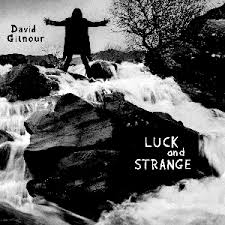
David Gilmour returns nine years after his previous solo album. He announced his return with the leading single ‘The Piper’s Call’ a while ago now. “Luck and Strange” is David’s fifth solo record since he embarked on a solo career in 1978. Of course, he was also in Pink Floyd back then and has been in sporadic reunions. Many have said the Pink Floyd albums he did without one of the founding members, Roger Waters, are nothing more than David’s solo career concealed behind the band’s name. Especially “The Endless River”. I bought that as a Christmas present for a family member. They were left unimpressed as it was full of guitar solos and instrumentals. The only track with vocals on was a soundbite of the late Stephen Hawking. I have heard the record and concur that it is just David performing guitar wizardry.
I find it quite odd that after 46 years as a solo artist, David has just released five albums. Okay, he has done records with Pink Floyd, but even they have been quite lengthy album-to-album. I also found it rather bizarre that he appeared on Later…with Jools Holland in the ’90s when he wasn’t on tour or releasing any material. His estranged former band member Roger Waters hasn’t released many himself, with 4 in over 40 years. Is this a way of signalling yet another reunion? They seem not to care that much about releasing their own material. Especially in the modern era, when promoting an album via a tour is necessary. Or is it a case of them needing each other to bounce ideas off but being too stubborn to set aside their differences?
As much as my political views do not align with David’s or the fact I wasn’t born with the fine bone china spoon in my mouth, I will not let this blur my judgment on how great a guitarist he is. Besides listening to him, whether solo or with Pink Floyd, the way he plays is effortless. He doesn’t even look like he is concentrating. He is that smooth. My favourite solo of his will always be from ‘Comfortably Numb’. His axe-manship is also easy to define. It doesn’t matter if he is collaborating or not. You know it’s him. I cannot recall when I first heard Pink Floyd, but I remember seeing this really cool sleeve of “Dark Side of the Moon” and thought I’d listen, and it remains one of my favourites. I loved listening to it when I was baked. It didn’t encourage me to seek out David’s solo work; I just wanted to do it anyway because I found him to be a great guitarist.
His next solo album, “About Face,” was released in 1984, and it is considered his best by his fans and peers. Although he wrote most of the songs, he co-wrote a few with Pete Townshend. Returning to his relaxed approach to releasing albums, his follow-up was an astonishing 22 years in 2006 with “On an Island,” during which time he was chastised for using his wife as the songwriter.
Of course, it would take another nine years before he released his third album, “Rattle That Lock,” another record that received scathing reviews from the critics. ‘In Any Tongue’ was one of the few tracks that was any good. I imagine the critics savaged David again because he employed his wife for songwriting. However, it’s important to note that ‘Rattle That Lock’ was a vast improvement on “On an Island,” a sign of hope and optimism for the future.
Another nine years after his fourth album is “Luck and Strange”, which I have enjoyed listening to so far. It seems David has regained his hunger, and it was well worth declining Noel Gallagher’s request to do the solo on ‘Easy Now’ because he was busy recording this. Again, his wife returns as lyricist, his son on backing vocals, and his daughter takes lead vocals towards the end of the record. I actually think it’s the last track, but it has been over a week since I last listened, so my memory hasn’t been jogged.
Hindsight is a beautiful thing, and maybe I should have sought out the extended edition, which has an additional two tracks that are instrumentals. David isn’t a strong vocalist, but he is superb when he lets his guitar playing do the talking. The opener is called ‘Black Cat’ and is your quintessential David Gilmour sound. ‘Vita Brevis’ is a brief acoustic track over an album brimmed with long tracks that features sudden silence before going back into it. The final track is an extended version of the title track. It is dubbed ‘Luck and Strange Original Barn Jam’. This appears to be added as filler, but it’s David with his band having fun and goes on for 12 minutes. The guitar playing is once again effortless.
On the shorter version of the title track, David has added the keyboards of his late bandmate Richard Wright. This is a beautiful and nostalgic tribute to him. Does it sound like Pink Floyd for this reason? It probably does, invoking a sense of nostalgia. However, I find that David’s solo material is more removed from the band.
‘Dark and Velvet Nights’ is another highlight with organs and an ear-bursting sound. ‘Scattered’ has a piano solo, and you would expect David to follow it up with a guitar solo on this progressive blues track, but instead, he starts singing. ‘A Single Spark’ is a ballad with David at one with his Fender Stratocaster. I can just imagine him closing his eyes and falling into a trance as he plays effortlessly.
I feel ‘Between Two Points’ with his daughter Romany doesn’t get the love it deserves. The penultimate track addresses misogyny with lyrics written by her mother, but that isn’t why I like it. I like Romany’s vocals on this family affair track backed up by her father’s almost vocal-like axe-manship. ‘Sings’ is an acoustic ballad, which isn’t all that, I’m afraid. It’s a bit bland for David’s calibre. ‘Yes I Have Ghosts’ is a folk track over an acoustic that might not please the purists. The record, which I was shocked to see usurp Oasis, is…I don’t know. I love his solos and overall playing, but there isn’t a punch to it. The lack of ‘punch’ in the record, in my opinion, is due to the lack of dynamic changes and the consistent mid-tempo pace. It is mid-tempo to a plod. There’s not much change in the tempo—nothing to really get you moving.
In conclusion, I would encourage you to savour David Gilmour’s sublime playing and effortless solos. This is the heart of the record, a true reflection of David Gilmour’s artistry. The album itself is a typical display of his carefree attitude towards recording, a trait he often exhibits. He hints at a follow-up after the tour. As I said, this is a celebration of his guitar mastery, above all else.
Song recommendations: ‘Black Cat’, ‘Between Two Points’
I have decided to do a track-by-track review because it is the legends that are Blur. However, before I get to the review, I will introduce the band, as this is my debut review of them. They were formed in 1988 and initially named Circus before changing to Seymour. Damon Albarn was the sole member until bassist Alex James joined. Drummer Dave Rowntree followed in October before Damon recruited his childhood friend, who met when he moved to Colchester lead guitarist Graham Coxon. They then signed with Food Records in 1989. The label drew a host of names for the band as they were not keen on Seymour. They would decide on the name Blur.
They went on a UK tour in 1990 and released their debut single ‘She’s so High’, which reached 48th in the chart. For their following single, they worked with producer Stephen Street known for working with the Smiths and Morrissey, who the band were fans of. Stephen would produce the Stone Roses-esque ‘There’s No Other Way’, an instant hit with music fans and would peak at no.8 This would propel their status in the industry, but their third single ‘Bang’ was a total disaster peaking at no.24. Their label encouraged the band to keep the sound in line with the music coming out of Manchester at the time, dubbed Madchester. Their debut album, “Leisure”, came out in 1991 and charted at no.7.
Despite their mild success, they found themselves 60,000 pounds in debt and did a US tour in 1992 to clear their debt. They released their 4th single, ‘Popscene’, to promote the tour. It may only have charted at no.32, but the single would cement the Blur wall of sound we can still hear. The US tour was a bomb scare, with the members fighting and arguing.
When they returned, they worked on their second album, “Modern Life is Rubbish”, released in December, but then rejected by the label and wasn’t ready for release until May 1993. ‘For Tomorrow’ was 28th, and the record charted lower(15th)than their debut.
Their third album, “Parklife”, released the following year, got Blur the recognition they finally deserved. It helped that Oasis was being talked about and revived the Indie scene. For Blur, ‘Girls & Boys’ went in at no.5, their highest entry, but even better was “Parklife’, which became their maiden no.1 album. The band would win four awards at the 1995 Britannia Music Brit Awards.
The band would release “the Great Escape” the following year, which also went in at no.1, and they also went head-to-head with Oasis summer when they pitted their ‘Country House’ against the Mancunian’s ‘Roll with it’. Blur would beat Oasis to the no.1 single spot, and in the process, the media made up a bullshit ‘war” between the two bands, which saw fucking brainwashed idiots taking sides instead of appreciating both bands’ music.
Blur released their self-titled the following year, departing from the “Britpop” sound. Especially with the heavy rock song ‘Song 2’. Their first single, ‘Beetlebum’, a song that Noel Gallagher recently confessed that he thought was their best song and wished he had written.
Blur gave themselves a bit of a break and released “13” in 1999, which spawned the hits ‘Tender’, and ‘Coffee & TV’. “13” was yet another no.1 record. The next album would be in 2003 without their lead guitarist Graham Coxon and would be replaced by the Verve’s Simon Tong (Yes, his brother was the drummer for Bloc Party). “Think Tank” would also at chart no.1. There were several rumours in 2004-07 of the band working on extended plays, but these never happened, and without knowing it, the band disbanded.
They would reform in 2009 for a Hyde Park show, but it was Glastonbury, which would prove successful, and the fans hoped the band would stay together. They also headlined Oxegen and Tennents in the Park the same year. The band released their second greatest hits album after the successful reunion shows.
There would be several accolades and documentaries released before 2015 when the band announced they were back with their original lineup and released “the Magic Whip”, recorded in Hong Kong during a five-day visit in 2013. The band would hibernate after touring “the Magic Whip” until 2019 doing a special gig in London.
This brings us up to the present, where the band played EE Stadium, Wembley last month, and then played “the Ballad of Darren” in its entirety at AventimApollo last month. This will be the only time the new album will be played in its entirety live. The event was broadcasted online via a paywall, and of course, those who got tickets to witness it at the venue. Now, let’s get on with the review. I have given a long enough introduction to the band. I will also add that the album is named after their late security guard Darren “Smog” Evans:
the Ballad:
The opener begins with a drum machine that sounds tinny over minor keys and reflective vocals. This appears to be a hallmark of Damon’s solo material, but luckily for him and the listener, his bandmates from Blur are there to give the track more life akin to Blur. Graham Coxon especially rescues the song with his unique guitar playing and his backing vocals, then Alex James with his signature basslines. It is like Blur hasn’t had to shake off the rust of being absent from the studio for a decade.
St Charles Square:
For me, this track was the quintessential sound of Blur from the 90s and reminded me of tracks such as ‘Girls & Boys’ and ‘Charmless Man’. Again, Graham takes centre stage with his overdrive guitar tones.
Barbaric:
This is Damon putting the Gorillaz sound onto Blur. The subject, though, is not of the kind associated with the Gorillaz, as it is about a relationship falling apart and one of the lovers being hopeful yet bitter about it. However, they adopt something that Damon’s now friend Noel Gallagher is exceptionally good at blending melancholia lyrics over upbeat instrumentation. Staying with the Manchester thing, this track has an instrumentation that Morrissey and Johnny Marr excelled at within and outwit the Smiths. Graham Coxon’s intricate guitar playing gives the melancholia of Damon Albarn hope.
Russian Strings:
A more delicate side to the band, which sounds like ‘the End’ with overlaying guitars slow fading on the outro.
the Everglades:
So far, ‘St Charles Square’ is the only track that has resembled Blur’s 90s sound, and this track doesn’t give us a glimpse of it happening anytime soon. In fact, with the plodding acoustic guitar, this is more Simon and Garfunkel, complete with strings.
the Narcissist:
This was the track that everyone heard before the album was announced, and it was safe to say that it was an instant hit with their fans, but also music fans in general. Again, another track with melancholia but enveloped in 80s pop and 90s American Indie, so an example would be the kind of music associated with Pavement. There is also that tinny drum machine featured at the beginning of the record with Dave’s stomping drums to save the percussion element. Who wants to listen to a cheap drum machine without an actual drummer? This song is already featured in the band’s encores of their “the Ballad of Darren” tour, which shows that this track is already on its way to becoming a Blur classic.
Goodbye Albert:
Graham’s axemanship shines through as he blends aggressive with tender playing through the use of the pedal effects, so there is a lot of distortion. Alex hasn’t gone for his rapid playing on this, but rather a sense of delicacy with the bass. The lyrics delivered by Damon are him departing from his youth and entering into a more mature yet darker side of getting older. Also, as he confessed to Zane Lowe recently, he finds it difficult to sing the early Blur songs because his vocals were more youthful then, and now his vocals are a lot more bassy as he has got older. This song may be about Damon letting go of his youthful vocals and adopting the bass vocals he has acquired with age.
Far Away Island:
Damon has done many far-out projects outwith of Blur, and this one is a Brian Eno-esque experimental track. A psychedelic track over strings, with Damon adopting the vocals of a junior school kid. Will it go down well with the fans? Why not? Brian Eno makes far-out songs, but it works. You have to look at U2’s “the Joshua Tree” as a good example.
Avalon:
As we approach the end of the record, you can sense a more upbeat vibe as ‘Avalon’ opens with horns. The track itself hints towards uplifting moments, which is briefly interrupted by the sound of fighter jets ready to engage in aerial combat. The lyrics reflect the fighter jets in aerial combat, but there is a particular sinister lyric where Damon says, ‘Then I overdo my dose, and I don’t even know I’m here anymore’, which could also mean that the fighter jets are a metaphor for one taking an overdose to end their life. However, after that verse, Damon utters the line, ‘but the glass is still half-full. As mentioned earlier, the track, on the whole, is uplifting and full of optimism, then countered with the fighter jets sample. This could well be Damon feeling in turmoil about the future. I am unsure why he would feel this, as he is among the great songwriters.
the Heights:
A nod to the late David Bowie with an acoustic guitar at the intro that sounds like David’s tenure as Ziggy Stardust and the classic ‘Space Oddity’. Damon’s vocals follow. Then, of course, the rhythm section consisting of Alex and Dave brings the uplifting element. Graham had a backseat over this Sgt Pepper’s-esque track, or their counterparts Oasis who had the Beatles-esque ‘All Around the World’. Unfortunately, although they tried to element that exquisite sound of the Beatles, or Oasis, it didn’t work. The track has far too much going on, so it sounds like a mess. The band should have finished on ‘Avalon’. Yes, it had brief melancholic moments, but the rest was bombastic and uplifting.
Overall:
I will add an overall summary because you might look at the track-by-track review and think, “Fuck that. It sounds shit”. However, that is not the case at all. Yes, it is an experimental laced with Ziggy Stardust, Brian Eno, and Pink Floyd, but that adds to the mystery of Blur. They shouldn’t be known as an Indie outfit, but that is willing to evolve, and that’s the case here. I sincerely hope the band do not call it a day after the current tour because they are working as a unit in the studio and onstage. Damon and Graham have had strong chemistry since the band reformed in 2009, and the music is better for it.
Song recommendations: ‘St Charles Square’, ‘Avalon’, ‘Far Away Island’
Serge Pizzorno was born to be the frontman since Tom Meighan’s valid departure. Serge has been brilliant taking on the role during the current tour. Seeing the band and the ferocious levels of energy Serge brings has been a pleasure. The new album incorporates the S.L.P., which is the solo moniker of Serge. Here is the reason why in a track-by-track review coming up shortly. Firstly, I would like to say that maybe the purists will not like this new-sounding Kasabian, but for me, it works. You have elements of hip-hop, grime, indie/alternative rock, and futuristic sounds.
Now, onto the review. I am not sure how this will play out; I might get carried away, or it might be short. Bear with me:
ALCHEMIST:
STOP SHOUTING! You discover that the majority of the titles are stylised in block capitals. The opening track is the sound of waves crashing, which is unusual for an album by Kasabian; however, this is under Serge’s command. Serge sends a clear lyrical message about the direction the band is heading under him. The lyric ‘Shut the door on your way out if you’re leaving’ is a clear message to those fans who dislike the new dawn because It IS a new dawn.
SCRIPTVRE:
Unlike many of you who saw the band perform live, my introduction to the new Kasabian was when they appeared on the Spring edition of Later…with Jools Holland. I loved Serge’s energy during this performance and how he had the audience, fellow artists, and Jools Holland in the palm of his hand. I loved the attitude in his vocal delivery/ rapping and the profound lyrics that indicate the onus now put on him. This performance alone showed me that the band were in safe hands under him.
ROCKET FUEL:
The first track that reflects the remnants of the old Kasabian in terms of how it keeps your attention; the track is more suited to beat break with 808s, hi-hats, and hip-hop( Expect a lot of hip-hop and grime.).
STRICTLY OLD SKOOL:
Serge again touches on the changing of the guard and how he brings a sense of originality to his concept for the band.
ALGATYR:
Another track that was performed on Later…with Jools Holland. The vocal sound effect is adopted by bands such as Muse, who use it significantly in their “Supermassive Blackhole’ song. The overall sound is powerful, and Serge’s rapping could efficiently be utilised over a grime beat. Another song full of energy and lends itself more to grime than Kasabian’s once rock sound.
AE Space:
Why, oh, why do artists/ bands do this? I have no time for interludes/preludes. They are nothing but short throwaway tracks where either the lyrics were not built upon or simply the writer(s)couldn’t be bothered. These intermissions, to me, are merely a “Fuck it. That’ll do” moment on an album.
THE WALL:
A melancholic song about relationship troubles.
T.U.E(the Ultraview Effect):
This one has the essence of a Pink Floyd song and certainly takes its roots from progressive rock.
STARGAZR:
Futuristic sounding track with keyboards gives it that space feel before completely turning on its head after the halfway point and becoming more hip-hop that you would have heard in the 1990s. Not surprising when you consider that Serge would have grown up with that kind of hip-hop being a young kid in the 90s.
CHEMICALS:
Now, I did hear this one before the album was even named. I believe they were performing in Glasgow. I remember seeing this on YouTube. Serge’s message is, “It’s going to be tough without Tom, but stick around, and things will improve under me”. It’s more a song of assurance addressing the fans.
AE Sea:
Another pointless interlude includes the sound of the waves crashing. A moment of calm, if you will, on the record.
Letting Go:
The acoustic guitar makes an appearance to close out the album. A song of what’s been has passed. Serge talks about the past, referring to the old Kasabian and the future with him at the helm. He even brazenly adds at the end, ‘It just got better now’. When you hear this record, you will understand why. This is the new dawn, and it’s going to get better. Serge is taking Kasabian into another realm, and you want to jump on the spaceship for it.
Song recommendations: ‘SCRIPTVRE’, ‘ALGATYR, ‘STARGAZR’
My introduction to Coldplay was the year of their debut album “Parachutes” at the start of the millennium. It wasn’t ‘Shivers’ I heard either, but instead their classic song ‘Yellow’. While on a break in the common room at sixth form college, I remember hearing it on Radio 1; I think that was the station, and the DJ was Chris Moyles. I loved the idea of someone ready to do all crazy things to prove their love to another. Not to mention the instrumentation itself. Later that day, I went home to do some coursework and download songs through Napster (Remember that?), and of course, ‘Yellow’ was one of the tracks.
“Parachutes” was a tremendous debut album, and everyone thought they would follow in the footsteps of Oasis, but the band had other ideas from the second record onwards. Indeed, Chris Martin said the band was created in the same image as his idols, U2. U2 upset many people when they changed from punk to make music to appeal to a broader audience.
However, unlike U2, Coldplay is the marmite of music. You know where I am going with this, so there is no need to explain further. Some idiots follow like sheep and believe it is “edgy” and “cool” not to like Coldplay, whereas some simply do not like their music because they changed dramatically after “Parachutes”. I do not care what music they make because I enjoy it regardless and respect their creativity. I have been slaughtered for liking the band. So why do they have such a vast fanbase if many hate them? Well, it all boils down to their live shows. There is something magical about seeing them live. Like U2, they can have the audience in their palm at any stadium and are frequent headliners at signature festivals. Regarding live performances, Coldplay is the second most significant band in the world behind U2.
However, when becoming a considerable stage presence, frontman Chris Martin might have lost his edge to write songs in the studio. Their last album was 2019’s “Everyday Life”, which, in the many accolades the band have received, was a massive disappointment as it was their first album in 20 years not to go multi-platinum. It didn’t fare too well in America, neither where the band are top-rated. “Everyday Life” didn’t get close to the sales made by 2015’s “A Head Full of Dreams”, which featured the likes of Beyoncé, Tove Lo, and their good friend Noel Gallagher (I recommend watching the film of the making of the album, and the tour.) I am not sure why the previous record didn’t do well. Maybe people didn’t like the concept of the band experimenting with African and Gospel. That’s what the band are about, though. Experimentation.
The band didn’t run away after the disappointment of “Everyday Life”. Its poor reception has motivated them to return more robust and show people that they are keeping their standards from slipping after 20 years at the top. Coldplay is still played on Radio One during the pop-friendly daytime, unlike most of their counterparts who have been consigned to Radio Two as their music isn’t “hip enough”.
To make their presence known, the lead single ‘Higher Power’, which is a track that is the Weeknd-esque with the electronic 80s theme, was premiered in the Mercedes advert to promote their new electric car after Chris had stated the previous year that Coldplay would not be releasing anything until 2022. It took many by surprise; some said that Chris was a hypocrite for saying such a statement and using it in the advert for Mercedes. It also boomed out in the International Space Station. So from there, only a few expected a new albumby the band, going by Chris’ comments. Even though ‘Higher Power’ was released, many still expected that to be the sole materialreleased until next year.
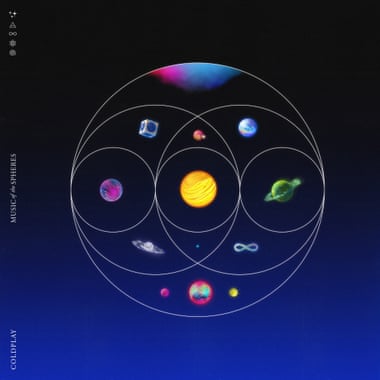
The collaborators of the previous record were not acquired for “Music of the Spheres”. Coldplay got Max Martin on board toproduce the album and gave him complete control. Max brought in the likes of Selena Gomez and theextremely popular K-pop boyband Bangtan Boys, aka BTS. I also like that London’s Jacob Collier was also acquired.I can imagine the criticism they will get for working with BTS, but Coldplay has always known that the best way to garner new fans and appeal to a broader audience is to remain relevant in the pop charts. Who knows, maybe some BTS fans have been turned onto Coldplay through the collaboration. That is what the band are aiming for. Remember that most music is now streamed via Spotify, so that the streaming hits will propel the band even further.
This is familiar for the band in that they have made tracks like ‘A Sky Full of Stars’ and their 2015 album ‘A Head Full of Dreams’ while featuring guitars was centred around electronica. On“Music of the Spheres”, I noticed that the synths feature prominently and are the loudest instruments. On a side note, some songs do not have names but are represented by emoticons or, as the youngsters call them, “emojis”. You need to go to Wikipedia to have a rough idea of what they are called. For example, the title track is stylised as an emoji of Saturn. Who would know that that planet represented the title track’s name? I know the band has used emojis as the names of songs before, but although it is unique and fun, it could be clearer at the same time to decipher the name. The track featuring BTS shows their dynamic ability and blends into the K-pop scene. Of course, there are also moments of what we know the band to be on tracks like ‘Humankind’ with an element of Van Halen’s ‘Jump’ or Huey Lewis and the News ‘Power of Love’. ‘People of the Pride’ sees the band again flirt with Experimentation as they try to sound like Muse. However, this time, Coldplay appear to be out of place.
What annoyed me about the record is that there are many instrumental tracks that I have classed many times on previous reviews as simply throwaway tracks that shouldn’t feature on albums. The record does drag somewhat, and it is a welcomed relief when the ballads arrive. My favourite, of course, was ‘Human Heart’ or rather just a heart emoji featuring the highly talented multi-instrumentalist/producer Jacob Collier, who always uses his falsetto range. Now, I usually detest that piece of shit known as auto-tune, but it is used correctly to give Chris a Bon Iver effect on his vocals this time. Yes, Bon Iver’s Justin Vernon is the only artist I can think of who uses auto-tune to better his vocals. I can’t believe I am saying this, but ‘Human Heart’ is one of my favourites off the record because it sounds like a Bon Iver track.
The obscurely named ‘Biutyful’ (From what I got from listening, it is pronounced “Beautiful”) sees the band try their hand at K-pop without the help of BTS. It works and has a beautiful melody. One wonders what the song’s original concept would be and why they decided to take a leap of faith in K-pop. The theme of the record is centred around the Universe. Indeed, the subtitle is “Volume 1. From Earth with Love”, which fits in with the humanitarian ways of Chris Martin. Chris is all about saving the planet. The album closes with ‘Coloratura’, which is far removed from most of the sound on the record.
This 10-minute and 17-second track is your typical Coldplay anthem that rings out in the large stadia they perform in. The song includes strings during the instrumental breaks and synths that sometimes stand alone. The record itself is…well, a bit mental. There is no structure evident (If there is, fuck knows where.), and it reminds me of an album called “the River” released by Pink Floyd during the last decade. That record also needed an actual structure in place.
However, I did enjoy “Music of the Spheres”, but it appears the band has rushed this rather than taken their time to make the album more structured. You go from an instrumental into a track, then a ballad, then a track that can’t make up its mind, whether instrumental or vocal. This is where Coldplay have fallen, in my opinion, on this album.
Song recommendations: ‘Human Heart’, ‘Biutyful’, ‘Humankind’




 Honest Opinions