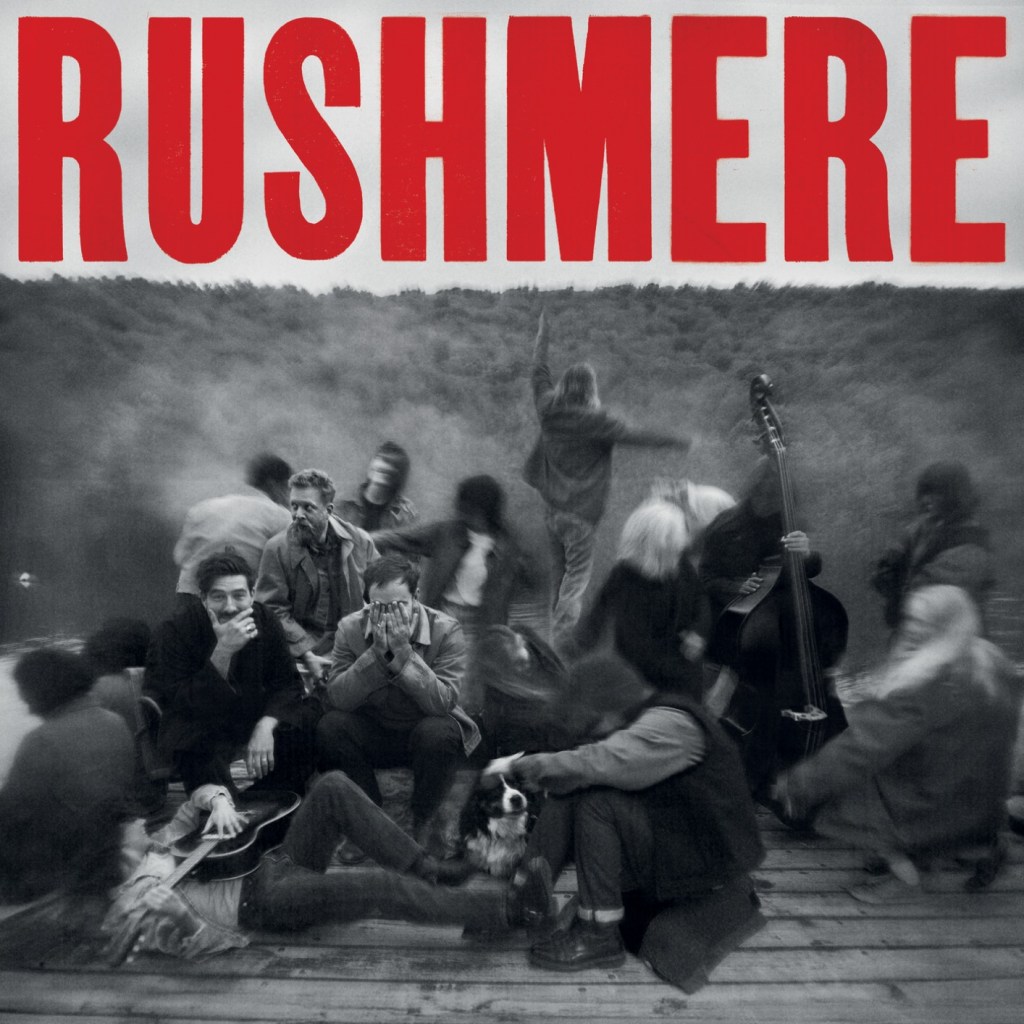
Week 14: Mumford & Sons- Rushmere

Mumford & Sons. The name alone has me picturing folk and Americana and the familiarity of the banjo. It took me a while to come around to their music. I didn’t dislike them; I found “Sigh No More” ideal as background music. But they never quite captured my full attention, remaining a band I politely tolerated rather than passionately embraced.

However, over time, their music began to seep into my consciousness, altering my perception and kindling a newfound appreciation.


It was 2015, and I was settling in to watch “Later…with Jools Holland,” expecting the usual mix of established acts and rising indie darlings. When Mumford & Sons performed, I expected to hear the usual. I was utterly taken aback by what I heard.


What followed was a sonic jolt. The band launched into “The Wolf,” a track that shed the banjos and acoustic guitars in favour of distorted electric guitars, driving drums, and a raw, almost primal energy. That folk element everyone had been accustomed to was replaced by a full-blown rock attitude. I was completely taken aback. This was the side of the band I had yet to have heard.

It was a revelation. The track was powerful. Signalling a significant shift in the band’s sound. It was a risk that paid off. After that appearance on Later, I decided to give the band a proper chance, diving deeper into “Wilder Mind” and re-evaluating their entire discography. I particularly enjoy watching/listening to their live shows.


Now, let’s delve into some background on this West London ensemble. Mumford & Sons, formed in 2007, comprising of members Marcus Mumford (vocals, guitar, drums, mandolin), Ben Lovett (vocals, keyboards, accordion, drums), Winston Marshall (vocals, banjo, guitar, dobro. Winston left the band in 2021), and Ted Dwane (vocals, bass guitar, double bass, drums, guitar). They quickly and impressively rose to prominence with their distinctive blend of folk, Americana, rock, and bluegrass, characterised by their soaring vocals, intricate instrumentation, and introspective lyrics. Their early albums, including “Sigh No More” and “Babel,” were massive commercial successes, cementing their place as one of the most popular bands of the decade.


However, with “Wilder Mind,” they consciously moved away from their signature sound, embracing a more electric and expansive sonic palette. While the change would inevitably divide fans, it opened them up to a broader audience and allowed them to explore new creative avenues.


What followed was the 2018 album, “Delta”. Another record showing their ambition and their willingness to experiment with various sounds, and connect with a global audience. Their collaboration with African musicians such as Baaba Maal seemed to have inspired this direction, making their music resonate with a wider, global audience. It may not have sounded like their first two albums, but it proved that they could push the creative boundaries. Now we are up-to-date on what the band released and Winston Marshall’s departure amid controversy in 2021; we will crack on with the review “Rushmere”—their first record in a staggering seven years.


Why “Rushmere”? The title carries a double meaning. Rushmere, a lake in Wimbledon, South-West London, is where the band formed, and this record is a return to their roots. The album, therefore, is reflective. Recorded in RCA Studio A, Nashville, and their home studio in Devon, this period from 2022 to 2024 was their most productive. Interestingly, frontman Marcus Mumford released a solo album the same year the band returned to the studio. This decision might have been influenced by a conversation with Noel Gallagher in a London pub, where he challenged Marcus to fully utilise his songwriting talent, both as a solo artist and with the band.


As usual, the songs ease your soul and are just the tonic when you feel the world’s weight on your shoulders. The album itself has a confessional lyricism and offers hope as the record goes on. So stick with it, even though the beginning is downcast.


Despite the melancholic verses, the opener ‘Malibu’, also their latest single, starts with that unmistakable rousing chorus.


It’s intriguing that others, rather than just the band, wrote a few songs. Adele and Liam Gallagher songwriter Greg Kurstin is one of them. He writes the title track and sends it in a Fleetwood Mac direction. The band’s adaptation of Fleetwood Mac on ‘Caroline’ is a fascinating development, suggesting a new direction for their music. More than likely drawing inspiration from Greg’s song.
Returning to the title track, it was the teaser and leading single. It is a song that is the quintessential folk side of the band enveloped with Fleetwood Mac. ‘Monochrome’ is a romantic ballad that somewhat lightens the mood.


’Truth’ is when the mood shifts, with Marcus radiating confidence over the track. However, this confidence is short-lived, as we soon arrive at the fittingly titled ’ Surrender’. While I believe this is the piano ballad, it’s been a few days since I last heard it, so my memory might not be entirely accurate. In the early section of the song, you can hear his vocals breaking, a clear sign of the emotional depth he’s delving into. Marcus’s performance is a masterclass in emotional expression as he transitions from powerful vocals to tender ones, reflecting a profound ache and a heart struggling to heal.


As I mentioned earlier, the album is reflective, and the lyricism mirrors that. You believe every heart-shredding vocal that Marcus delivers. It’s the same as when he delivers vocals displaying optimism. While the band has always been known for their jovial and forthright songs, this album marks a significant evolution, showcasing a level of maturity we haven’t seen before. The record harks back to the heady days, a nostalgic treat for those who appreciate it. As for me, I’m still processing my feelings about it. However, I can’t help but admire the depth of the lyricism. The album’s conclusion with ‘Carry on’, a song brimming with hope, is a fitting end.


Song recommedations: ’Carry on’, ’Truth’, ‘Malibu’

7/10
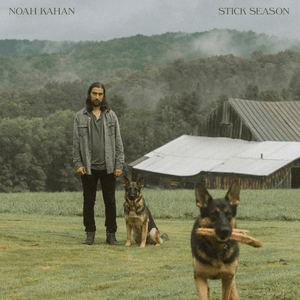
Week 7: Noah Kahan- Stick Season

I was astonished to discover that “Stick Season” was released in 2022, with the latest single ‘Homesick’ released last month. The album is named after autumn before the snow arrives in New England. 

In 2020, Noah teased the title track on TikTok, which inspired many covers, several reviews, and comments by the likes of Maisie Peters, who I reviewed last year.

I don’t know much about Noah, but his first two records were quite poppy, whereas his third effort is all-out folk. This album is almost certainly folk. It sounded like a combination of Mumford and Sons, Hozier, Lumineers, and Vance Joy. Noah said in an interview that this is the kind of music that he prefers to do. God knows why, then, the first two records were pop. It’s probably pressure from the label for marketing purposes.

Along with Gabe Simon, Noah himself is on production. That doesn’t particularly stand out for me because folk is easy to listen to. It’s the songwriting where this album is at. You would think, as this record was done during the midst of the lockdowns, that it would be centred around that, but no. Noah chose a more reflective album where he wants to leave home, longs for home, and deals with the unfinished business of returning.

He addresses several subjects, including mental health, such as ‘Growing Sideways’ and ‘Stick Season’ of growing tired of home. The latter sees Noah talk bluntly about hating home. The record closer, “The View Between Villages’ is about when he drove back home. He feels excitement returning, but he also knows he will start to loathe the idea. It is apt that it ends with him on a journey because the album is life’s journey. In the beginning, he is angry; during the midway point, he is feeling sad, and by the end, he has accepted life. I found it hard to pick song recommendations because I like the bulk of the album. My choice varies the more I listen to it.

Song recommendations: ‘Growing Sideways’, ‘Northern Attitude’, ‘The View Between Villages’

8/10

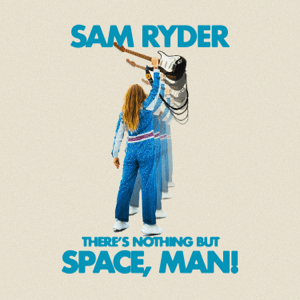
Week 50: Sam Ryder- There’s Nothing but Space, Man!

Now, my family have always been one to watch Eurovision, no matter how crass the songs are. However, I became hooked in 2014. I felt the competition had upped its game. You were now getting more house and RnB-type songs. One year, there was even a drum n bass track by Austria or something like that. Anyway, Sam Ryder finished second (Should have been first.) behind Ukraine, who had a fucking awful song that wouldn’t have got a sympathy vote from the public if it wasn’t for the current situation. It would have finished last. ‘Space Man’ was by far the best song there. I don’t root for any nation, but Sam Ryder was robbed.

So, where did Sam come from? I didn’t know of him until he showcased his ” Space Man” song on BBC’s One Show. Friends of mine, particularly from Glasgow, filled me in on Sam and his popularity. Sam uploaded covers of popular songs to TikTok, where he gathered an off-the-scale following. I enjoyed the song, so I was looking forward to what his album would be like.

Despite his recent rise, Sam has been familiar with music. He fronted some bands, did busking and wedding receptions. He also had his own Juice bar business. 

What I liked about this record is the number of influences in his songs from Sam Fender, David Bowie, Elton John, Sum 41, AC/DC and club music. The opener is ‘Deep Blue Doubt’, and I couldn’t help but feel a Sam Fender-Esque vibe going on. The song could easily be mistaken for Geordie Sam from the instrumentation to the vocal delivery. It is my personal favourite off the album. Already a solid start and a twist of what to expect. This certainly sounds different from ‘Space Man’. The Fender horn section was missing from ‘Deep Blue Doubt’. ‘Somebody’ taps into Sam’s inspiration for funk. If I remember rightly, I thought while listening to the track; it reminded me of Nile Rodgers and Chic.

‘Tiny Riot’ is aptly named and an intriguing listen. You have the presence of Bring me the Horizon, but if they performed soul. I do not remember Bring Me the Horizon ever doing that, but this would be the result. Olly Sykes could also carry it off because of his vocal range.

‘All the Way Over’ is the first real reflective moment as he performs a piano ballad, which showcases his vast vocal range, complete with a bombastic outro featuring an orchestra. He then goes into A Day to Remember mode. Not the band at their rockiest, but more the quiet and gentle acoustic moments for his mid-tempo ‘OK’, so even though he does pick the tempo up, it is only slightly.

You may be wondering why I mentioned the late David Bowie; it’s more to do with ‘Space Man’ and Sam’s fascination with all things in the cosmos. The song is laden with space references, and David did this during his Ziggy Stardust period.

Once again, Sam has added another layer to the album. ‘Put a Light on Me’ gives you a false impression as you hear the guitar at the intro before bursting into a club dance floor filler. I, for one, was surprised to find club tracks to feature. Even if this isn’t your cup of green tea, the hook alone will suck you in.

‘Whirlwind’ wouldn’t look out of place at the Grand Ole Opry. We go from one extreme to the other as Sam brings the tempo down to a folk ballad with excellent fingerpicking on the guitar, either by him or a session musician (We will have to wait for the tour to find out.). He slightly ups the tempo with ‘Ten Tons’, where he blends funk with a piano. The vocals appear to be Sam channelling the late George Michael. The song goes in the blues direction during the guitar solo. Again, who performs that? We know Sam can play the guitar, as witnessed at Eurovision.

Sam shows even more vocal versatility as he taps into the Lumineers/Mumford and Sons/Of Monsters and Men section with the uptempo and country pop ‘More’. The tempo then drops to another folk ballad, this time with ‘Crashing Down’, which is quite apt when you consider the title, and the context. He follows that with ‘This Time’, an upbeat blues number.

I will close this review with ‘Living without You’, my second favourite, and the record closer Sam goes full-on club with this. David Guetta and Sigala feature, and I cannot see this not filling the dance floors whenever it is played. It is so uplifting—a brilliant way to end a versatile album. Sam may have been on Eurovision and a TikTok star, but he is no passing fad. Sam has proven now he is in the door; he plans to stay around for a long time.

Song recommendations: ‘Deep Blue Doubt’, ‘Living without You’, ‘More’

9/10

Week 51: Taylor Swift- Evermore

Here is my track-by-track review of her 9th studio album and her second album release of the current year:

Willow:

This isn’t just the opening track of the album, but it is also the leading single. This is Taylor returning to her roots when she was gigging constantly across America to get herself noticed within the industry by basing herself on country music. It’s a bizarre choice as a single, as it hasn’t any of those typical pop traits to chart that high. It is pure country with its delicately plucked acoustic guitar. Her vocal delivery synchronises with the subject of being in love with someone, and you’re trying to make them feel the same way. Taylor expresses this by how we would feel in those moments. From feeling high and excited to feeling low and being unable to breathe from the panic that they don’t love you. There are also some deep lyrics within, so listen carefully.

Champagne Problems:

This piano ballad was written with her boyfriend, who uses the alias William Bowery (Of course, his real name is Joe Alwyn.). Is the subject matter supposed to be about their current relationship? Rather than about a couple in college who share very different views about a night where one wants to break up and the other wants to propose. I don’t know how happy they are, but I can’t see them dropping hints while writing a song together. I also learned that “Champagne Problems” is a phrase (I guess only in America.) that means when an individual’s troubles are genuine but, when put into perspective, are less important than how much others are suffering. Like with “Folklore”, Taylor touches on the very fragile subject of mental health. In this song, the female character mentions her problems with mental health and how the break up of her relationship has further impacted it. I am going to quote some compelling lyrics taken from the male character in this, as he is the one who has been left heartbroken. “Sometimes you just don’t know the answer til someone’s on their knees and asks you; she would have made such a lovely bride, what a shame she’s fucked in the head, they said, but you’ll find the real thing instead”. As you can see, the song is very emotional.

Gold Rush:

Wasn’t this also a song on “Folklore”? I can’t remember, but someone will tell me when they visit my archives this year. Bizarrely, the producer of this track only features once on the record when you consider Jack Antonoff has produced half of her songs over the past three albums. This song is more chart-friendly compared to the previous tracks on the record. This time, the leading character starts falling for someone popular among several others. Unfortunately for the leading female character, the other women chases the man in question. Still, just like the leading female, they are also looking for gold in California, which, when you think about it, makes the title make sense. The leading character becomes jealous and longing to have him, and she decides she can no longer chase him because she has no fight left in her and feels it is futile. Again, some lyrics stood out for me, and they are intense by the lead character. “At dinner parties, I call you out on your contrarian shit, and the coastal town we wandered round had never seen a love as pure as it, and then it fades into the grey of my day-old tea, cause it could never be”.

Tis the Damn Season:

What I found about Taylor’s songwriting is she can tell fables about fictional characters based on actual events or fables about her own life experiences. It is challenging to do the former, as you must design the characters and build the fable around them, but Taylor does this effortlessly. Once again, on this album, she has devised a character from Tupelo, Mississippi, who is leaving her town to achieve her dreams in Hollywood on the big screen. You may be wondering where the Christmas element comes into it. The lead character returns home to enjoy the festivities, where she stumbles across an ex-lover. As one of the lyrics depicts over this electric guitar track, she says how she is breaking her own heart by returning to Los Angeles, where everyone she meets is superficial, including the way she smiles, rather than remaining in Tupelo to get back with her ex-lover and feel loved and happy once more.

Tolerate it:

There appears to be a trend with Taylor and the obsession with the fifth track; the fifth track always seems to be a ballad with a heart-wrenching confession. “Evermore” doesn’t buck the trend. Again, the song is seen from the female perspective. She is sick and tired of devoting her life to her lover, and she is not getting much compassion or any form of emotional connection in return, so she is starting to hate and resent him for that. She has tolerated this behaviour for far too long from him, and now she is ready to confront him. This track perfectly depicts when love fades away from one perspective and turns sour from the other.

No Body, No Crime:

HAIM features on this, but it is based more on the country music scene, from what I recall, rather than the usual rock-based music from HAIM. As you can tell from the title, Taylor, with HAIM doing backing vocals, has gone for a topic about committing a murder. However, it is a double homicide told from different perspectives. The first verse is the narrator’s friend bringing up in a conversation that she thinks her husband is seeing another woman; in the second verse, her friend disappears, and the narrator is sure that the husband killed her and to avenge her friend’s death in the third verse, she kills the husband, but by doing this she compromises the case. Again, this is another powerful fable told by Taylor on this record.

Happiness:

The calibre of this song is quite astonishing when you consider it was the last one to be written in just under a week before the album was due to be released. Most might panic and therefore not put much effort into the last song they are writing just in case they miss the deadline by taking too long, but Taylor has managed to create a good song under that pressure and have it all done and ready to be included on the album. The story is both one of despair and optimism. The individual is going through the agony and six degrees of separation phase of splitting up with their lover, but they show signs of optimism, knowing that happiness will return once this phase has passed. The production complements the lyrics with its slow tempo and melancholic tone. Is the individual Taylor? It shows a mature approach to handling a breakup compared to her as a teenager, where she attacked every ex with venom over wax. If the character is indeed Taylor, then she has shown that as she has got older, she can move on and enjoy the next one to enter her life.

Dorothea:

Remember the track “Tis the Damn Season” earlier on and the unknown female? Well, this is her name and the continuation of the story. However, this is not told from Dorothea’s perspective but by her ex-lover. He was devastated when she moved to Hollywood and longed to be with her. He also ponders, now she is in L.A. chasing her dreams, whether she pauses to think about him. Although the subject is deep and emotional, the song has a relatively upbeat tempo.

Coney Island:

Now, I expected HAIM to feature, but the National? I wasn’t expecting that. Nor was I expecting a duet between Taylor Swift and Matt Berninger. However, I discovered that the National’s Aaron Dressner produces most of the tracks on this album, so it makes sense for Taylor to collaborate either by request or suggested by Aaron. The subject matter is once again that of broken love. This time, it is about a couple reminiscing on the relationship and how it fell apart because the levels of commitment were not balanced. The song also appears to be the couple trying to work out what went wrong and trying to see if they can try again. Taylor’s melodic vocals complement Matt’s customary raspy yet deep vocals.

Ivy:

The banjo is the main instrument this time. It features the first of two collaborations with Justin Vernon of Bon Iver (Later on, the entire band feature.) over a story about a wife committing adultery and subsequently falling in love with her secret lover. Even though she continues the affair as she enjoys the attention, she is trying to stay faithful simultaneously. It is similar to the story in “illicit Affairs” from the previous album and is also freakishly the tenth track.

Cowboy Like Me:

Another song inspired by her roots in country, the story is that of gold diggers who, instead of chasing those with wealth, end up falling for each other. Marcus Mumford from Mumford and Sons provides backing vocals. The song is also typical of a song likely to be composed by Mumford and Sons with guitars, mandolins, harmonicas, and anything from country music you can think of.

Long Story Short:

From an album steeped in country, this track departs from that with its catchy pop chorus, drums, and guitars out of indie rock. You can see this being on her albums before her current two. Taylor goes after the media and the misogynists who tried to ruin her career a couple of years ago (See my first review on the album where she goes fucking ballistic on those people for the whole story.). However, rather than getting herself worked up, Taylor’s vocals are balanced and calm. Even the lyrics are about not sweating the small stuff. She displays happiness knowing she is content in her relationship and that she is way past all this petty bullshit from her enemies. She writes lyrics to her past self to let these things slide and let her enemies defeat themselves by being starved of her attention and reaction. Taylor has shown a lot of maturity so far on the record.

Marjorie:

I am starting to wonder if “Evermore” is the continuation of “Folklore” with the topics, sound, and production. It seems like it is. Still, it doesn’t bother me a jot because I prefer Taylor when writing music in the genre her heart belongs to. Pop was to get a wider audience, but country is where her heart is. Also, there is another reason this is a continuation, and it is related to the thirteenth track of the respective albums. “Folklore” was an ode to her grandfather, who fought in World War II, and “Evermore” focuses on her grandmother, Marjorie Finlay, an opera singer whom Taylor didn’t appreciate until she passed away when Taylor was just a teenager. Taylor regrets this and wishes she could go back and fix this with her grandmother. It is also a grand, haunting gesture, that Taylor used her late grandmother’s vocals for the backing track. Sends chills down your spine.

Closure:

Many of us can relate to the topic here. I’m sure we have all been in a relationship where it ended badly, and we wanted to explain ourselves later on after the dust had settled as to why, but our ex simply refuses the closure and doesn’t want to know. This song describes that. In this case, it’s a male looking for closure from the female, but she has moved on and doesn’t find it necessary to explain it, rather than doing something to avenge the hurt he caused. The lyrics mention that he wants to remain friends after the closure and that he’s angry she won’t hear him out.

Evermore:

The closing and my favourite track. Sorry, but it’s got Bon Iver on it. What more is there to say? Justin Vernon and the rest of the band produce good music. I love this piano-based song with Taylor and Justin doing a cypher and harmonising together, which touches on depression with a mix of dark and optimism to end the album. The highlight is the cypher for me; it is scarce to see vocalists go bar-for-bar like they were rapping or sharing a poem.

Song recommendations: “Evermore”, “Coney Island”, “Long Story Short”.

8/10