Week 44: Dave- The Boy Who Played the Harp

I was stunned to discover that Dave hasn’t released an album in over four years, but as the review progresses, you will see why the wait was worth it.

You are probably wondering about why that title? Well, it is a biblical reference from the book of Samuel foretelling the story of King David. Quite funny, really, when the artist in question shares the same name.

The production doesn’t lean towards hip-hop and anything that might resemble a banging tune. Instead, it is more introspective, featuring piano, spaciousness, and ethereal tones. Occasionally, the harp features, and Dave even picks up the guitar on the 6th track.

In regard ot the themes, he focuses on dealing with fame, identity, legacy, being a man, faith, and how he has a sense of duty to his listeners and society. Rather than basking in his achievements, he questions what his roleand voice is doing to lead by example.

Now, part of the summary is out of the way; let’s look at the songs that caught my ear:

History:


The opener sets up the rest of the record. Dave addresses everything about himself. James Blake not only features on the track but also produced it, creating a typical atmospheric soundscape that he adopts, complete with tender piano and reverb space that allows the words to land, allowing the listener to engage with the thought-provoking lyricism from Dave, which is always interesting. I have never found him at a loss for words. In fact, let’s look at that on here. Dave refers back to King David, and as the record progresses, you hear why he uses this biblical figure to illustrate power, vulnerability, and how music heals the soul. Never mind, if the track is not for the commercial market, but rather the lyricism and the matching mood of the music.

Chapter 16:


What more can you say? It features the amazing Kano. I have been a fan of Kane since the early days of grime, so this track was never going to be skipped. The pair trade verses, discussing their legacies, the rap game, and how they feel burdened by representing the scene. Once again, James goes for a minimalist sound with his trademark piano chords and a beat that allows for reflection.  Dave pays tribute to Kano, stating that he has been a fan of his since he was 14 years old. Kano also  praises his younger counterpart. The song connects all timelines of UK rap, with Dave accepting his role in its future, while also questioning what he wants and what he owes. The track could have easily been one of pure egotism, but Dave shows humility alongside ambition, and, of course, what his legacy is.

Raindance:


Unless you follow her closely, have seen her at major festivals, or watched Later… with Jools Holland, the Nigerian vocalist Tems, who features, will probably have escaped your attention. The Afrobeats-inspired track, over reflective piano riffs, is more light-hearted than the previous tracks. Dave is more playful with Tems. The lyricism focuses on Dave enjoying a night out, where he meets someone, apologises for future relationship struggles, and references the concepts of marriage and property. This track takes him out of his comfort zone with Afrobeats, but it works well with Tems, nonetheless. A bit of a breather from the heavier songs so far.

Selfish:


James Blake returns from the control room with a heavy, moody, introspective, and self-confessional collaboration. Dave examines what fame has cost him in life, including narcissism, and what his ambition entails. Dave also highlights how his bravado is often laced with self-doubt. A typical James Blake production, leaving Dave’s wordplay time to breathe. Another heavy, but lyrically intriguing track.

My 27th Birthday:


This nearly eight-minute track focuses on self-reflection, with Dave looking inward at his legacy, expectations, age, and how he has evolved.  Again, the production is more of the same, with a blues-inspired piano riff with looping vocals.  The lyrics are used as a metaphor for a day/year that’s in motion or standing still.  Dave once again examines his role in society and considers how he can utilise his voice to create a positive change in the world. He also examines how fame can be a burden rather than a blessing, as he feels that people are being cynical about the messages he is trying to convey. They are using his fame as a weapon against him when he is less likely to return to a life of poverty. A very deep listen.

Fairchild:


Dave gives a chance to the upcoming talent of Nicole Blakk and lets her showcase her views, where she discusses being the unfortunate victim of assault, which has triggered a fear of men, and her experience of misogyny. This evokes emotions in Dave about how incels behave, and he questions why his fellow men more often than not turn a blind eye to this unacceptable behaviour. Dave even questions if sometimes he, too, has shown misogynistic traits, which is perfectly portrayed in the line “All know a victim, don’t know a perpetrator, am I one of them?” It may be a heavy listen, but it is what you would expect from him. It’s a deep track with substance. It is refreshing to see a male address violent behaviour towards, whether he has unknowingly done it himself, and how he feels a sense of responsibility to make his fellow man aware of this abhorrent behaviour.

The Boy Who Played the Harp:


The closing and title track uses a sample from The Beatles. The track’s name eludes me at the moment. This track makes the premise of the album all make sense. The name, the purpose, the record’s identity, the burden he feels, and the activism displayed.  I love the premise behind the lyrics, as he places himself within historical moments, such as world wars and the civil rights movements. He ponders if, like in those moments, he can speak up, act, and lead when necessary. The title track, like the rest of the album, ends strongly, leaving the listener to ask themselves the very questions he did throughout. Bizarrely, though, there is no harp. Just a piano.

Strengths & Weaknesses


Now let’s address where the record is good, and where it falls down:


Strengths


Of course, it has to be his lyricism. I mean, after all, that is what he primarily is. Dave started as a spoken word artist before moving into rap. I love his wordplay, detail, reflection, and how he uses metaphors.

The album is streamlined rather than a mishmash of songs. There is a constant string of themes that remain consistent.

He isn’t coy about asking himself challenging questions, rather than doing a record that focuses on his success.


If you ask me, what are the highlights of the album? Well, it’s all of the tracks above.

When I get to the song recommendations, I’m going to have a think about what three stood out.

This is up there with his best work to date.


Weaknesses / criticisms


This is not my opinion, but looking at it from a critical point of view, you have to say that James Blake’s production is too moody and lacks dynamism.

The tracks are not chart-friendly, both in terms of lyricism and production. There is also a lack of hooks, which may hinder the number of plays he receives in the mainstream.

Some listeners will feel that the themes are more of the same, and doesn’t bring anything new to the table.

Coda


Although the album may not be that chart-friendly, it is full of thought-provoking tracks, which to me, is always better than sacrificing for the sake of the singles chart. It is up there with his best work so far. You just have to look at songs like ‘Fairchild’, ‘Chapter 16, and ‘My 27th Birthday’ to see the maturity in his writing, and how they all have a purpose. It may not have the hits that have featured on past records, but this is one for the deep thinkers, who will appreciate Dave’s approach.
My personal opinon is, I love it. A very strong record that cuts through all the bullshit.


Song recommendations: Chapter 16’, ‘Fairchild’, ‘The Boy Who Played the Harp’


9/10

Week 35: Wolf Alice- The Clearing

I recall telling you all that I was impressed with their previous album, “Blue Weekend”, which was released four years ago. As we all know, that is a long time in music; therefore, it is easier to be yesterday’s news. However, the period between “Blue Weekend” and “The Clearing” has seen them remain fresh and avoid the block, and they have certainly been working hard to make something special.


Markus Dravs was the producer last time, and this time they have employed another top producer, Greg Kurstin, and dare I say it, but he has bettered what Markus did. We have frontwoman Ellie Rowsell’s soul laid bare in songwriting and fantastic vocals with profound instrumentation. This record, much like “Blue Weekend”, is more autobiographical regarding Ellie, where she delves into her life experiences with utmost honesty.


Wolf Alice have never shied away from exploring new sounds despite them being heavily pigeon-holed in the indie punk category. There are new layers with every song you hear. Even though the band have been together for going fifteen years, the chemistry is still there, and it appears they are tighter than ever.


The opener ’Thorns’ shows their intent. Ellie confesses to being a narcissist and a masochist on this storm-cloud ballad. Quite a surprise to hear her say that. You would never have her down as a narcissist. We then have the confidence of the lead single,’ Bloom, Baby, Bloom,’ featuring a drum and bass element. We then have a track called ‘Just Two Girls’, which celebrates friendship between two females. The intimacy of this friendship is so palpable that it will resonate with the listener, evoking a deep connection.


However, it’s moments like ‘Leaning Against the Wall’ that capture the meaning behind Ellie’s lyricism and just an acoustic guitar on the folk track to drive the point home. Another one that highlights Ellie’s words is ‘Play It Out, which is a highly emotional piano ballad that will certainly move the listener. It addresses Ellie opting not to have children, but maybe as she grows old, she might repent at leisure.


Yes, the album has quite a bit of introspection, but it never becomes overly introspective. We have rock-pop energy in ’Safe in the World’, ‘Bread, Butter, Tea, Sugar’, and ‘Passenger Seat’to lighten the mood. It showcases the band’s ability to transition seamlessly from raw energy to introspection.

The end has two tracks that are in each of the spectrum: ‘White Horses’ offers the energy, and my favourite track ‘The Sofa’ sees Ellie reflect on her life and what she desires over tender instrumentation that is quite dreamy. It is indeed a track that took me by surprise when I heard it on Later…with Jools Holland, in the spring, because it is nothing like I have ever heard them do before.


You will hear several influences, including Florence and the Machine (Markus is known to produce for them), The Beatles, the late Sinéad O’Connor, Portishead, and, dare I say it, Taylor Swift. Having said that, Wolf Alice still maintains their identity. What the band have achieved on this record is how the emotion increases track after track, leaving the listener feeling the impact. Of course, the album is not complete without Ellie’s unmistakable vocals that range from intimate and soul-bearing to the power we hear on the high-energy tracks.


“The Clearing” showcases the band at their most confident, fearlessly displaying raw emotion and delivering tracks that are destined to be timeless. The album’s frank honesty, although it may be slower-paced than their usual style, is refreshing and showcases their versatility. I am certain that this record will receive several accolades shortly.


Song recommendations:
‘The Sofa’, ’Safe in the World’, ‘White Horses’


9/10

Week 27: Lorde- Virgin

Lorde or Ella Marija Lani Yelich-O’Connor first came to prominence at the tender age of 15. Of course, my introduction was through Later…with Jools Holland, where she performed ‘Royals’, a track that, somewhere along the line, has been called “racist”. I am not here to discuss that, but rather how she became more than just a flash in the pan after her strong debut. I also recommend watching a YouTube documentary on her from her native New Zealand, featuring accounts from her friends and detailing her early rise.


The Irish New Zealander has been known for her reflective lyrics, otherworldly production, and for defying the conventional expectations of what a female pop star should be. Her debut album, “Pure Heroine,” demonstrated an exceptional level of maturity for a mid-teenager, both lyrically and vocally.


Lorde has never been shy about discussing her struggles with fame and her thoughts on culture and the arts. In a world full of fake bullshit, Lorde searches for the truth.

She is not interested in following the herd. After the debut came “Melodrama”, a collection of bright melodies, followed by the reflective “Solar Power”. What’s consistent across all her records is that her music never stays the same. She’s always evolving, always stepping out of her comfort zone. This was just a brief introduction to Lorde, as I want to focus more on the review. But I strongly recommend that you listen to her albums, experience her live performances, and seek out documentaries, because her story is a fascinating journey that’s worth exploring.


People have been waiting quite some time for her fourth studio album, “Virgin”, and although it is easy on the ear, the sound itself has remained stagnant. Everything else, from the lyrics to the themes, is, as always, the strongest link. I am quite surprised that her sound has not moved forward. As with every record, she is not interested in the past. As I mentioned, she likes to challenge herself, but this feels like she has played it safe, for once.


The opener ‘Hammer’ is quite a misleading finish. It builds and builds, and you expect a mind-blowing chorus, but instead it fades into an instrumental interlude. A rather disappointing end to a track that had the potential to be much grander than what it was.


Her leading single, ‘What Was That,’ also suffers the same fate, as the wishy-washy music surrounds her lyricism and strong subject. The track also builds like ‘Hammer’, and just like that track, it too comes to a shuddering halt.


After the shaky start, the record picks up with tracks like ’Shapeshifter’ and ‘Man of the Year’. Let’s focus on that. Her vocals, shrouded by a bass line, are then joined by strings and synths, leading to a moment of grandeur. This allows the lyrics to take centre stage before the build-up.


‘Favourite Daughter’ shows her ability to devise a memorable chorus and addresses how her mother has dealt with her fame. ‘GRWM’ and ‘Broken Glass’ also have strong choruses. It’s just a shame that what appear to be potentially good tracks are overshadowed by the production.


The title track, despite the production that overshadows her vocals and lyrics, showcases the artist’s potential. The opening two tracks, along with ‘Current Affairs’, unfortunately, fall short of the standard set by “Solar Power”. It’s uncertain where “Virgin” will rank over time, but for now, due to the production hindering the lyrics and vocals, it appears to be her weakest yet.


Song recommendations: ‘Man of the Year’, ‘Favourite Daughter’, ’Shapeshifter’

7/10

Week 15: Elton John and Brandi Carlile- Who Believes in Angels?

Several years ago, Elton and Brandi’s professional relationship blossomed into a deep friendship. Elton, never one to hold back his admiration, often praised Brandi’s unique songwriting, her raw vocal delivery, and her ability to tell stories through her music. What truly drew him to her was the reflection of his own passion in her work, a musician who sang every note with the same fervor as he did.

As for Brandi, she has cited Elton as having a profound influence on her. She likes how Elton is flamboyant onstage, dedicated to his craft, and outspoken when asked his opinion on tricky political subjects.

As I mentioned, this is more than just a friendship between musicians; Elton has often spoken about her during interviews, showering her with praise for her exceptional talent. Elton’s admiration for Brandi’s artistry is truly inspiring. He has also championed Brandi by inviting her to perform at charity events. Thanks to his mentorship, Brandi has flourished in her career as one of the leading artists of modern Americana.

When these two worlds collide, as you are about to discover, they blend their styles, creating a powerful and deeply moving sound and combining his iconic vocals with her soulful harmonies. Something that has been witnessed when they have performed live together. Now, let’s get on with the review of this brilliant collaboration album:

Disc One/Side A

The Rose of Laura Nyro:

What a great way to kick off this record. The slow build-up reflects my listening experience. I had only just started to listen, so I needed time to settle in, and this track allows you to do that. Then, as the verse enters, the bass drum and electric guitar lock into a powerful synchronisation, driving the music forward.

Little Richard’s Bible:

A fitting tribute to the late vocalist because it matches the energy he used to perform with. There is also an easy rhymic section for the listener, who might not have good rhythm. However, I cannot see them falling out of time with the tambourine. Little Richard tracks are laden with fast piano riffs, and this track is no exception. Elton playing equisitely.

Swing for the Fences:

From Elton’s rock n roll fast tempo playing to Brandi’s vocals. Elton harmonising adds to her vocals. The song addresses how people should be who they want to be without holding back—an upbeat track with motivating lyrics and a chorus that sticks in your head.

Never too Late:

As the album’s first half nears the end, the tempo drops off, but Elton still manages to show why he is considered one of the best piano players in the world, with Brandi complimenting his vocals.

You Without Me:

It’s clear that this record, much like a vinyl, was crafted with a soulful touch. Brandi’s solo performance in this slow-paced, easy-listening track delves into the emotional complexities of being a parent and a music artist. She poignantly shares her struggle of being away from her children as they grow up. Her delicate strumming not only complements the message but also evokes a sense of empathy in the audience.

Disc Two/Side B

Who Believes in Angels?

Another slow burner to ease the listener. A sublime duet about the friendship between Elton and Brandi, but is done in a way that could apply to the listener’s friendships—Brandi’s vocals and lyricism link up well with the keyboard.

The River Man:

Yes, you’ve heard of a High Flying Birds track with the same title, but this one has its own unique musical journey. The song starts with a gentle guitar and backing vocals, gradually building into a jazz-infused masterpiece. The only other similarity with the High Flying Birds track is the jazz section, but each song has its own distinct charm. What truly stands out is the powerful chorus, where Brandi and Elton’s vocals blend in perfect harmony, a testament to their musical chemistry.

A Little Light:

Just as the record on disc two/side B begins to soar, the tempo dips, but with great lyricism with the message of keep on keeping on during the hard times.

Someone to Belong To:

The penultimate track matches the same tempo as the previous track, and once again with great lyricism. For me, it acts as the continuation of ‘A Little Light.’

When This Old World is Done with Me:

A beautifully melancholic way to end the album. This track, is a reflective piece on mortality. Elton, alone with his thoughts, sings about accepting his inevitable fate, his words resonating over the contemplative piano, inviting the listener to ponder their own mortality.

Overall:

I have been a keen listener of Brandi since her debut on Later…with Jools Holland in the 2000s. After seeing documentaries about her, her band, and her family, I also find her a very warm and cool person. My only complaint is that the record’s second half doesn’t pick up that much in tempo. However, this studio collaboration has been a long time coming, but it delivers in every way. Another example of two great artists coming together in the studio to create magic that formulates into something truly special. It was worth the wait.

Song recommendations: ’The Rose of Laura Nyro’, ’Swing for the Fences’, ‘When This Old World is Done with Me’

8/10

Week 14: Mumford & Sons- Rushmere

Mumford & Sons. The name alone has me picturing folk and Americana and the familiarity of the banjo. It took me a while to come around to their music. I didn’t dislike them; I found “Sigh No More” ideal as background music. But they never quite captured my full attention, remaining a band I politely tolerated rather than passionately embraced.

However, over time, their music began to seep into my consciousness, altering my perception and kindling a newfound appreciation.


It was 2015, and I was settling in to watch “Later…with Jools Holland,” expecting the usual mix of established acts and rising indie darlings. When Mumford & Sons performed, I expected to hear the usual. I was utterly taken aback by what I heard.


What followed was a sonic jolt. The band launched into “The Wolf,” a track that shed the banjos and acoustic guitars in favour of distorted electric guitars, driving drums, and a raw, almost primal energy. That folk element everyone had been accustomed to was replaced by a full-blown rock attitude. I was completely taken aback. This was the side of the band I had yet to have heard.

It was a revelation. The track was powerful. Signalling a significant shift in the band’s sound. It was a risk that paid off. After that appearance on Later, I decided to give the band a proper chance, diving deeper into “Wilder Mind” and re-evaluating their entire discography. I particularly enjoy watching/listening to their live shows.


Now, let’s delve into some background on this West London ensemble. Mumford & Sons, formed in 2007, comprising of members Marcus Mumford (vocals, guitar, drums, mandolin), Ben Lovett (vocals, keyboards, accordion, drums), Winston Marshall (vocals, banjo, guitar, dobro. Winston left the band in 2021), and Ted Dwane (vocals, bass guitar, double bass, drums, guitar). They quickly and impressively rose to prominence with their distinctive blend of folk, Americana, rock, and bluegrass, characterised by their soaring vocals, intricate instrumentation, and introspective lyrics. Their early albums, including “Sigh No More” and “Babel,” were massive commercial successes, cementing their place as one of the most popular bands of the decade.


However, with “Wilder Mind,” they consciously moved away from their signature sound, embracing a more electric and expansive sonic palette. While the change would inevitably divide fans, it opened them up to a broader audience and allowed them to explore new creative avenues.


What followed was the 2018 album, “Delta”. Another record showing their ambition and their willingness to experiment with various sounds, and connect with a global audience. Their collaboration with African musicians such as Baaba Maal seemed to have inspired this direction, making their music resonate with a wider, global audience. It may not have sounded like their first two albums, but it proved that they could push the creative boundaries. Now we are up-to-date on what the band released and Winston Marshall’s departure amid controversy in 2021; we will crack on with the review “Rushmere”—their first record in a staggering seven years.


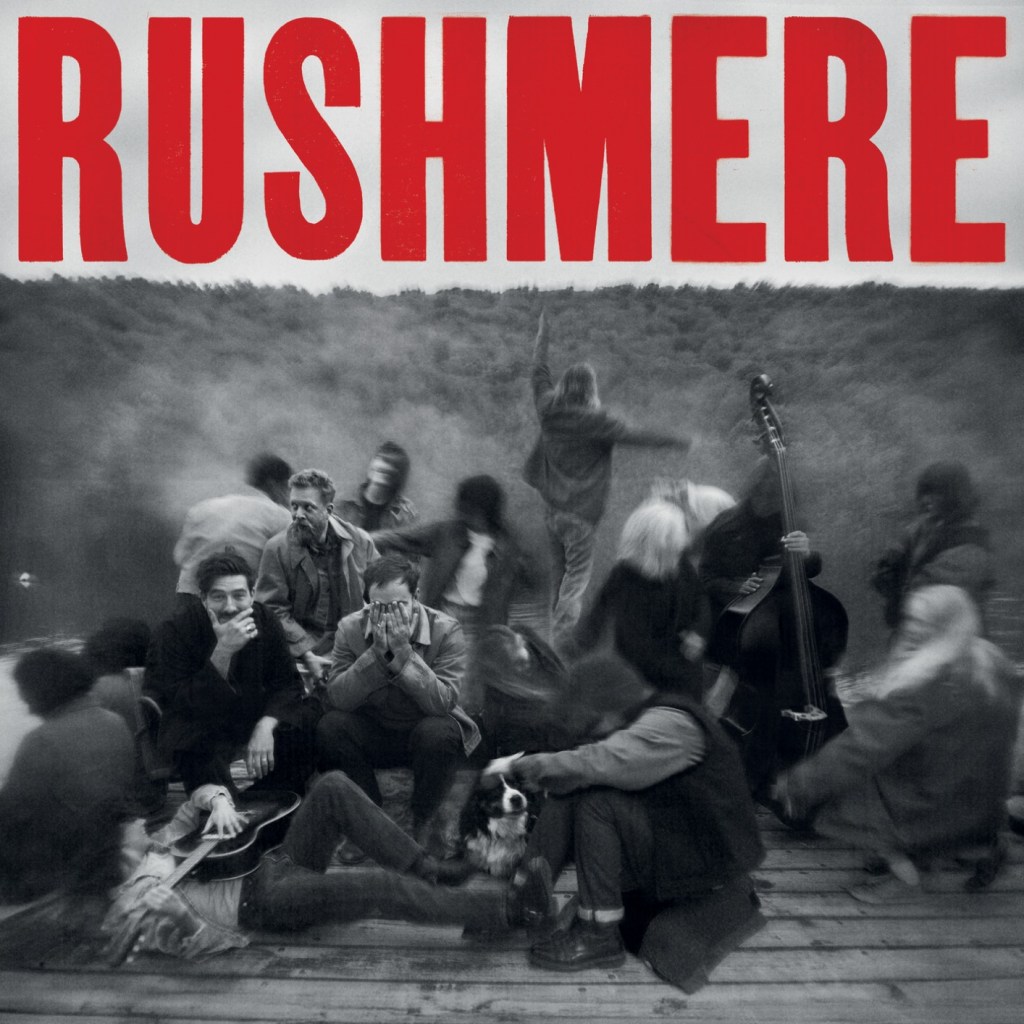
Why “Rushmere”? The title carries a double meaning. Rushmere, a lake in Wimbledon, South-West London, is where the band formed, and this record is a return to their roots. The album, therefore, is reflective. Recorded in RCA Studio A, Nashville, and their home studio in Devon, this period from 2022 to 2024 was their most productive. Interestingly, frontman Marcus Mumford released a solo album the same year the band returned to the studio. This decision might have been influenced by a conversation with Noel Gallagher in a London pub, where he challenged Marcus to fully utilise his songwriting talent, both as a solo artist and with the band.


As usual, the songs ease your soul and are just the tonic when you feel the world’s weight on your shoulders. The album itself has a confessional lyricism and offers hope as the record goes on. So stick with it, even though the beginning is downcast.


Despite the melancholic verses, the opener ‘Malibu’, also their latest single, starts with that unmistakable rousing chorus.


It’s intriguing that others, rather than just the band, wrote a few songs. Adele and Liam Gallagher songwriter Greg Kurstin is one of them. He writes the title track and sends it in a Fleetwood Mac direction. The band’s adaptation of Fleetwood Mac on ‘Caroline’ is a fascinating development, suggesting a new direction for their music. More than likely drawing inspiration from Greg’s song.
Returning to the title track, it was the teaser and leading single. It is a song that is the quintessential folk side of the band enveloped with Fleetwood Mac. ‘Monochrome’ is a romantic ballad that somewhat lightens the mood.


’Truth’ is when the mood shifts, with Marcus radiating confidence over the track. However, this confidence is short-lived, as we soon arrive at the fittingly titled ’ Surrender’. While I believe this is the piano ballad, it’s been a few days since I last heard it, so my memory might not be entirely accurate. In the early section of the song, you can hear his vocals breaking, a clear sign of the emotional depth he’s delving into. Marcus’s performance is a masterclass in emotional expression as he transitions from powerful vocals to tender ones, reflecting a profound ache and a heart struggling to heal.


As I mentioned earlier, the album is reflective, and the lyricism mirrors that. You believe every heart-shredding vocal that Marcus delivers. It’s the same as when he delivers vocals displaying optimism. While the band has always been known for their jovial and forthright songs, this album marks a significant evolution, showcasing a level of maturity we haven’t seen before. The record harks back to the heady days, a nostalgic treat for those who appreciate it. As for me, I’m still processing my feelings about it. However, I can’t help but admire the depth of the lyricism. The album’s conclusion with ‘Carry on’, a song brimming with hope, is a fitting end.


Song recommedations: ’Carry on’, ’Truth’, ‘Malibu’

7/10

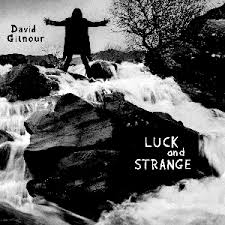
Week 37: David Gilmour- Luck and Strange

David Gilmour returns nine years after his previous solo album. He announced his return with the leading single ‘The Piper’s Call’ a while ago now. “Luck and Strange” is David’s fifth solo record since he embarked on a solo career in 1978. Of course, he was also in Pink Floyd back then and has been in sporadic reunions. Many have said the Pink Floyd albums he did without one of the founding members, Roger Waters, are nothing more than David’s solo career concealed behind the band’s name. Especially “The Endless River”. I bought that as a Christmas present for a family member. They were left unimpressed as it was full of guitar solos and instrumentals. The only track with vocals on was a soundbite of the late Stephen Hawking. I have heard the record and concur that it is just David performing guitar wizardry.

I find it quite odd that after 46 years as a solo artist, David has just released five albums. Okay, he has done records with Pink Floyd, but even they have been quite lengthy album-to-album. I also found it rather bizarre that he appeared on Later…with Jools Holland in the ’90s when he wasn’t on tour or releasing any material. His estranged former band member Roger Waters hasn’t released many himself, with 4 in over 40 years. Is this a way of signalling yet another reunion? They seem not to care that much about releasing their own material. Especially in the modern era, when promoting an album via a tour is necessary. Or is it a case of them needing each other to bounce ideas off but being too stubborn to set aside their differences?

As much as my political views do not align with David’s or the fact I wasn’t born with the fine bone china spoon in my mouth, I will not let this blur my judgment on how great a guitarist he is. Besides listening to him, whether solo or with Pink Floyd, the way he plays is effortless. He doesn’t even look like he is concentrating. He is that smooth. My favourite solo of his will always be from ‘Comfortably Numb’. His axe-manship is also easy to define. It doesn’t matter if he is collaborating or not. You know it’s him. I cannot recall when I first heard Pink Floyd, but I remember seeing this really cool sleeve of “Dark Side of the Moon” and thought I’d listen, and it remains one of my favourites. I loved listening to it when I was baked. It didn’t encourage me to seek out David’s solo work; I just wanted to do it anyway because I found him to be a great guitarist.

His next solo album, “About Face,” was released in 1984, and it is considered his best by his fans and peers. Although he wrote most of the songs, he co-wrote a few with Pete Townshend. Returning to his relaxed approach to releasing albums, his follow-up was an astonishing 22 years in 2006 with “On an Island,” during which time he was chastised for using his wife as the songwriter. 

Of course, it would take another nine years before he released his third album, “Rattle That Lock,” another record that received scathing reviews from the critics. ‘In Any Tongue’ was one of the few tracks that was any good. I imagine the critics savaged David again because he employed his wife for songwriting. However, it’s important to note that ‘Rattle That Lock’ was a vast improvement on “On an Island,” a sign of hope and optimism for the future.

Another nine years after his fourth album is “Luck and Strange”, which I have enjoyed listening to so far. It seems David has regained his hunger, and it was well worth declining Noel Gallagher’s request to do the solo on ‘Easy Now’ because he was busy recording this. Again, his wife returns as lyricist, his son on backing vocals, and his daughter takes lead vocals towards the end of the record. I actually think it’s the last track, but it has been over a week since I last listened, so my memory hasn’t been jogged.

Hindsight is a beautiful thing, and maybe I should have sought out the extended edition, which has an additional two tracks that are instrumentals. David isn’t a strong vocalist, but he is superb when he lets his guitar playing do the talking. The opener is called ‘Black Cat’ and is your quintessential David Gilmour sound. ‘Vita Brevis’ is a brief acoustic track over an album brimmed with long tracks that features sudden silence before going back into it. The final track is an extended version of the title track. It is dubbed ‘Luck and Strange Original Barn Jam’. This appears to be added as filler, but it’s David with his band having fun and goes on for 12 minutes. The guitar playing is once again effortless.

On the shorter version of the title track, David has added the keyboards of his late bandmate Richard Wright. This is a beautiful and nostalgic tribute to him. Does it sound like Pink Floyd for this reason? It probably does, invoking a sense of nostalgia. However, I find that David’s solo material is more removed from the band.

‘Dark and Velvet Nights’ is another highlight with organs and an ear-bursting sound. ‘Scattered’ has a piano solo, and you would expect David to follow it up with a guitar solo on this progressive blues track, but instead, he starts singing. ‘A Single Spark’ is a ballad with David at one with his Fender Stratocaster. I can just imagine him closing his eyes and falling into a trance as he plays effortlessly.

I feel ‘Between Two Points’ with his daughter Romany doesn’t get the love it deserves. The penultimate track addresses misogyny with lyrics written by her mother, but that isn’t why I like it. I like Romany’s vocals on this family affair track backed up by her father’s almost vocal-like axe-manship. ‘Sings’ is an acoustic ballad, which isn’t all that, I’m afraid. It’s a bit bland for David’s calibre. ‘Yes I Have Ghosts’ is a folk track over an acoustic that might not please the purists. The record, which I was shocked to see usurp Oasis, is…I don’t know. I love his solos and overall playing, but there isn’t a punch to it. The lack of ‘punch’ in the record, in my opinion, is due to the lack of dynamic changes and the consistent mid-tempo pace. It is mid-tempo to a plod. There’s not much change in the tempo—nothing to really get you moving.

In conclusion, I would encourage you to savour David Gilmour’s sublime playing and effortless solos. This is the heart of the record, a true reflection of David Gilmour’s artistry. The album itself is a typical display of his carefree attitude towards recording, a trait he often exhibits. He hints at a follow-up after the tour. As I said, this is a celebration of his guitar mastery, above all else.

Song recommendations: ‘Black Cat’, ‘Between Two Points’

6/10

Week 9: Rod Stewart & Jools Holland- Swing Fever

Well, it goes without saying that I am a big fan of Jools Holland; as you know, I discover many bands/artists through his show. Jools started off as the keyboardist in Squeeze before leaving to go solo while presenting The Tube on channel 4. He then went on to form His Rhythm & Blues Orchestra and present the Late Show’s spin-off “Later…with Jools Holland in a pokey studio in Shepherd’s Bush. The show would expand and move to Maidstone Studios in 2011 (The Annual Hootenanny still takes place there.) before returning to Shepherd’s Bush in 2019 and then moving onto the current venue deep in the bowls of Alexandra Palace, where the first television broadcast for the BBC took place. The show had a live half-hour midweek show until 2019 before reverting back to a show that lasted just an hour on weekends from 2020 onwards. Of course, the series during 2020/21 was locked down, so it was limited to one guest per episode discussing their music and their favourite moments from the show’s archives with other bands/artists performing elsewhere. Now, onto Rod Stewart. I have no idea when how I came into his music because my mum is a big fan of his, and during the 80s/90s, she would go to quite a lot of his London shows. I guess I grew up with his music.

As you know, Rod was in the Faces with Rolling Stones guitarist Ronnie Wood, among others. He then decided to go solo, and the rest is history. He has amassed hit after hit and collaborated with a slew of artists.

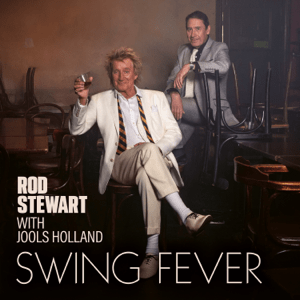
You might think, “What’s the point of this album? It will be the usual compilation”. Well, I didn’t share that notion after listening to them talk about the project on the One Show and Jools’ Later Show. I know it all started after a love of building model railways, et cetera( Look closely at the opening credits of Later…with Jools Holland from 2015 onwards. You will see what I mean.). Honestly, I knew this wouldn’t be a compilation album with no love put in, because Jools and Rod are passionate about Swing. One thing that I was surprised about was the front cover. Why is Rod, with a whiskey shot, sitting in front of Jools, while Jools is in the background, sitting on a table leaning on an upside-down chair in what looks like a bar setting? This is supposed to be a collaboration. They should have been sat parallel to express this. The cover art gives the impression that this is Rod’s record.

As the album is set around the Big Band Era, the bulk of the songs are strikingly short, falling under the 3-minute mark regularly. This is how it used to be back in that era so that they could be played on the radio. Of course, songs can now qualify for anything up to five minutes. Talking of five minutes, the opener ‘Lullaby of Broadway’ is the longest track on the record, packed with brass, Rod’s swooning vocals and Jools’ iconic boogie-woogie. This is followed by ‘Oh Marie’ with more of the same, but much shorter. ‘Sentimental Journey’ is where Rod’s vocals hit top gear surrounded by brass and trumpets. Jools takes centre stage on ‘Pennies from Heaven’ with his band backing their leader. Rod’s vocals synchronise with Jools and his band on ‘Night Train’.

Rod and Jools have a lot of fun on this album. Where it falls down for me is that I thought this was supposed to be a collaboration. Too often on this record, I felt Rod was taking centre stage, and Jools was simply blending into the background. Jools is a phenomenal boogie-woogie player, but there wasn’t enough of that for me. We were not shown Jools’ pure craft on the piano. However, if you want an upbeat album for a knees-up, then this is it. 

Song recommendations: ‘Sentimental Journey’, ‘Night Train’, ‘Oh Marie’

8/10

Week 6: the Last Dinner Party- Prelude to Ecstasy

Once again, this is another cliché. I found this band via Later…with Jools Holland, where they performed ‘Nothing Matters’ and ‘ My Lady of Mercy’. From there, I scoured YouTube, looking for information about them. I came across a review of one of their tracks, plus a little background on them by The Darkness frontman Justin Hawkins. He does a review show on there called Justin Hawkins Rides Again. It has become so popular that he is taking it out on the road. I was highly impressed with his knowledge of every tone in the track. He also mentioned that the band are rumoured to be “industry plants”. Now, if they are, who cares? You can tell they are highly talented, so they would inevitably break through regardless. This rumour is circulating because the band had minimal performances before being signed. Skunk Anansie must have been “industry plants” if that’s the case. They were signed after four gigs. That’s how ridiculous this rumour is for me. I am sure Skunk Anansie was in the right place at the right time. The other suspicions are that they also signed to the prestigious Island Records, have over 30 million streams for ‘Nothing Matters’ on Spotify, and have had this album produced by James Ford, who has recently worked with Blur, Kylie Minogue, and Arctic Monkeys on their current records.

So, a little background on the band: They are from London. An all-female rock band (I beg to differ on rock.)consisting of Abigail Morris (Leading vocalist), Lizzie Mayland (Backing vocalist, guitarist, flautist), Emily Roberts (Guitarist, backing vocalist, flautist, mandolin), Georgia Davies (Bassist, backing vocalist), and Aurora Nishevci (Backing vocalist, organist, synthesiser, conductor, string arranger). I believe they also met at university, which is another reason people are suspicious of their rise. Fuck knows what that has to do with it. I like the name of the album, and I found the cover art quite eye-catching. The name might have a negative impact because it mentions a specific substance that also has taken its name from a form of joy. As everyone knows, I detest preludes/interludes, but there was a certain magic to them this time. There are two interludes. The title track and ‘Gjuha’, with the latter coming in just after the halfway point. Both tracks feature incredible vocal harmonies over what can only be described as booming classical music. From the reading, there is no clear indication that an orchestra was used, but it sounded like one in the prelude/interlude. You must admire the sheer audacity of using such music when this album was released in the mainstream. From this, you can tell that the ladies do not want to conform.

The band reminds me of a cross between Florence and the Machine and Elastica. Because of their sound, but also, Abigail sounds similar to Justine Frischmann. Talking of Abigail, her best vocal performance is ‘On Your Side’. However, that doesn’t take away from the other tracks. She is an outstanding vocalist.

The highlight has to be ‘Caesar on a TV Screen’. It changes throughout with different genres and tempos. Quite a lot of the tracks stop suddenly, but after half a minute, they come back in with frantic tempos, usually classical or a stabbing piano. The title of the record is quite apt. There are many moments of ecstasy. I was left highly impressed. It is pretty hard to believe that this is only a debut album.

Song recommendations: ‘Caesar on a TV Screen’, ‘On Your Side’, ‘My Lady of Mercy’

8/10

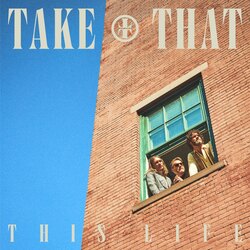
Week 48: Take That- This Life

Take That came to dominance in the 1990s and drove teenage girls and young women wild. The band split in late 1996 before reforming again in late 2005 without Jason Orange and Robbie Williams. Robbie would rejoin the band in 2011 (I think) before once again leaving and recommencing his successful solo career. During the band’s 9-year hiatus, Mark Owen had a brief solo career. Howard Donald became a DJ after his debut album was shelved, and Gary Barlow released about four solo albums but had more success as a songwriter. The band reunited for a Channel 5 early-2000s documentary at a country manor to talk about the band without Robbie, who did leave a video message addressing each member. As we know, from there, the band reformed to release material and perform live again. The band is more democratic nowadays, with each member taking the lead vocals. 

They made their debut appearance recently on Later…with Jools Holland, where they played two songs off “This Life” and said that the album, which was recorded in Nashville, was inspired by the country scene. I will later explain what I thought it sounded like.

“This Life” comes six years after “Wonderland”. Of course, there has been a greatest hits collection, a live album of their greatest hits, and surprisingly, a musical, which became a film released in the summer starring the Irish comedian Aisling Bea. The band have already sold out a staggering six-night residence at London’s O2 in April next year for the upcoming “This Life” tour. We are currently in the era of nostalgia, so this is no surprise. Take That, as we know, has a fantastic song catalogue, making recording new material a challenge because it will always be challenging to match those world-renowned hits. 

One thing you will notice with this album is that it needs the singalong anthems we know the band for. I don’t know what chief songwriter Gary Barlow’s thinking is behind this, but he did tell Jools that this is a record that the band wanted to do rather than what the singles chart would dictate. ‘We Got All Day’ is one of the rare anthems on the album that will see the crowd waving their arms or holding their phones/lighters aloft. The final track, ‘Where We Are’, is more of the band revisiting their past glories by making this the record’s ‘Never Forget’ moment, where they sing about how far they have come over a bombastic production.

The album is quite eclectic for the band; the title track is something different. It sounds like a 1970s soap-themed tune with a jaunty piano. As you can imagine, it didn’t chart upon its release. The next track I will highlight is ‘Windows’, one of the songs featured on Later…with Jools Holland, an acoustic track more akin to their fellow Mancunians, the Smiths. They said the song is country, but I got a Smiths-esque sound instead. ‘Time and Time Again’ is the closest I came to hearing anything resembling country music with its relaxed acoustic strumming. ‘Brand New Sun’ was another song played on Later…with Jools Holland, and this one, with its electric guitar solo, reminded me of, once again, fellow Mancunians New Order. If I recall correctly, there is a Peter Hook-esque bassline. Although “This Life” differs entirely from anything they have done previously, you must feel it lacks the anthems we are accustomed to from the band. Despite that, this low-key album will not stop hardcore fans from flocking to their upcoming shows, and therefore, the band can enjoy themselves in the studio and have autonomy over what they want to record.

Song recommendations: ‘Windows’, ‘Brand New Sun, ‘We Got All Day’

7/10

Week 38: Kylie- TENSION

What is this? Like my third review of a Kylie album? I’ve lost track. My most recent review of hers was ‘Disco’, which came out amid one of the lockdowns, and the music within made you yearn to return to the dance floor, be it at clubs, wedding receptions, bars or parties. I also enjoyed listening to it and found it the perfect tonic to escape the drab reality we were all subjected to. However, it could have gone better with the younger generation, which could mean that with streaming services widely available, they can steer clear of radio and television music channels and avoid going to shops to listen. Therefore, they can choose who they want to listen to and become trapped in that mindset. I grew up on everything mentioned in the previous sentence, so my taste has become eclectic. Listening to the radio and watching Later…with Jools Holland gave me an open mind to music. I don’t believe that on these streaming services, the algorithm would recommend Kylie Minogue to a youngster listening to BTS, so therefore, you can see why Kylie hasn’t been as popular with the younger generation (yet.)

I first heard ‘Padam Padam’ on the Graham Norton Show (I think.), which was four months ago when the track was released, and it is still as popular now as it was then. The younger generation will certainly know this one, as the staff of Hobbycraft did a dance for it on TikTok. What is refreshing about the track is that it is uplifting, fun and humourous.

The record is reminiscent of the Europop/Eurodance you would hear on Euro Trash. It may be cheesy, but it is fucking fun and uplifting. We all need to lighten up once in a while. The title track flirts with Kylie going for the Daft Punk approach of using robotic vocals; the saxophone swoons on ‘You Still Get Me High’ and ‘Vegas High’, which have that Europop sound. ‘Hands’ reminded me of Madonna’s ‘Vogue’—especially the rapping verses. 

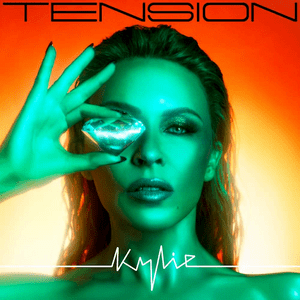
There is no way in hell that  “Tension” is nothing more than to promote her upcoming Las Vegas residence shows; I am not having it. It is far too professional just to be regarded as a throwaway. It is Kylie at her best, touching on all sorts of emotions, and it deserves its number-one placing. I do not believe “Tension” got there by sales alone; I reckon that the younger generation heard ‘Padam Padam’, streamed her, and fell in love with the music. The TikTok video would have also drawn their attention. I also love the cover art. Nice and vibrant

Song recommendations: ‘Hands’. ‘Vegas High’, ‘Padam Padam’

8/10