Week 36: Sabrina Carpenter- Man’s Best Friend

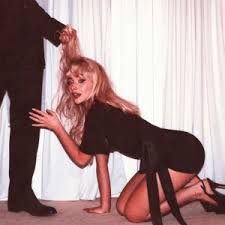
Well, let’s start by mentioning the provocative album cover, where it appears that Sabrina is ready to perform a sex act, and the face-hiding man is pulling her hair. You may have noticed she has done the same pose, sandwiched between two male dancers, on her tour. Also, the record is called “Man’s Best Friend”. Now, everyone knows that phrase relates to dogs, so is Sabrina insinuating women are like dogs? Now, as you know, I reviewed her last album and was left impressed by it, but this one is certainly not for the faint-hearted. Sabrina talks candidly about sex in all its explicit glory, and swears an awful lot.

However, rather than trying to appear controversial, the music has to back that up, but alas, it does not.


Unfortunately for Sabrina, the chart landscape has changed, and once what might have been too much is now seen as tame, which is shocking when we have children as young as four being exposed to the sexually explicit content featured on “Man’s Best Friend”. As I am an adult, I could not give a shit about her saying that, and I found humour within it, but it is not for any child below a certain age to be exposed to.

Additionally, the album is too polished, as evident in ‘Manchild’. I like it, but the production and her wordplay conceal the message that she is trying to convey, so it goes missing. Now, as a songwriter, I am sure Sabrina would want that message to be heard.


Now, I have mentioned the lyricism is both sexually honest, funny, and witty, but that is as far as it goes. Rather than going deeper into the subject behind the songs, Sabrina leaves that up to the listener. Now, this isn’t a bad thing, but on this occasion, it is. She needed to make a connection with the listener about the deeper meaning behind songs like ’Never Getting Laid’, ’Tears’, ‘We Almost Broke Up Again Last Night’, which, as I said, are sexually explicit and contain the occasional fuck word, but there is nothing else.


Unfortunately, Sabrina has sacrificed artistic creativity for commercial outreach. Although the album may have an element of shock value with the lyricism, she unfortunately does not explore other sounds, so you end up with a safe record. On one hand, this could be seen as smart and doesn’t alienate her core fanbase, but on the other hand, the predictability of the subjects and the production on offer takes away the soul of the music. Rather than challenging the listener, she gives them what they want. Well, her core fanbase, at least, but nothing for the casual listener, who will see it as the usual pop album that every female artist is churning out at the moment.


Despite the lack of substance. Sabrina’s vocals are once again incredible, and it’s nice to see her flirt with country music occasionally. She needs to do more of that because she excels in that field. As we all know, despite the glaring flaws I have highlighted, Sabrina will have another successful record under her belt. Yes, it is number one, but it will receive accolades because the commercial market loves an album full of catchy pop songs. That is just how the commercial scene works. It does not matter if the record lacks on a deeper level.


When artists such as Pulp frontman Jarvis Cocker and Lola Young can merge on a deeper level within pop, it is sad to see artists like Sabrina being bound to what pop expects. Sabrina is a brilliant songwriter, and she should have given more behind her barbs to the men behind the album. I believe it is her ex, Barry Keoghan, instead of giving us bitchy lyricism with no deeper meaning. The two artists I mentioned prove that you do not have to be bound to the constraints of pop. Hopefully, Sabrina offers more on her eighth studio record, because she is more than just a pop artist.

Yes, we have catchy choruses and pop-friendly production over a fleeting half-hour listen. Most songs fall well below the three-minute mark. Music that I describe as “TikTok generation”, but there needs to be more to it. Sabrina is capable of doing that if she frees herself from the confines of generic pop.


I would also like to add that you should not let your kids listen to this. They are far too young to be exposed to such sexually explicit content. This is strictly for teenagers and adults.


Song recommendations: ‘We Almost Broke Up Again Last Night’, ‘Manchild’, ’Tears’

5/10
Week 24: Pulp- More

Before their stroke of fortune of being bumped up to Glastonbury headliners in 1995, and of course, the success of ‘Common People, Pulp had been plying their trade for over a decade with little success. However, their rise from playing pokey venues in Sheffield to performing in stadiums, and of course, being on the iconic 1996 Knebworth Oasis gigs, shows that with a little patience, you can get to where you want to be. The band finally found their home in the 90s, thanks largely to their counterparts Oasis making indie rock cool again. Jarvis was seen as an elder statesman of the scene despite still being relatively young in his early 30s. The band emerged from post-punk in the 1970s and began with a teenage Jarvis Cocker inspired by David Bowie, and Roxy Music formed the band in 1978 using the original name Arabicus Pulp. The band flirted with various sounds and had frequent lineup changes while trying to search for their identity that began to take shape in the late 80s.


Before the hedonistic days of the 90s, the band, despite their indie status, had a strong connection with their fanbase, which remained small but loyal. They released several singles and albums that explored themes such as adolescence, boredom, and sex, all tinged with melancholy. Interestingly, tracks like ‘Babies’, now a regular feature in their setlists, were born during this period, showcasing frontman Jarvis Cocker’s storytelling talent, lyrical prowess, and knack for crafting a hit that vividly depicts life in Sheffield and his time at St Martin’s College in London, where the iconic ‘Common People’ story began.


Then came the breakthrough years in the 1990s. Jarvis had changed the lineup during the mid-80s and brought guitarist Russell Senior, keyboardist Candida Doyle, drummer Nick Banks, and the late bassist Steve Mackey. Pulp finally found their wall of sound that would bear fruit in the following decade. That sound would include glam rock, art-pop, and lyrical storytelling, all delivered with charisma by frontman Jarvis Cocker, the band’s founder in 1978.


The band’s 1992 single, ‘O.U.’, marked the beginning of their success and appealed to a broader audience. This success paved the way for their 1994 album “His n Hers”, a collection of songs that featured relatable storytelling. Popular songs such as ‘Do You Remember the First Time?’ let the audience feel a personal connection to the band’s music. This is where frontman Jarvis, a witty storyteller, arrived, further enhancing the emotional connection between the band and their fans.
“Different Class” followed a year later, and this is when things really took off for the band. ‘Common People’, which had a dig at the class divide, was fast becoming a frequently played song and evolving into an anthem for the band. ‘Disco 2000’ and the controversial ’Sorted for E’s & Wizz’ showed Jarvis’ witty and comedic storytelling over unforgettable melodies. The album would beat Oasis, among others, for the Mercury Prize in September 1996. It is also worth noting that their fan club president, Mark Webber, joined them as a guitarist/keyboardist in 1995 when they commenced recording the now legendary record.


Guitarist Richard Hawley became a touring member in the late 90s and early 2000s. The band appealed more to the misfits and quiet ones compared to the brashness and laddishness of the Oasis fanbase.


If you are new to Pulp, I would start with the iconic “Different Class”, but after, give “His n Hers” a listen to experience Jarvis’s lyricism with the band’s raw energy. You will realise why Pulp, even during their hibernation, has always been relevant in music conversations. Jarvis’ lyricism is like the poetry of everyday life accompanied by instrumentation. It also shows why they are still adored internationally—enough of the introduction. Yes, I could have mentioned the indie rock departure of “This is Hardcore”, but I was in danger of boring you. So, let us move on to the long-awaited record.


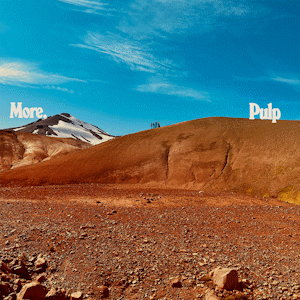
Pulp has finally completed its eighth album after a gap of twenty-four years between 2001’s “We Love Life” and now. It is also, sadly, the first record without their bassist, Steve Mackey. Although “More” addresses middle age daily life, compared to their iconic 1995 album “Different Class”, Pulp has not lost the magic that made them so popular in the 1990s.


From wanting to be noticed in their heyday, this album is more based on nostalgia than in the future. There are two tracks where enigmatic characters appear in ’Tina’ and ‘Grown Ups’ who seem to be individuals from Jarvis’ past.


Do not be fooled by the notion you are just listening to songs because with Pulp, it is more than merely instrumentation with nonsensical lyricism. The songs have always been poetic lyricism, and this record is no different. The tracks all formulate a meaningful story; sometimes, Jarvis delivers these in spoken word. Be it through the interludes or breakdowns during the tracks. Pulp is not aiming for chart success with “More” but is looking to structure the songs however they see fit while keeping the listener interested with the storytelling over various genres. This is not your typical pop-friendly album.


Despite not aiming for chart success, the band maintains a unique and unmistakable identity firmly embedded in their record. Each element contributes to the band’s distinct style, from Nick Banks’ driving drums to Mark Webber and Candida Doyle’s elan and Jarvis Cocker’s exemplary storytelling and witty lyricism. The band’s dynamic combination of these factors, however, is what truly excites and engages the audience.


The album explores several phases of human emotion. ‘Got to Have Love’ is what I would describe as a Smiths/Oasis/Killers song laced with melancholy over uplifting instrumentation. In this case, it is more indie-disco, like a fair few of their hits were in those heady days. ‘Farmers Market’ swings the mood with a romantic story encased by a piano and violins to bring it to life.


’Spike Island’ opens the record with a short, amusing story, setting a feel-good tone. ‘Hymn of the North’, the penultimate track, is a heartfelt tribute to their beloved Sheffield. The closer ‘A Sunset’ wraps up the album on a note of tranquillity, leaving you calm. Unfortunately, I haven’t had the chance to listen to the bonus track ‘Open Strings’ to see how it might alter the album’s ending. The verses in ‘A Sunset’ resemble the late Johnny Cash’s rendition of ‘Hurt’. Whether this was a deliberate homage from Jarvis or a happy coincidence, I can’t say.


“More”, for me, has something for everyone. It is not based in one genre. The lyricism and storytelling are outstanding, and I am excited about what comes next because it was worth the twenty-four-year wait. Despite the tragic loss of Steve Mackey, the band has not lost their touch, aided by their old friend Richard Hawley. Pulp is in rude health, and the impending tour will be fantastic. The magic is still there; they deserved to be at the top of the chart. Form is temporary, but class never fades.


Song recommendations: ‘Farmers Market’, ‘Hymn of the North’. ‘Got to Have Love’


9/10