
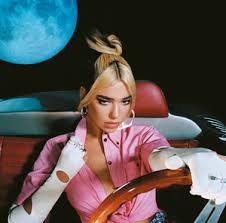
Week Fifteen: Dua Lipa- Future Nostalgia

Dua Lipa

Here is a track-by-track review of Dua Lipa’s second album:

Future Nostalgia:

This is the title track that blends rap with pop. This track was only thought of after the record was already named.

Don’t Start Now:

This track has been dubbed the best of her works since “Be the One” off her self-titled debut album in 2017. This disco-pop song shows she will not rest on her laurels and is looking to aim higher. It also just keeps getting better after every listen.

Cool:

Dua is trying her hand at the 80s, and this track is aptly named. It reminded me of what the Weeknd has done with his latest album. The 80s disco is well in at the moment.

Physical:

I should probably look at the singles released off this record, but I have heard that this track is a massive hit among her fans, and they find that this pop song stands out on “Future Nostalgia”. It has got plenty of attitude, suggestive lyrics and synths with a drum beat that will send shock waves through your body.

Levitating:

It’s another disco track that feels like it belongs on the album. It’s much slower than “Physical” and much more laid back. The song is surrounded by synths, a typical dance beat and some very teasing vocals. There’s even some swearing in this track um hahahahaha. Snowflakes will recoil in horror. Awww.

Pretty Please:

From going full throttle with her vocals on most of the record, Dua eases off on this track, but that doesn’t take away from the fact it is a great song.

Hallucinate:

Some may disagree, but this track fits the house genre. When the drop happens, you have the typical house pulse and the iconic bassline. And why wouldn’t it be? It is produced by SG Lewis, who is known for his work, not only as a singer but for his productions in house, deep house, drum n bass and techno and being a DJ within those genres. It’s certainly a surprise at this point because there has yet to be a song so far that fits into club-based. I see this being a potential single and being played out in the clubs (when they finally reopen.). It would fit in very nicely into a Carl Cox, Mad Fingers, Anne Savage, Lottie or Fatboy Slim set. The lyrics even talk about meeting someone on the dance floor. You can’t get more apt for the club environment than that.

Love Again:

We now come to the longest song on the album, and there’s a very recognisable sample. It was also No.1 in November 1996 and was played to death. Wiley has also sampled it. It is White Town’s “Your Woman”. Although the sample is the strings of the chorus, it cuts into a dance track. It works, though and deems this song a success.

Break My Heart:

Her latest single, which again follows the disco path, includes an Australian band INXS sample. It is quintessentially pop, rising and falling, complete with a bridge and chorus. There’s a very poignant lyric in there regarding the current situation the world is in. Now, it’s without question she wrote the lyrics ages before the lockdown, but the verse is “I should have stayed at home”.


Good in Bed:

Haha, what a name for a song and if you can’t work out the suggestive lyrics, then there really is no hope for you. It is as clear as day. This is an early Kate Nash song with Dua’s own style added. It is also the only track with a comedic element on the record.

Boys will be Boys:

It’s pretty odd that as we approach the album’s end, the tracks have changed direction and become more risqué. While surrounded by strings, Dua talks about the opposite sex but still manages to keep it in line with the record’s narrative. It’s more of a dig about the inequality that still exists. It’s typical for Dua if I am honest with you, she is never too shy to give her opinions on anything, especially this subject.

Overall review:

I may be wired differently from everybody who listens to her songs, but although the album is very good, my standouts are not among the favourites with her fans. I preferred “Hallucinate” because it is house music and very suitable to include in a set at a club, and “Love Again” for its White Town sample, but then kicks into a dance track. What I like about the album is that this is a very different pop angle and gives a nod to the 80s. Not to mention, you have a house track, so Dua is bringing the dance scene back into the mainstream because, let’s face it, it has been gone for a very long time; it’s mainly sing-a-long, happy clappy shite. With this and the Weeknd’s latest record, we now see the pop charts changing yet again, bringing back the dance and club element. Will this album stand the test of time? Well, that all depends on her fans. I will not get all nostalgic and listen to this record in twenty years. I was really shocked when she wasn’t No.1 in the first week because this, by far, a much better

album than “C A L M”. 7/10

Week Four: Pete Tong with the Heritage Orchestra Conducted by Jules Buckley- Classic House

Classic House-Continuous Mix:

This may well be the opening track, but if you want to keep listening to the album, listen to the opener first, as this is the whole album in total, but with the usual DJ techniques of beat matching, et cetera. After listening to the album track-by-track, come back to this part and appreciate it as a mix.

Right Here, Right Now: 

The track is opened with an array of stringed instruments, adding a wholesome tone to the classic 1990s track. The trumpets follow before Pete gets on the decks and brings in the vocal samples. The track sounds grandiose and wouldn’t look out of place in any classical music hall.

Pjanoo:

This dance anthem begins in its original form before the strings enter. They then gradually feature throughout the song. I love the orchestra in the chorus.

Lola’s Theme ft Cookie: 

The intro begins with steady violins, and when the whole orchestra kicks in with Cookie’s vocal, it is like something straight out of heaven. The Heritage Orchestra compliments this feel-good track well, and I’d be shocked if this track version does not feature across nightclubs. It is a floor filler, albeit a bit short.

Children:

Ah, the track that made Roberto Concina’s (Robert Miles) career kick off in the mid-90s (well, outside of mainland Europe, anyway). I felt nostalgic at this point, but when the strings compliment Miles’ piano riff, I felt a tingle down my spine. Again, the track could be longer.

9pm (Till I Come): 

I love how the strings follow the same rhythm as the classical guitar. The most surprising aspect is that Pete decides on beat matching and brings in the next track (Go), which will take the listener by surprise.

Go: 

Again, the strings feature at the intro, chorus and breakdown, keeping in with the sombre feel of the original. Pete, again, beat matches and brings in the next track.

Your Love ft Jamie Principle: 

Rather than cutting into the next mix, Pete decides to beat match for a bit longer on the intro to “Your Love” with the orchestra accompanying him. As Jamie Principle comes in with the vocals, Pete is still beat-matching, but do You know what? I like it, and it certainly shows off the skills of the legendary DJ (I hope he was using vinyl to reiterate that point further). The orchestra sure makes this version of “Your Love”, dare I say it better than the original.

Good Life ft Katy B:

Very interesting how Pete has opted for the talented Katy Bryan (Katy B) rather than the original vocalist. Another upbeat number was complimented well by the orchestra. It also makes the listener question how on earth, the producers of the original versions didn’t think to use more classical elements. I am enjoying this track, nodding my head and clicking my fingers.

Belfast:

We are now entering the second half of the compilation album (with a twist), and it hasn’t disappointed so far. I hadn’t heard of “Belfast” (Not knowingly, anyway. It turns out, I have listened to it several times without knowing its name.) until I heard it on this album. It has a chilled-out feel and is an indicator of things to come.

Smokebelch II:

I don’t know where the original is on this short track, but I love the steady pace of the strings. The listener might be forgiven for thinking it is merely a break into the next track.

Where Love Lives:

The album has taken a substantial upbeat turn with Alison Limerick’s “Where Love Lives”. It sounds like Limerick’s vocals were sampled for this orchestral remix, which is a real shame. The strings add zest to the otherwise soft and lonely break. The outro is perfect for that closing song as the DJ brings down the clubbers, who head for the exits.

Rachel’s Song:

Again, this track, with its angelic vocals and celestial orchestra, is another skit before the next track.

Porcelain:

It didn’t make Moby an established artist, but it helped him on his way (“Play” was probably the album that helped him). I know Moby uses strings in the original, but throw in the Heritage Orchestra; it sounds much fuller. When the Orchestra kicks in on this piano riff…wow, just wow.

Waiting All Night ft Ella Eyre: 

Ella Eyre’s vocals greet the listener’s ears. This is undoubtedly a great spin on Rudimental’s original. There is no drum n bass element, but soft vocals by Ella accompanied by an angelic sound of the orchestra. It appears that Pete has gone for a chilled-out vibe to the second half of this album (albeit “Where Love Lives”).

Insomnia:

A grand intro to Faithless’ classic song before the original stands alone. The strings then come back in and remain throughout the bass line. I love the sustained sound coming from the brass section. The song stops suddenly.

Strings of Life/Knights of the Jaguar/Nightmare/Café del Mar:

The 17th track is not merely a track but a medley comprising four songs. “Strings of Life” lasts just over a minute and a half, as does “Knights of the Jaguar”. The medley’s best part is the third track, “Nightmare”. The brass section stands out in this part of the medley. But the longest part of the medley belongs to “Café del Mar”, and it’s no surprise, as it was the trance anthem of the 1990s and played out in venues like Manumission Worldwide by Pete Tong and Judge Jules. I confess that I didn’t like the original of this track, but the orchestra may have just swayed me into liking the classic trance anthem in its latest form.

Feel the Love ft John Newman:

And so, we come to the finale, “Feel the Love”. Again, another Rudimental track has been blowing up the airwaves regularly since its release in Spring of 2012. The original vocalist (John Newman) accompanies the track with his use of the falsetto range. Now, Pete has added the original drum n bass element, but the orchestra, again, has been given centre stage leaving the drum n bass toned down. The brass section is superb. The vocals overlay during the acapella section, adding a lavish and fuller tone to John’s vocals—a great way to end the album. Pete indeed went for that encore moment for the finale leaving the listener on a high.

Overall Review:

He might have cockney rhyming slang named after him, but it’s all gone, Pete Tong, it ain’t. Pete first did this as an experimental tour, which was a success. The album appeared to have zero risk involved, and the concept for me was always going to work in the studio and the classical music venues. This album fully deserves its position at the acme of the album chart. The legacy of Pete Tong lives on and remains intact. I dare anyone to challenge the outstanding reviews this album has had. The skits, I feel, are not necessary, and some of the tracks are too short, but otherwise, a great way to split the album up from the upbeat in the first half, then the more chilled-out second half before ending on a track fit for an encore for any live performance. 9/10