Week 44: Dave- The Boy Who Played the Harp

I was stunned to discover that Dave hasn’t released an album in over four years, but as the review progresses, you will see why the wait was worth it.

You are probably wondering about why that title? Well, it is a biblical reference from the book of Samuel foretelling the story of King David. Quite funny, really, when the artist in question shares the same name.

The production doesn’t lean towards hip-hop and anything that might resemble a banging tune. Instead, it is more introspective, featuring piano, spaciousness, and ethereal tones. Occasionally, the harp features, and Dave even picks up the guitar on the 6th track.

In regard ot the themes, he focuses on dealing with fame, identity, legacy, being a man, faith, and how he has a sense of duty to his listeners and society. Rather than basking in his achievements, he questions what his roleand voice is doing to lead by example.

Now, part of the summary is out of the way; let’s look at the songs that caught my ear:

History:


The opener sets up the rest of the record. Dave addresses everything about himself. James Blake not only features on the track but also produced it, creating a typical atmospheric soundscape that he adopts, complete with tender piano and reverb space that allows the words to land, allowing the listener to engage with the thought-provoking lyricism from Dave, which is always interesting. I have never found him at a loss for words. In fact, let’s look at that on here. Dave refers back to King David, and as the record progresses, you hear why he uses this biblical figure to illustrate power, vulnerability, and how music heals the soul. Never mind, if the track is not for the commercial market, but rather the lyricism and the matching mood of the music.

Chapter 16:


What more can you say? It features the amazing Kano. I have been a fan of Kane since the early days of grime, so this track was never going to be skipped. The pair trade verses, discussing their legacies, the rap game, and how they feel burdened by representing the scene. Once again, James goes for a minimalist sound with his trademark piano chords and a beat that allows for reflection.  Dave pays tribute to Kano, stating that he has been a fan of his since he was 14 years old. Kano also  praises his younger counterpart. The song connects all timelines of UK rap, with Dave accepting his role in its future, while also questioning what he wants and what he owes. The track could have easily been one of pure egotism, but Dave shows humility alongside ambition, and, of course, what his legacy is.

Raindance:


Unless you follow her closely, have seen her at major festivals, or watched Later… with Jools Holland, the Nigerian vocalist Tems, who features, will probably have escaped your attention. The Afrobeats-inspired track, over reflective piano riffs, is more light-hearted than the previous tracks. Dave is more playful with Tems. The lyricism focuses on Dave enjoying a night out, where he meets someone, apologises for future relationship struggles, and references the concepts of marriage and property. This track takes him out of his comfort zone with Afrobeats, but it works well with Tems, nonetheless. A bit of a breather from the heavier songs so far.

Selfish:


James Blake returns from the control room with a heavy, moody, introspective, and self-confessional collaboration. Dave examines what fame has cost him in life, including narcissism, and what his ambition entails. Dave also highlights how his bravado is often laced with self-doubt. A typical James Blake production, leaving Dave’s wordplay time to breathe. Another heavy, but lyrically intriguing track.

My 27th Birthday:


This nearly eight-minute track focuses on self-reflection, with Dave looking inward at his legacy, expectations, age, and how he has evolved.  Again, the production is more of the same, with a blues-inspired piano riff with looping vocals.  The lyrics are used as a metaphor for a day/year that’s in motion or standing still.  Dave once again examines his role in society and considers how he can utilise his voice to create a positive change in the world. He also examines how fame can be a burden rather than a blessing, as he feels that people are being cynical about the messages he is trying to convey. They are using his fame as a weapon against him when he is less likely to return to a life of poverty. A very deep listen.

Fairchild:


Dave gives a chance to the upcoming talent of Nicole Blakk and lets her showcase her views, where she discusses being the unfortunate victim of assault, which has triggered a fear of men, and her experience of misogyny. This evokes emotions in Dave about how incels behave, and he questions why his fellow men more often than not turn a blind eye to this unacceptable behaviour. Dave even questions if sometimes he, too, has shown misogynistic traits, which is perfectly portrayed in the line “All know a victim, don’t know a perpetrator, am I one of them?” It may be a heavy listen, but it is what you would expect from him. It’s a deep track with substance. It is refreshing to see a male address violent behaviour towards, whether he has unknowingly done it himself, and how he feels a sense of responsibility to make his fellow man aware of this abhorrent behaviour.

The Boy Who Played the Harp:


The closing and title track uses a sample from The Beatles. The track’s name eludes me at the moment. This track makes the premise of the album all make sense. The name, the purpose, the record’s identity, the burden he feels, and the activism displayed.  I love the premise behind the lyrics, as he places himself within historical moments, such as world wars and the civil rights movements. He ponders if, like in those moments, he can speak up, act, and lead when necessary. The title track, like the rest of the album, ends strongly, leaving the listener to ask themselves the very questions he did throughout. Bizarrely, though, there is no harp. Just a piano.

Strengths & Weaknesses


Now let’s address where the record is good, and where it falls down:


Strengths


Of course, it has to be his lyricism. I mean, after all, that is what he primarily is. Dave started as a spoken word artist before moving into rap. I love his wordplay, detail, reflection, and how he uses metaphors.

The album is streamlined rather than a mishmash of songs. There is a constant string of themes that remain consistent.

He isn’t coy about asking himself challenging questions, rather than doing a record that focuses on his success.


If you ask me, what are the highlights of the album? Well, it’s all of the tracks above.

When I get to the song recommendations, I’m going to have a think about what three stood out.

This is up there with his best work to date.


Weaknesses / criticisms


This is not my opinion, but looking at it from a critical point of view, you have to say that James Blake’s production is too moody and lacks dynamism.

The tracks are not chart-friendly, both in terms of lyricism and production. There is also a lack of hooks, which may hinder the number of plays he receives in the mainstream.

Some listeners will feel that the themes are more of the same, and doesn’t bring anything new to the table.

Coda


Although the album may not be that chart-friendly, it is full of thought-provoking tracks, which to me, is always better than sacrificing for the sake of the singles chart. It is up there with his best work so far. You just have to look at songs like ‘Fairchild’, ‘Chapter 16, and ‘My 27th Birthday’ to see the maturity in his writing, and how they all have a purpose. It may not have the hits that have featured on past records, but this is one for the deep thinkers, who will appreciate Dave’s approach.
My personal opinon is, I love it. A very strong record that cuts through all the bullshit.


Song recommendations: Chapter 16’, ‘Fairchild’, ‘The Boy Who Played the Harp’


9/10

Week 16: Digga D- Naughty by Nature

This is going to be a concise review, I’m afraid. I listened to the Drill artist from London but was left unimpressed, as with most of Drill. Not long ago, I sang Central Cee’s praises, who is also a Drill MC, but whereas he adapted, Digga D still needs to (yet.). Most of the songs are ultra-violent and talk about the usual shit you hear in Drill—an MC wanting to shoot, stab, rob, and kill. Only two tracks had any actual storyline behind them. They were ‘Statement’, where he says he will be better than Dave, and Stormzy, and ‘Hold it Down’, where the sample is 50 Cent’s ’21 Questions’. Apart from that, it isn’t worth a listen. Therefore, I will not give it a rating.

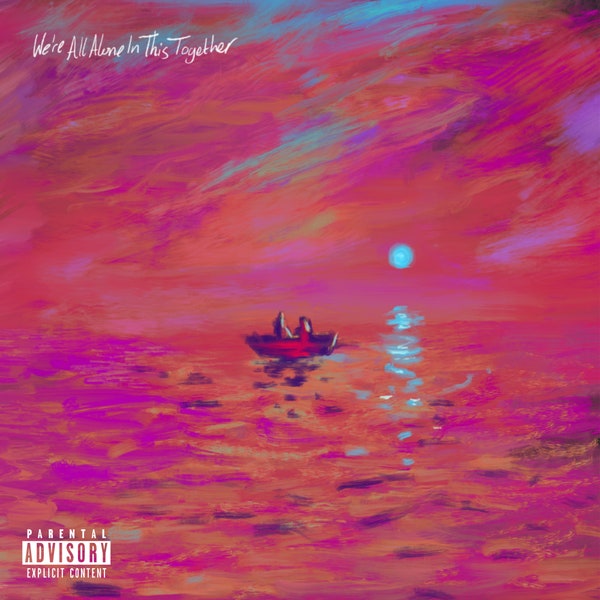
Week 31: Dave- We’re All Alone in This Together

Another artist I saw on Later…with Jools Holland, but that caught my eye more than usual. Dave is a rapper and a spoken word artist, which is what I happen to do. These kinds of artists are rare to see on mainstream television, so I was delighted to see him on there. He and George the Poet have been the best-spoken word artists on the show of late. I was also very encouraged when Dave’s debut album hit the top spot because it meant that spoken word now had a platform for bigger and better things, rather than just medium-sized venues with modest audiences. 

Moreover, his debut album, PSYCHODRAMA, earned a Hyundai Mercury Prize in 2019—an incredible achievement for a spoken word artist. Could Dave better that this time around? That’s a hard act to follow. I am pleased to inform you that Dave didn’t fall under the immense pressure bestowed on him. This record isn’t just for those who understand the struggle; there is also a universal message. Dave often goes after the Conservative and Unionist Party and its current and former leaders. From immigration, racism, and the Windrush scandal. Indeed, Dave talks about being raised in London, proud of his Nigerian roots, and paying homage to his ancestors. I love how Dave is fearless in addressing the history of Britain that is seldom spoken about in schools. It is a shame it isn’t because it isn’t as pretty as Dave paints for you on the album. Indeed, he does a track with Stormzy where they call out the state of Britain since leaving the European Union and the failings of the current government. They also have “Jeremy Corbyn won” in the chorus, supporting the former Labour Party leader and making it clear that he would have been the better choice in their opinion.

‘In the Fire’ features Giggs and Ghetts over a gospel beat. He then talks about the Windrush generation on ‘Three Rivers’ and how they are now being mistreated by the country that they have contributed heavily to and done a lot of good for Britain but are currently being treated like shit due to racism peddled in the right-wing press. However, my favourite is the longest track on the album, ‘Heart Attack’. Dave addresses knife crime, racism, and how the metropolitan police profile certain people. 

Indeed, Dave says Scarface and its lead character Tony Montana are praised because he is white. Still, when it comes to a black individual depicting a similar role in a film, the press says how appalling it is and glorifies violence. I loved this outlook by the man known as Santan Dave, and unfortunately, it is true. It is always films with black individuals that get the bad press. Indeed, this is reflected in the aftermath of Marcus Rashford, Jadon Sancho, and Bukayo Saka missing penalties for England in the recent European Championship final against Italy. All three were racially abused and received death threats for being human. To my horror, I saw an online poster calling for all white people to “Attack a Black” the following day. It was worse than that, but you don’t need to be a genius to work out what the poster said. There was a points system as well for the forms of attack. It is fucking abhorrent that this shit still goes on and that after a specific referendum in 2016, it has emboldened racists to now do it with minor consequences. Just look at the fucking right-wing twats who are currently on television. It is disgusting. We all live under the same sky and should try to get along with each other regardless of our skin colour or religion.

Dave closes the record on a reflective note about how he has let himself and others down with his past behaviour on ‘Survivor’s Guilt’. Dave acknowledges that the press has highlighted his actions outwith his music and that he will learn from his past mistakes and become a better role model and better to Black women. This album is brilliant, and I loved how he didn’t hold back over several issues that need a light shone upon them. Look for “We’re All Alone in This Together” among the Hyundai Mercury Prize 2021 nominees. This is better than PSYCHODRAMA.

Song recommendations: ‘Heart Attack’, ‘Three Rivers’, ‘Survivor’s Guilt’

9/10

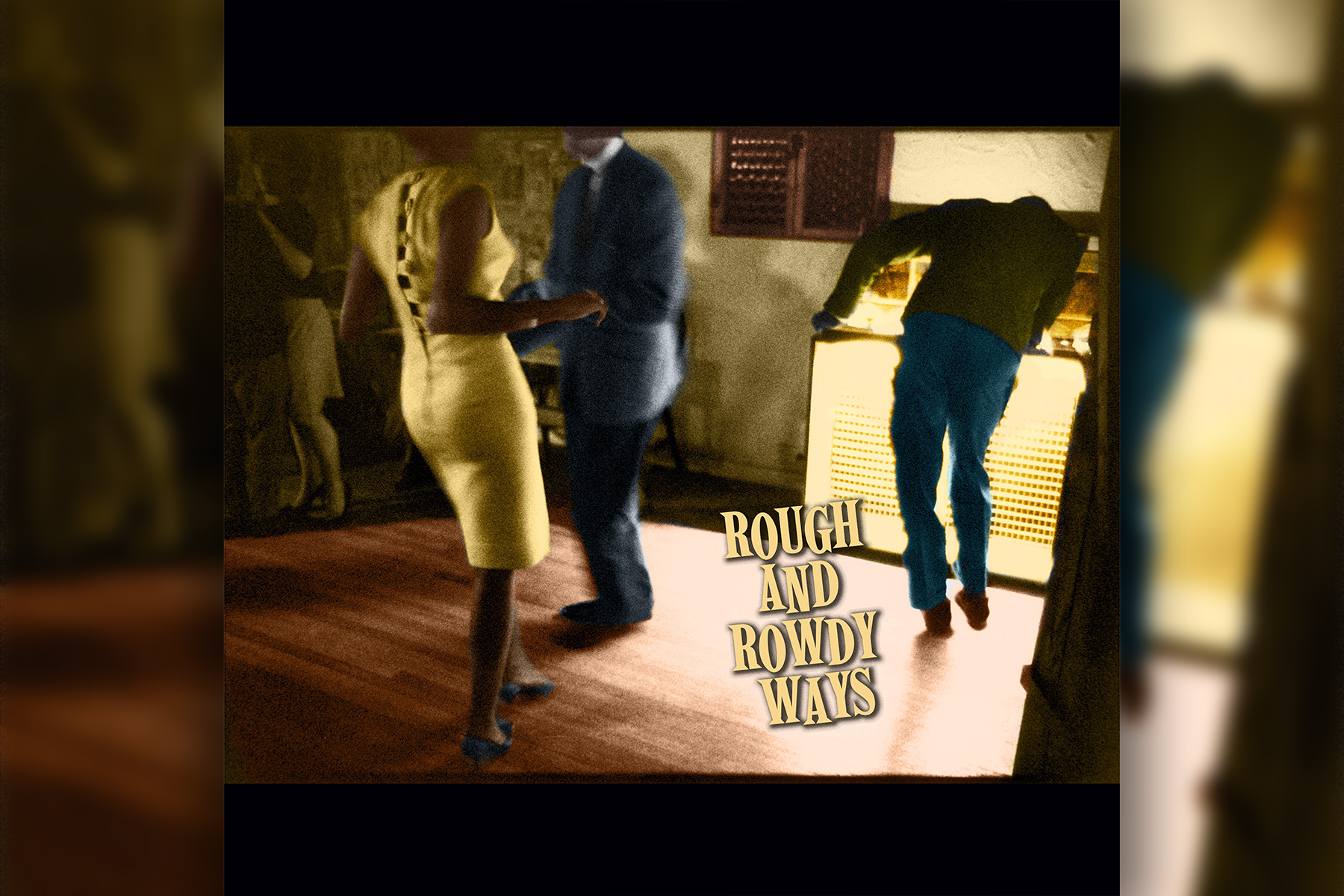
Week Twenty-Six: Bob Dylan- Rough and Rowdy Ways

rough-and-rowdy

Well, it is only fitting that I do an entire track-by-track review of Bob’s latest and 39th album:

I Contain Multitudes:

As you will discover as the record progresses, most of the songs are over five minutes long. The opening track was released as a teaser for the album, which happens with most soon-to-be-released albums. As I said, most of the songs are long, and this was no exception, but keep your attention focused and listen to what is contained in this spoken word track. It may start differently than a typical Dylan album, but it is still worth listening to. It felt like I was listening to the start of the record as dawn broke, and I thought it sounded familiar to the late John Prine’s “All the Best”. Bizarrely, Bob even sounds a bit like John on this one. What will surprise you is that the song pretty much doesn’t reflect the usual Dylan material, but the lyrics inform you that it is indeed the genius of Bob at work.

False Prophet:

Yet another one that Bob used to tease the album release. From the sombre mood of the opener to the more lively following track laced with Bob’s dark humour.

My Own Version of You:

Now, this might go down poorly with the hardcore element of his fan base. Remember what happened when he ditched the acoustic guitar to play more electric originally? He alienated a fan base by doing so but didn’t give a fuck and did what he wanted to do. Of course, he still played a balanced set after all the furore over it, and again we see Bob doing what the fuck he wants to. Why? Because this sounds more like Bob rapping than actually singing or spoken word. I love his wordplay and his delivery on this track. I also like rap, so this track doesn’t make me get all angry at Bob’s attempt to do something creative. Anyway, that’s who he is. He is an innovative artist who gives himself no boundaries in the expressive arts kingdom. His hardcore fans should give it a listen and a chance.

I’ve Made up My Mind to Give Myself to You:

A rare glimpse at the moment with Bob’s songwriting as he focuses on the subject of love. It also reminded me of “Is Your Love in Vain” and the track he wrote for the Home Box Office serial crime drama rated one of the best in the world, the Sopranos. Bob usually struggles to convey his messages with sincerity regarding love songs, but he delivers this song with absolute conviction.

Black Rider:

Well, you will have noticed that most of the album is more spoken word, and this song is no exception. Indeed, if you thought the tracks were delivered in the same vein as the late Leonard Cohen, you will hear something very familiar in the form of Leonard’s “You Want it Darker”. Although about mortality, the topic hits the nail right on the head with how it is portrayed. Nick Cave or John Cooper Clarke, fuck it, even Dave could turn this into a cover that justifies Bob’s work later down the line. Of course, their version won’t beat his, but they could do it at some event in his honour in a couple of years. I mean, like a recognition event for his work. Many of which he has already had.

Goodbye Jimmy Reed:

Now, we are on common ground with Bob’s material. So far, the album has been unique and captured our attention. Not to say anything is wrong with Bob bringing familiarity to the record, but this is a safe option with all that has happened so far.

Mother of Muses:

It feels more like a Christmas song, and who knows, maybe this will be released just in time for this year’s yuletide? There’s also a change in vocal direction as Bob sings on this one, and I describe the delivery as melancholic yet beautiful.

Crossing the Rubicon:

It’s a blues song that captivates you with its slow arrangement. That is the track in an absolute nutshell.

Key West (Philosopher Pirate):

This is one of his very best, alongside all his work, and I am not exaggerating. Definitely the best off the record, but it goes much further than that. This is Bob at his finest. He still has it in him to write timeless classics, even at this late juncture of his career. It is a better version of all his tracks that do not get the recognition they deserve. His vocal delivery and melody are one. Even if this album hasn’t been to your liking so far (Trust me, it’ll grow on you in time.), you have to give this track a listen. Bob has written a classic that will be spoken about long after the current people occupying the planet are dead and gone.

Murder Most Foul:

What’s impressive about the final track is he had the fucking balls to release it as a single! It is only FIVE seconds short of SEVENTEEN minutes! Incredible! It is also his longest-ever song, the first single off the album. The sleeve has a picture of the late John Fitzgerald Kennedy; indeed, that topic is the assassination of the 35th president of the United States. The song itself was an accidental release. It appears as it was uploaded onto Bob’s YouTube account. Imagine Bob has ended an album with two masterpieces that look like they are going down as his timeless classics. No need to imagine anymore because he has finally done it on this Leonard Cohen-esque record. Bob said he did this album for him and him only, but stick with it and keep listening, and I guarantee even the hardcore fans will get it. It’s a shame he was up against Neil Young for the top spot, but Bob thoroughly deserves to sit atop the rest of the competition again.

Song Recommendations: “Key West (Philosopher Pirate)”, “Murder Most Foul”, “My Own Version of You”

9/10