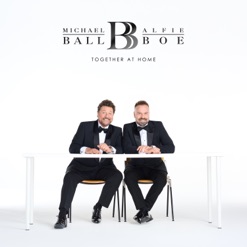
It’s Christmasss! Hahaha, as Noddy Holder from Slade once bellowed. I find it wholly appropriate to say that because, once again, Michael Ball and Alfie Boe sit atop the album chart, and it always makes for a great Christmas present. The duo first teamed up in 2014, and six records on have been quite a success. This album is also a poignant milestone—it marks a decade of their beautiful collaboration.
I am also surprised to discover that I might just well be the FIRST individual to review this new record. No pressure, then, eh? One of the first tracks I would like to highlight is their cover of Heather Small’s ‘Proud’. The song represents the duo’s pride in their roots, welcoming people from all backgrounds into their world and feeling proud of their families.
‘Homeward Bound’ was chosen because it is about being on the road and longing for home. The great American sonwriter Paul Simon also wrote it in Widnes train station.
‘Welcome Home’ is by a small American band called The Welcome Home, which is from the same place as R.E.M. The song combines a modern hymn with a Southern American style of Coldplay. Boe discovered it while trawling through Spotify.
Seeing ‘Ferry Cross the Mersey’ by Gerry and the Pacemakers on the album was a personal highlight for me. As a fan of Liverpool, and knowing that Boe is also a red, it’s a special connection. Another standout is the timeless ‘Baker Street’ by Gerry Rafferty. The album is a treasure trove of classics like ‘Dirty Old Town’, Take That’s ‘Rule the World’, The Hollies ‘He Ain’t, He’s My Brother’. But my heart belongs to the closing track ‘What’s the Craic? (An Irish Medley)’. This track, a medley of traditional songs from Mother Ireland, including ‘The Irish Rover’, is a perfect ending to a brilliant album. It’s a medley that’s perfect for any celebration or festivity.
Song recommendations: ‘What’s the Craic? (An Irish Medley)’, ‘Dirty Old Town’, ‘Welcome Home’
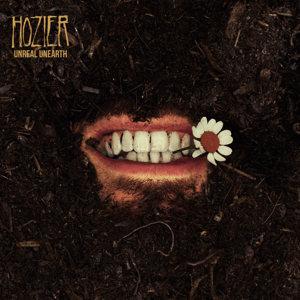
Who could forget 2015 when Hozier went toe-to-toe with James Bay for the anthem of the year? I am trying to remember who won precisely, but both anthems are now somewhat iconic. That was the beginning of Hozier’s already lengthy career. We might not have heard of him until then, but he was in a band before and did several live performances as a backing vocalist, et cetera. His anthem, ‘Take Me to Church’, finally got him noticed. The whole album was good, and the songs performed live were quite celestial. According to an interview with Jools Holland, “Unreal Unearth”, his third studio album, is inspired by literature, such as Danté.
What I found somewhat surprising is Hozier has written only two songs on the record, and the rest are co-written. You would think Hozier wouldn’t find this necessary, as he has shown he is a great songwriter on many occasions. As you can imagine, the two he wrote are by far the best work on the album. One of them would be seen as controversial over here as it details how the Irish citizens suffered at the hands of Britain during the invasion. Particularly the holocaust, which is dressed as the “famine”. The track in question is called ‘Butchered Tongue’, and over this plucked acoustic tune, Hozier gives a fiery vocal delivery about the injustices. If you can’t handle sheer honesty in the song, then don’t listen. He doesn’t hold back. It was also refreshing to hear a Gaelige song that introduces the album—further stamping his Irish identity. The second, written by him, is towards the end of the album ‘Unknown/Nth’, an ethereal track riddled with metaphors.
Another of my standouts are songs I had earlier in the year when he performed on Later…with Jools Holland. ‘Eat Your Young’ is quite a disturbing track. Still, it has some fantastic guitar work by Hozier and then ‘Francesa’, a highly emotional track about someone dying of an incurable disease. The vocal delivery on both are raw and sung with absolute conviction. Hozier’s lyrics go from biblical references, to the outlandish naming of car parts. It is beyond insane as the record progresses. The biblical references kind of blend in with the whole Danté-inspired premise.
In the Spring edition of Later…with Jools Holland this year, Jools felt the album was eclectic, and Hozier agreed. Indeed, this record has funk, soul, Celtic, and rock, to name a few. As well as having co-writers, Hozier also did an indie-inspired track called ‘Damage Gets Done’ with Brandi Carlile. Then there is a jazz track, ‘All Things End’. You would be forgiven for detecting a metronome, but it is surprisingly finger clicks, complete with a gospel choir in the chorus.
It was disappointing to find Hozier acquired co-writers for this album, and you feel cheated knowing he did. Yes, co-writers can write, but they need help understanding the meaning of your songs. As mentioned earlier, Hozier, in his own right, is a great songwriter, so this decision seems odd. Hozier is known for writing passionately about things he is interested in or his life. I can only think the record label browbeat him into using co-writers because they would be able to stem his creativity on what can be controversial opinions. The real test is how they hold up live. Although the album might be slightly manic with the genre-hopping, I still find it quite a good listen.
Song recommendations: ‘Francesca’, ‘Butchered Tongue’. ‘De Selby Part 1’
One thing you will notice about “-‘ is that Ed uses a lot of weather-based themes to foretell the latest trials and tribulations in his life. Although the lyrics and his delivery are pretty heart-wrenching, they are encased with rays of sunshine regarding the instrumentation. You may start to think it is a typical Ed acoustic, but the song builds as the choir comes in, making it more uplifting over Ed’s heartfelt vocals. Some of you may not like it and feel it is the same old thing because Ed is out with the acoustic again, but I say, listen to his frank story.
Salt Water:
Again, listen to the lyrics as he goes deeper with another life story. When you listen to the instrumentation, you understand how apt the title is. You have piano keys throughout, which represent the waves engulfing him, and the slow, steady drum beat, which means his struggle to stay afloat as the water tries to pull him under. There is then a bright moment with Female vocal harmonising coming in, which represents Ed’s soul letting go as it burns him inside from the pain he is experiencing. The bridge is where the tracks have ethereal tones, meaning Ed succumbs to the waves as he falls to the ocean bed. He has accepted drowning in his sorrows. The track then fades out, which represents Ed’s spirit giving up.
Eyes Closed:
For once, Ed starts a track on an uplifting melody. However, the song in question is another heartbreaker and a moment of reflection. This one is a tribute to SBTV’s Jamal Edwards, who tragically passed away early last year due to an overdose. Jamal was the guy who gave Ed his early but growing fan base when Ed performed from his London home over the Internet. It is undoubtedly how I initially heard of Ed after a friend, Joe, showed me some of the performance through his mobile phone in 2009. From there, I would keep my eyes peeled for Ed as I was left impressed. Those performances on SBTV gave him the platform he needed. So, the track has an uplifting melody, but it is also there to show that not everything appears as it seems and represents Ed’s sense of loss perfectly. Why? Because the upbeat melody represents Ed’s veil of happiness as he carries on after Jamal’s death when really behind the veil, he is struggling to come to terms with it. The behind-the-veil segment of the tracks is Ed’s lyrics, which reveal the true extent of his grief. Ed, with an acoustic baring his soul, is Ed at his best.
Life Goes on:
If you thought the previous track was heavy, put on your lifejacket because this one is gut-wrenching and pulls at your heartstrings—a deeply personal story. Cherry Seaborn, Ed’s childhood sweetheart and now his wife, is carrying their child when Ed taps into the emotion Cherry is experiencing when she hears the news. Ed belts out ‘it hit like a train’ to convey the feeling that Cherry has found out that their happiness is soured with news that she has been diagnosed with cancer. The track is Ed talking directly to you candidly about how he is worried about what may be on the horizon. Ed is begging his wife throughout to fight and beat the horrible illness as he cannot imagine life without her. Why is it called ‘Life Goes on”? Well, Ed is saying that, unfortunately, the world doesn’t stop when a tragedy occurs. If you don’t shed tears or feel anything as Ed pours his heart out about Cherry, then quite frankly, your body is just a vessel with nothing in it. Even though Cherry could not be operated on during her pregnancy with Jupiter, she has since had treatment and is recovering.
Dusty:
After the heaviness of the previous track, Ed switches up to hip-hop. The instrumentation is quite groovy, as most hip-hop is, and represents the light at the end of the tunnel for Ed, as do the lyrics, as they are more optimistic. Indeed Ed even says enthusiastically, ‘the future is so bright’. The bridge is out of synchronisation with the rest of the song as it sounds like something the likes of 5ive, 911, Boyzone, Westlife, et al would utilise in their songs back in the 90s. This track is like a continuation of ‘Salt Water’, although this time, it is Ed climbing off the ocean bed and swimming up while floating on the calmer seas as he gets above the water. Ed represents this with a high-frequency sound at the end of the track. The sound means his ears are unblocking as he returns to the surface.
End of Youth:
Oh dear, that calm ocean has turned rough again as Ed finds himself battling the waves that are dragging him under. To represent the sense of drowning and hopelessness, Ed utilises minor chords, which, if you have a good ear for music, are used in sad/reflective songs. To add to the gloomy mood, Ed throws in strings that match his vocals as he foretells how the grief drove him to attempt suicide. Another track that leaves his heart open.
Colourblind:
Staccato piano chords over loving lyrics to begin with Ed propelling back to 2013 when he was recording “X” and recording the controversial ‘Thinking Out Loud'( I am not going to go into the details about that. Just Google Marvin Gaye and Ed Sheeran for that story.), which this song draws inspiration from. The track is uplifting, and Ed’s happiness is heard through the vocals. When he was in the booth, he had a smile on his face when delivering the vocals on this one. Ed then tests his vocal range as he goes high and falsetto over a choir, adding that angelic and floating touch.
Curtains:
Ed showcases another segment of his vocal range: singing lower than ever. This track also breaks away from the usual acoustic and heads into the electric and rock arena as you can hear electric guitars, crashing cymbals, and thumping drums over Ed’s vocals. The chorus is even more frantic, representing that Ed is breaking free of his worries and rediscovering his zest for life. This whole track has a positive message for Ed and the listeners.
Borderline:
Once again, Ed sinks to the bottom of the sea as the depression takes hold. I call this the manic depression track because the instrumentation represents the manic cycle, and the lyrics describe the clinical cycle. When we get to the chorus, the song breaks free of the manic depression, and a bright sky breaks through. Very autobiographical.
Spark:
This is like swimming against the rough seas, represented by the bouncing beat before the drums match Ed’s soaring vocals to mean conquering the rough seas, which gradually get calmer. Ed is leaving his worries and his past behind and moving forwards.
Vega:
Another reflective moment as Ed returns to his beloved Martin in a song talking about the devastating news of his wife Cherry heard during the pregnancy and almost broke Ed entirely. He delivers his pain perfectly in the chorus—an emotional track. The track is very downtempo, but the lyrics contrast this with optimism that things will improve for Cherry and the family.
Sycamore:
This is a follow-up to ‘Vega’ with Ed and Cherry feeling relief that the nightmare is over and they can recover from the ordeal. Strings accompany an optimistic but wary Ed as he talks about being by Cherry’s side at the hospital. A clever track melodically because it shows the feeling of optimism and fear, which is what happens with an experience like that.
No Strings:
This is Ed letting go over stabbing piano chords as he expresses what Cherry means to him. After his wife’s recovery, Ed feels she has to know just how much he loves her, and that love is why they made it through.
Hills of Aberfeldy:
Remember when everyone mocked ‘Galway Girl’? I didn’t mind it, to be fair. I found it rather uplifting, but many thought it insulted Celtic music. He is back again with another Celtic song, but it will be warmly received this time. This is your typical traditional Celtic song. No fancy additions like on ‘Galway Girl’. The vocal delivery is that of an old Celtic singer with acoustic guitar joined by bagpipes and marching drums. Sonically, the track is calm, suggesting that Ed finds peace after a rough journey. Another ode to his wife, which looks to the future and ends the album with a message of hope and never fading love.
Song recommendations: ‘Salt Water’, ‘Hills of Aberfeldy’, ‘No Strings’
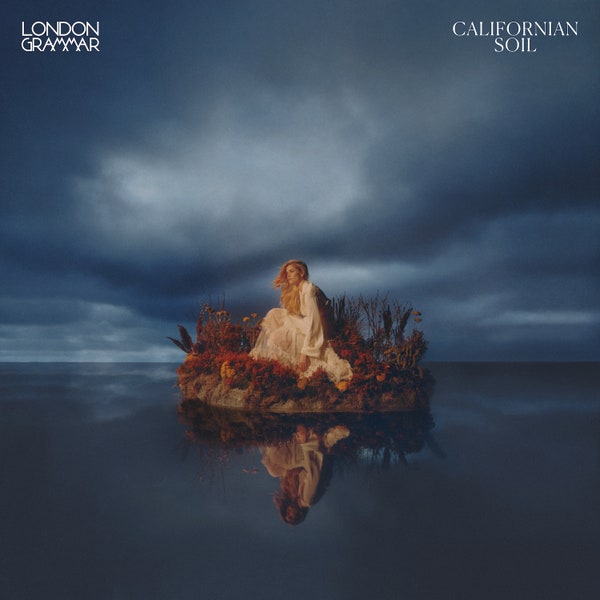
As you can imagine, Hannah Reid is once again a critical group member, and I especially liked her vocal performance on ‘Intro’. Many told me before I got the chance to listen and review this album that it had a hint of Clannad about it. Considering Hannah’s Celtic roots, this didn’t surprise me, but I’m afraid I have to disagree with most of their assumptions about this record sounding like Clannad. Yes, ‘Intro’ does sound like a Clannad track used for a soundtrack or otherwise, but I didn’t see much else resembling Clannad’s inspiration. Another three to four songs, but that’s about it.
It differs from the last album from 2017 because it flirts with experimentation more, adding more orchestral, Celtic, and cinematic sounds. There is a touch of ambience in the album, too. Now, remember I spoke about ‘Intro’ sounding like Clannad earlier? Here’s why. Although Hannah doesn’t sing, she still uses angelic vocalising with her voice while chiming bells, strings, vinyl crackles, and a haunting Celtic ambience dances with her vocalising. Its cinematic feel is glorious to listen to in surround sound and sends chills down your spine with its haunting. It would be ideal for a film based on Celtic folklore. Clannad may have heard this track and might be interested in working with Hannah.
Hannah’s vocals do not deviate much during the entire album. The record then goes from ‘Intro’ to the ‘Californian Soil’ title track. Many have drawn comparisons with Massive Attack on this.
Still, as always going against the grain, I found some other artists I felt drew more comparison in Alanis Morrisette. Why? Because to me, the riff sounded more like her 90s hit ‘You Oughta Know’ not because of the aggressive vocals or subject matter, but just that.
After that, a record is packed with Hannah’s trademark vocals, sometimes angelic vocals, synths that are sorelaxing you fall into a trance, strings, Clannad-inspired melodies, and sometimes the guitar riff makes an appearance.
Because of the calming and light instrumentation, you could also draw comparisons to My Morning Jacket. Like the American band, London Grammar has allowed you to sit back, stare at the ceiling, or close your eyes and dream of entering another realm.
Of course, aside from their generic sound, ‘All My Love’ is a cinematic ballad, and ‘Closer America’ is more melancholic than what they usually do. The latter is about chasing the American dream and crushing it with brutal honesty.
However, I will close on the trackside of the review with ‘Missing’. When I heard this, I instantly thought of Zero 7’s ‘Destiny’ with its downtempo, which felt precisely like the 2001 track. Still, Hannah’s vocals mirrored Sophie Barker’s and Sia Furler’s (Yes, THAT Sia Furler. She came over to England in 1998 from Australia. In fact, it is worth listening to some of her earlier work like ‘Little Men’ and ‘Drink to Get Drunk’). Not only have you got a sense of Sophie and Sia in it, but I am going to say the great Sadé, too.
The lyrical content is centred mainly around Hannah’s fight with feminism and the sexism and misogyny she has encountered many times since joining the industry. It gives more energy and passion to the record because it lets her emotionsshine through with conviction.
The record is quite melancholic for the group, more mature than the previous records, with some tracks fit for a film soundtrack, inspired by Hannah’s Celtic roots and subject matters that need urgent addressing, like the sexism towards women that isstill experienced by many within the industry to the present day. As for the Clannad connection? It was less heavily influenced than some people have made out. Like I said, three to four tracks at the maximum.
Song recommendations: ‘Intro’, ‘Californian Soil’, ‘Missing’

 Honest Opinions