I planned to start with a brief introduction to Olivia Dean, but since this is quite a lengthy review, I will leave it until next time. Olivia Dean expresses something that is often lost in today’s society. A society full of anxiety, negative news headlines, and anger. Her second album, “The Art of Loving”, asks the listener to take a moment, listen, and find kindness in their soul. Now, I have never done a review like this, but I am going to use bullet points. Let us begin:
Her vocals:
Olivia’s vocals act as a warm hug, inviting you into her world from the very first note. Her voice has a unique duality, speaking directly to you while also addressing the wider world. The light production, featuring acoustic guitars, brushed drums, brass, occasional piano, and strings, further reflects Olivia’s emotional journey. Her lyrics reflect her hopes, dreams, heartbreak, and above all, her enduring kindness, making you feel included in her story.
What question does ‘Nice to Each Other’ ask?:
Of course, one of the standout tracks is her latest single, ‘Nice to Each Other’. The song depicts two lovers at war during their relationship, but of course, the chorus asks them to be nice, even when they shouldn’t, because they are hurting each other. The track reflects these emotions of conflict and reconciliation. The sublime jazz-inspired piano hook causes the track to swell after each verse, before dropping into a chorus where Olivia’s vocals take the limelight over a reverberating snare drum. The production is quite clever here, as it shows us that even through ill feelings, a soft approach can be taken, rather than a knee-jerk reaction leading to a blazing row and plenty of volume.
Her love of lounge jazz to mirror empathy:
Olivia’s passion for lounge jazz is beautifully captured in ‘CloseUp’. The track’s unique features, such as the muted trumpets that accompany her sincere and softly spoken apology, the brushed drums, the laid-back bass, and the saxophone that mirrors the lyrics, make it a standout piece. The profound lyricism is certainly a highlight, but the true beauty of the track lies in how the instrumentation breathes life into the song, creating an emotional connection that allows the listener to find their personal experiences within.
The versatile message in ’So Easy to Fall in Love”:
A track that says let your inhibitions go, but also to tread with caution. The title is apt because it is indeed easy to fall in love, get caught up in the moment, and become naïve to the pitfalls that will eventually occur. The production reflects this by using the electric arpeggiated piano and a bright sound to convey infatuation. Her vocals are once again tender, but warm.
‘Something In-Between’ showing the selfish side of love:
Olivia has created a record full of blissful stories about love, but she was also not shy about discussing the other side of it. She talks about protecting one’s worth and standing her ground to avoid being taken advantage of. The track itself is aptly played in the minor key range, featuring a lightly strummed acoustic over a low synth pulse. Reflecting the sense of being at ease with standing your ground, but also knowing that not losing face can be risky to the relationship.
The three-part coda:
While most albums end with a simple coda, Olivia has included the final three tracks, ‘A Couple Minutes’, ‘I’ve Seen it’ and ‘The Last Note. ‘I’ve Seen it’ is about her discussing love with a conviction she feels has never been done before. One particular lyric highlights this: “I’ve seen the movies, I’ve read the poems, but the real love that sticks is the one that hurts enough to matter”, and she is right. It does. Most romantic songs have an air of pretence about them, but Olivia has done it more genuinely. For the first time, an electric guitar is utilised as it bends, representing a sigh, while a light harmonica blends into the background.
Why the album shines a light on being kind:
As mentioned earlier, we live in very evil times, and “The Art of Loving” illustrates that kindness is often frowned upon in society because it is seen as a sign of weakness, and individuals can be easily taken advantage of. However, Olivia has used it to show that being kind is a good thing and as a form of rebellion.
Let us have a look at the tracks I have been discussing, then what they teach us about being kind:
Nice to Each Other:
Even if we have ill feelings towards someone or something, we can choose to show kindness instead of responding in a way that worsens the situation.
CloseUp:
Before rushing in with all guns blazing, we should take a step back and assess the situation to understand it before deciding on the appropriate action.
So Easy to Fall in Love:
Yes, it is pure bliss to feel in love and grow stronger because of it. It may leave our hearts open, but we should embrace it, rather than see it as a weakness.
Something In-between:
Be in a loving relationship. But make sure you can stand your ground, so one person does not dictate the relationship. The balance will ensure the relationship is healthy.
I’ve Seen it:
Love is not perfect. It has its pros and cons, as with everything in life. Give both the rough and the smooth a warm hug.
The lyricism is profound, and her vocals are like standing next to a warm radiator, making you feel warm and cosy as the songs radiate with kindness. In a world that sees love as a weakness, she sees it as a strength. She does not know the answers, nor does she pretend to, and she refuses to be a wallflower about asking. That is why the record shines a light on being kind.
Outro:
Olivia’s album paints a picture of a world where the need to express thoughts is as urgent as a megaphone’s call. Yet, Olivia’s voice rises above all the noise, calling for whispers of kindness, devoid of any expectation of grand gestures in return. She invites us to listen, to pause, and to harmonise with the gentle sound that embodies humanitarianism. Her goal is to evoke a fuzzy, humane feeling, which she more than delivers. Her message, both thought-provoking and steeped in kindness, is a rare and precious find in the 21st century when it comes to love.
Song recommendations: ‘Nice to Each Other’, ‘CloseUp’, ‘So Easy to Fall in Love’
One of the most admirable qualities of Sam Fender is his courage to speak up for the working class in the music industry. He fearlessly calls out the industry for not doing enough to support musicians from working-class backgrounds. His outspokenness is a testament to his advocacy and determination. I share his views, and I believe Sam is one of the most authentic and relatable musicians out there. He remains true to his roots and takes pride in them.
So far, all his albums have reached the top spot with his Springsteen-esque songs. “People Watching” makes that a hat trick. The record still has elements of “Hypersonic Missiles” and “Seventeen Going Under”; however, this time, he isn’t autobiographical but looking at other people around him and incorporating their stories into his songs. A tactic used by many a songwriter and poet. One of these includes a rather unwell friend. He also forms stories about people in the gym or those sleeping rough, making this an interesting listen. The album features a diverse range of themes, from personal struggles to societal issues, making it a compelling and thought-provoking listen. At the same time, the Geordie Bruce Springsteen delivers electric guitars with acoustic with the familiarity of the saxophone—all the ingredients of his American idol.
Although Sam may be talking about others on the album, he finds a way to express how he feels about those particular themes. Social commentary, if you will. ‘Crumbling Empire’ is the most poignant, where he attacks the state of the world, comparing it to Newcastle, where various governments have let the people down. He mentions his mum working as a midwife to drive this point home. He acknowledges, after seeing his hometown falling apart, that he may not live the life he did, but he is thankful music worked out because he knows the life he had could be a lot worse than it was before he shot to fame.
‘TV Dinner is a departure from Sam’s usual style, reminiscent of Hozier’s ‘Take Me to Church’ not in its structure, but in its sound. The song features a long verse and a short chorus, with the final chorus serving as a long outro. This structure, combined with the song’s powerful vocals and emotive lyrics, evokes the same raw energy found in Hozier’s work. As mentioned in the first paragraph about criticising the industry, this song addresses how they build artists into idols and then stand aside when their flaws come to the surface. He particularly addresses the late Amy Winehouse as an example. He isn’t afraid to say how he has been treated himself. Referring to them treating him as a cash cow, he has decided to do as he pleases from here on rather than appease the industry. Sam also discusses the controversial and complex subject of religion and whether we can abide by our religion and genuinely live life according to the ways of the church on ‘Little Bit Closer’. Now, from listening, I gather Sam is an atheist because, during the bridge, he asks, “What is God?” and goes on to say he hasn’t found God yet, although he has had moments where he has been close to seeing why people believe in God and are part of the church.
Another unusual track is ‘Remember My Name’, a piano ballad dedicated to his late grandparents. Usually, a record concludes with a bombastic track, but Sam has opted for a slower tempo. It is quite dark talking about how his grandmother had dementia and was looked after by his grandfather. His thoughtful and caring grandfather would speak to his grandmother to help her remember things. The raw emotion in Sam’s vocals adds to the story’s effect. Sam may not be speaking from personal experience, but as frequently done on this album, he puts himself in their shoes. Granted, what “People Watching” lacks sonically with the same old tried and tested method, it makes up for with the lyrical content and how Sam can observe people, listen to conversations and structure from there. He has spoken about other people in his previous records, but never to this extent. This is his Kelly Jones moment, a reference to the lead singer of Stereophonics, known for his observational storytelling.
Song recommendations: ‘Crumbling Empire’, ‘TV Dinner’, ‘Remember My Name’
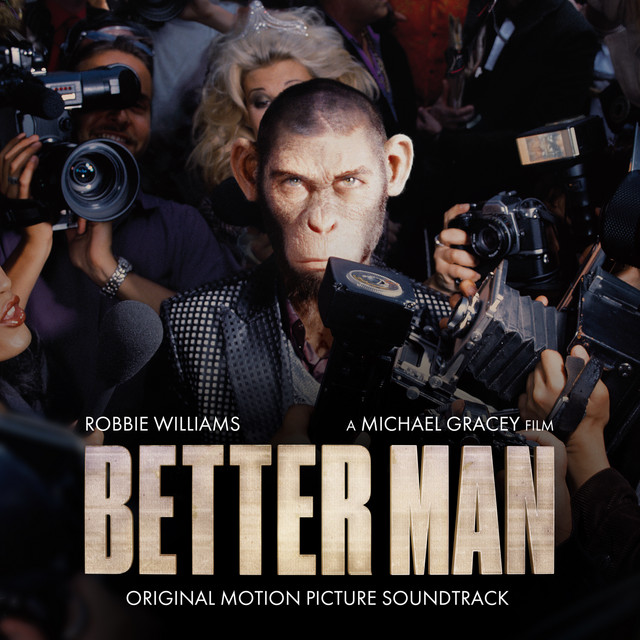
As you can see from the front cover, it bears a striking resemblance to the 1997 album “Life Thru a Lens”, with Robbie surrounded by the paparazzi and a shaven head. However, the ‘Better Man ‘ cover, named after one of his songs, features a unique twist-a CGI monkey in place of the human Robbie. The monkey also plays Robbie in the film. The album also features a range of special guests , including Carter J Murphy, actor Steve Pemberton, who plays Robbie’s dad, Tom Bales, Kayleigh McKnight, and Adam Tucker, who provides the vocals for Robbie’s earlier material. The reimagined songs, featuring an orchestra and shortened for the soundtrack, also include the man himself. Now, let’s move on to the track-by-track review:
Feel featuring Carter J Murphy & Steve Pemberton:
The song undergoes a transformative journey in the reimagined version . It evolves into a duet, with Carter and Steve stepping into the roles of a young Robbie and his father. As the melancholic melody unfolds, Robbie’s presence is felt, adding a poignant layer to the song. This transformation adds a new dimension to the original version, making it a compelling listen.
I Found Heaven featuring Tom Bales & Adam Tucker:
The original song , one of the very first by Take That, the boyband that launched Robbie’s career, is a quintessential 90s pop with a club element. Adam Tucker’s vocals, reminiscent of a young Robbie , are so similar that it’s often a delightful challenge to tell them apart. This similarity adds an intriguing layer to the performance, engaging the audience in a unique listening experience.
Rock DJ:
I didn’t mind this song when it first came out in the summer of 2000, but it got overplayed and, therefore, saturated. I grew to hate it for its cheesiness. The new version hasn’t changed my opinion.
Relight My Fire featuring Tom Bales & Adam Tucker:
I never liked the original version with Lulu of this poppy dance track, and I still don’t.
Come Undone:
I still need to know how Tupac Shakur inspired this song. Anyway, I liked this one for its lyrical content and the story Robbie foretells. The song tells the story of his dealing with instant fame, his father leaving home, self-loathing, and drug addiction.
She’s the One featuring Adam Tucker & Kayleigh McKnight:
As you’re familiar, this was a cover of the World Party song, a rendition that stirred the late Karl Wallinger’s animosity towards Robbie. Adam, with his heartfelt vocals, is joined by Kayleigh, who embodies All Saints member Nicole Appleton in the film . Together, they bring to life this romantic ballad.
Something Beautiful:
I still do not like it, but I understand now that the song is about Nicole aborting his child. So, instead of this song being pop, the uptempo conceals a darker meaning found within the lyrics.
Land of 1000 Dances featuring Adam Tucker:
This track features a repetitive chorus, blaring drums, and a brass section. The orchestra shines through as the vocals reveal the sense of overwhelmingness that Robbie experienced on his way up.
Angels featuring Adam Tucker:
I have always loved this song, and if you say you do not, then you are a fucking liar. It is a heartfelt ballad with a sweet guitar solo. It isn’t a patch on the original, but the soaring orchestra is used to great effect and represents how Robbie was mourning for his Gran and then how his emotions boiled over, which led to him going off the rails and turning to drugs and alcohol to escape the trappings of fame.
Let Me Entertain You featuring Adam Tucker:
One of his anthems that always gets the crowd in the mood, with its rock n roll element and a sublime brass section. This version replicates the live version of the iconic and record-breaking Knebworth Park gigs in 2003. Need I say anymore?
Better Man featuring Adam Tucker:
From the rock-n-roll anthem of the previous track to a more downtempo one, this track showcases the artist’s growth and introspection while he was checked in at the Priory to battle his demons and addictions . I have always loved this track for its reflective lyrics and the mature delivery in the vocals.
My Way featuring Adam Tucker & Steve Pemberton:
Another track that replicates a live performance, this time from Robbie’s swing concert at the Royal Albert Hall in 2001. Robbie dedicated it to his parents in the venue. Unlike in the film, Steve, who depicts Robbie’s father, joins him onstage. Steve can certainly sing, and in a way, this version is just as good.
Forbidden Road:
The final track was written specifically for the film and is used for the end credits. It is an acoustic ballad with reflective lyrics about Robbie’s journey so far. It is certainly not deserving of the end credits, where most people lose interest and leave the room/cinema.
Song recommendations: Angels, She’s the One, Forbidden Road
Well, it goes without saying that I am a big fan of Jools Holland; as you know, I discover many bands/artists through his show. Jools started off as the keyboardist in Squeeze before leaving to go solo while presenting The Tube on channel 4. He then went on to form His Rhythm & Blues Orchestra and present the Late Show’s spin-off “Later…with Jools Holland in a pokey studio in Shepherd’s Bush. The show would expand and move to Maidstone Studios in 2011 (The Annual Hootenanny still takes place there.) before returning to Shepherd’s Bush in 2019 and then moving onto the current venue deep in the bowls of Alexandra Palace, where the first television broadcast for the BBC took place. The show had a live half-hour midweek show until 2019 before reverting back to a show that lasted just an hour on weekends from 2020 onwards. Of course, the series during 2020/21 was locked down, so it was limited to one guest per episode discussing their music and their favourite moments from the show’s archives with other bands/artists performing elsewhere. Now, onto Rod Stewart. I have no idea when how I came into his music because my mum is a big fan of his, and during the 80s/90s, she would go to quite a lot of his London shows. I guess I grew up with his music.
As you know, Rod was in the Faces with Rolling Stones guitarist Ronnie Wood, among others. He then decided to go solo, and the rest is history. He has amassed hit after hit and collaborated with a slew of artists.
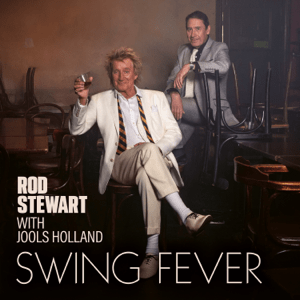
You might think, “What’s the point of this album? It will be the usual compilation”. Well, I didn’t share that notion after listening to them talk about the project on the One Show and Jools’ Later Show. I know it all started after a love of building model railways, et cetera( Look closely at the opening credits of Later…with Jools Holland from 2015 onwards. You will see what I mean.). Honestly, I knew this wouldn’t be a compilation album with no love put in, because Jools and Rod are passionate about Swing. One thing that I was surprised about was the front cover. Why is Rod, with a whiskey shot, sitting in front of Jools, while Jools is in the background, sitting on a table leaning on an upside-down chair in what looks like a bar setting? This is supposed to be a collaboration. They should have been sat parallel to express this. The cover art gives the impression that this is Rod’s record.
As the album is set around the Big Band Era, the bulk of the songs are strikingly short, falling under the 3-minute mark regularly. This is how it used to be back in that era so that they could be played on the radio. Of course, songs can now qualify for anything up to five minutes. Talking of five minutes, the opener ‘Lullaby of Broadway’ is the longest track on the record, packed with brass, Rod’s swooning vocals and Jools’ iconic boogie-woogie. This is followed by ‘Oh Marie’ with more of the same, but much shorter. ‘Sentimental Journey’ is where Rod’s vocals hit top gear surrounded by brass and trumpets. Jools takes centre stage on ‘Pennies from Heaven’ with his band backing their leader. Rod’s vocals synchronise with Jools and his band on ‘Night Train’.
Rod and Jools have a lot of fun on this album. Where it falls down for me is that I thought this was supposed to be a collaboration. Too often on this record, I felt Rod was taking centre stage, and Jools was simply blending into the background. Jools is a phenomenal boogie-woogie player, but there wasn’t enough of that for me. We were not shown Jools’ pure craft on the piano. However, if you want an upbeat album for a knees-up, then this is it.
Song recommendations: ‘Sentimental Journey’, ‘Night Train’, ‘Oh Marie’
My biggest fear for the record was that Billie-Joe Armstrong was going to water down the lyrics like he did recently for ‘American Idiot’ during a performance earlier this month. I wondered why he did that. Was he trying not to offend those referenced as “redneck” in the original lyrics? Or did he just want to let the Make America Great Again movement know he wasn’t a part of their agenda? I was worried Green Day would lose that punk ethos after that performance. However, I am pleased to say that is not the case, and they still have that political drive we know them for.
The opener ‘The American Dream is Killing Me’ sounds very familiar, and that is because it has an ‘American Idiot’ feel, so that’s one of the political songs. ‘Strange Days are Here to Stay’ addresses the use of heroin but also attacks racism, Über, and what the bullshit governments/politicians promise to deliver and never do. ‘Living in the 20s’ was a lot darker than any of the tracks on the album as this talks about mass shootings, which happen frequently in America. ‘Coma City’ also addresses that issue but also attacks police for their unnecessary use of force. All of the above have anthemic choruses and will send the audience wild during live shows. The punk spirit, passion, and fist-pumping will be palpable.
They also take a sarcastic swipe at their generation and nod to the 90s classic film Trainspotting. ‘1981’ reminded me of the likes of Clash and the Ramones. The lyrics reference the Cold War and East Berlin. They even reference the present, especially on ‘Fancy Sauce’, which is tongue-in-cheek.
The record spans across all decades. ‘Dilemma’ sounds like the 50s rock, and if I recall correctly, the last album I reviewed of theirs was pretty much a record packed with that particular genre, which I said, at the time, took me by complete surprise because it was more their cover band (Coverups)than them. Don’t be fooled by this; the song swings from that to the usual Green Day sound continuously over a hard-hitting subject of addiction. There is also the gender-neutral ‘Bobby Sox’. There is even room for their love of Oasis on ‘Father to a Son’, where the acoustic is deployed over strings and brass, and Billie-Joe talks about the pros/cons of being a parent. Again, there are a few tracks like the above that you think have softer moments, where Billie-Joe adopts the acoustic, but you are wrong. At some point, they explode into action with punk, and ‘Father to a Son’ is no different. It works on the aforementioned track because it conveys both emotions of being a parent.
This album never stops. Like I said, even the gentler, more acoustic moments do not remain ballads, but full-on pop punk. This is the closest album I can think of to “American Idiot”, with its bite, sarcasm, and political and controversial views across a range of topics. Some might say it’s “safe”; I’d say it’s the band at their very best. I am still a fan of “Dookie, though. Nothing will top that.
Song recommendations: ‘The American Dream is Killing Me’, ‘1981’, ‘Father to a Son’
The best thing about doing this track-by-track review of Noel Gallagher’s High Flying Birds’ fourth consecutive No. 1 album is to recycle bits of the old reviews I have done on High Flying Birds’ previous records. Of course, my views on ‘We’re on Our Way Now’, ‘Black Star Dancing’, ‘A Dream is All I Need to Get by, ‘This is the Place’, ‘Blue Moon Rising’ and ‘Flying on the Ground’ will be my thoughts inspired by others and from Noel, himself. I found myself agreeing quite a lot with what Noel had to say on some of the aforementioned tracks, as you will find out along the way:
Everybody’s on the Run:
Well, from the outset, you know the album will take you on a journey narrated by Noel Gallagher as different swathes of emotion wash over you. The introduction for ‘Everybody’s on the Run’ begins with a snare complete with the angelic singing of the Crouch End Festival Chorus and Wired Strings, with the guitars being played at a sweeping pace to add to the dramatic beginning. Before his vocals kick in, the song starts dropping to a nice, slow and steady pace. Noel delivers the music with a passionate yet desperate tone as he tells the listeners that this song is about holding onto love in the most testing times. The arrangement shows grandeur yet remains true throughout. The bridgereminds the listener that Noel is still very much in touch with rock n roll as it has this element, complete with the Wired Strings playing at an intense tempo. The acoustic guitars amazingly overtake the electric guitars and lead into the final chorus, where Noel delivers his message with pure emotion: a good way and a brilliant start to the album.
the Death of You and Me:
The biggest noticeable thing is that Noel uses trumpets( Actually, it’s him imitating trumpets. However, they are used live.), but it adds a grandiose sound to his credit. Many would be forgiven for thinking he wouldn’t use this method under Oasis as it is not very rock n roll. Well, you’re very much wrong about this song and the albums that followed. Noel remains true to rock n roll, and there are still elements of the Oasis wall of sound alive, and a bouncy tempo seems to put the acoustic guitars into mere significance on this track. It resembles more of a broader version of ‘She’s Electric. Unlike ‘She’s Electric’, this track is sung with mature vocals, bringing new charm and vulnerability, which shows Noel has changed his perspective on life now he is married with children ( No pun intended.), which adds to the track. The middle section is dreamy and catchy as Noel cleverly implants the harmonies of “La, La, La”, which is always a surefire winner as it is uplifting and infectious to the listener’s ear. The end section is dominated by the creeping brass, reminiscent of the jazz you hear from New Orleans as the song jauntily continues to flourish. As Noel added the infectious sing-a-long harmonies, the track would go down well when he took it out on the road, and rays of lights from phones and cigarette lighters get held aloft in unison when the introduction begins. Hopefully, we will see those moments again when High Flying Birds next go on tour.
AKA…What a Life!:
The song pays homage to Noel’s days at the Hacienda, enjoying the vibes as Acid House shook the building to the core. Noel uses a piano riff throughout, which is also a trait of a great house track that embeds itself in your memory bank and never leaves you. Noel has a matter-of-fact nature with an evil twist that’s switched onto the world air about him. As he heads into the chorus, he sings with a raised voice and at the top of his lungs, emphasising the word “life”, making it sound elongated to “liiiife”, which is the very last word of the chorus. An ear-piercing guitar solo finds its way in after the chorus, acting as a link before the verse. The guitar solo sends shivers down your spine. It’s not exactly something you would expect on a Dance-esque track. The song ends on a soft “woo-hoo” repeatedly as the music doesn’t end in a flurry, but rather a gentle come down as if you were back at the Hacienda as the last acid track is played and faded out to end proceedings.
if I Had a Gun…:
This was the biggest eagerly-awaited track from the debut album. There were guitar tutorials and even remixes since the track was leaked online during an Oasis soundcheck from their ill-fated final tour. The soundcheck may have sounded sketchy, and remember, the song was stripped back then, but now the song has lived up to expectations. Actually, no, it HAS exceeded the expectations it was burdened with. A piano and an acoustic guitar accompany Noel’s vocals as he sings in a fragile yet moody and restless tone, “If I had a gun/I’d shoot a hole into the sun/And love would burn this city down for me (or you. Depending on where you are in the song.).” A song that sounds in the same vein as ‘Wonderwall’ is complete with a slightly different chord change and melody. Haunting backing vocals add to the whole structure of the song. Electric guitars also lead us into the first chorus, where he delivers the line “Scuse me if I spoke too soon( Again, depending on where you are in the song.)/ My eyes have always/ Followed you around the room/ Cause you’re the only/ God that I will ever need/ I’m holding on/ and waiting for the moment to find me” with pure conviction, which is apparent throughout. It is also an ode to his wife, Sara. The lyrics will undoubtedly ensure the song stands the test of time (It has so far.)and remains a timeless classic long after we have all departed. Even when the instruments start to catch up with Noel and surround his vocals, he maintains his delivery and doesn’t succumb to arrogance as the song goes on. That reason alone shows that Noel deserves all those accolades and his place in music history. It also shows his maturity as he maintains his delivery from start to finish. In that sense, it might be a departure from Oasis, but it still has the sound of Oasis but is more grown-up. This song will(and has proved to be.)a hit with people who didn’t even like Oasis; it appeals to everyone across the music spectrum. It has also proven to be a crowd favourite, with the crowd singing along.
in the Heat of the Moment:
Once again, the house piano riff is back but veers away entirely from a house track once it kicks in. The chorus is very punchy as Noel sings it from the top of his lungs.
Riverman:
The opening track from the 2015 album “Chasing Yesterday” involves a count-in before surprising the listener with a space jazz guitar riff. In Noel’s own words, the song was inspired by a night out with Morrissey when he heard Brian Protheroe’s ‘Pinball’ for the first time despite growing up when the song was out. Initially, The song would be something different until he heard ‘Pinball’, and this track is undoubtedly a nod to Brian.
Lock All the Doors:
It was a song that had yet to be completed to Noel’s liking since it was first written in 1992 and featured on an Oasis demo tape with the bootleg freely available online. Noel was never delighted with the introduction, verse, or bridge that surrounded the chorus, and like ‘Stop the Clocks’ and ‘(I Wanna Live in a Dream in My)Record Machine’, he has returned to it and turned into a song that he feels is now worthy of featuring on an album and be played live. The song sounds like typical Oasis choc-full of attitude, and the guitars turned up loud. The arrogance in the song is much more reminiscent of ‘My Big Mouth’ from the 1997 album “Be Here Now”. This was one of the few songs that Noel wanted Oasis to play after that tour. This is the closest Noel has got to the Oasis sound since he embarked on his solo journey.
the Dying of the Light:
It’s in the same vein as a Smith’s song with its melancholic sounds despite the lyrics fusing melancholy and love. It was the ‘If I Had a Gun’ moment of “Chasing Yesterday” and, indeed, an ode to his wife. It is also a chill-out moment as the listener cools off after going mental to ‘Lock All the Doors’. Whereas that song is fast, this slows down drastically, with Noel playing the chords steadily.
Ballad of the Mighty I:
The ‘AKA…What a Life!’ track of “Chasing Yesterday” in a sense, although it does have differences. The chorus is incredibly catchy. Something that Noel mastered during his time with Oasis. Noel sounds younger than his years on that album, especially on this track. Despite all the drugs, cigarettes, and alcohol, the time has been kind to him and still given him a voice (If not more robust.) that he can use today, unlike his younger brother, whose voice started to decline after 2003. Johnny Marr also perfectly features a guitar solo on this song, which completes the song. A further note on the chorus: you will find yourself humming or singing to it.
We’re on Our Way Now:
An exclusive made for the record at Noel’s brand new Lone Star Studio, King’s Cross, London. The track is produced alongsideex-High Flying Birds Jeremy Stacey’s twin, Paul ‘Strangeboy’ Stacey. Noel has stated the song is about leaving unsaid things when you don’t get to say goodbye to someone. The song has a breakdown section reminiscent of Andreas Johnson’s 2000 track hit ‘Glorious’. It’s a folk song but done in a Noel way, with its melancholic theme and an upbeat tempo as the track goes on. It also reminded me of ‘AKA…Broken Arrow’ off the 2011 self-titled debut album. I was surprised to hear Noel return to something similar to that record. I enjoyed the strings on this and the female harmonising by Jess, Charlotte, and YSÉE. I don’t care what anyone says; those ladies make the High Flying Birds richer in sound.
Black Star Dancing:
I have heard some extremely cutting reviews of this track, but I like disco funk and enjoyed it. I will also add that it is highly elementary to play on the guitar. Nile Rodgers happened to be at the same studio when High Flying Birds recorded this, and if Nile says it’s brilliant, it is fucking brilliant. The man is the king of disco funk. Noel said the title is inspired by the late David Bowie’s final album “Black Star”. He also said that he was watching Top of the Pops 2 on BBC 4 on a Friday night, and ‘Let’s Dance’ by David Bowie came on, which inspired him to write this. Noel also said he was humming the bassline on a trip to Tesco Metro of what would become this track that has angered many hardcore Oasis fans who can’t accept that High Flying Birds are making music that is far more than stadium rock. Once again, I loved the female members’ vocals and how they sounded like they were from the era when disco-funk was at its peak.
Holy Mountain:
So, just like what was featured on “Riverman” from the sophomore record, “Chasing Yesterday” from 2015 (Yes, I said, “Sophomore”. So fucking what? I’m writing this, not you.) We hear a horn section featuring. This was also the lead single to promote “Who Built the Moon?”. It’s a bit bubble gum pop but is exceptionally catchy. You will get the chorus stuck into your head.
A Dream is All I Need to Get by:
I remember hearing this when I acquired it for DJing, and I was taken aback by how different it was to ‘This is the Place’ the EP from where it is from. You can hear twinkling castanets accompanied by Noel’s acoustic guitar and haunting vocals; the song grows and gets grander as you enter the chorus. Of course, the track is inspired by the Smiths and particularly by Noel’s good friend Johnny Marr. The song is chilled out and dreamy. It also sounded great live when High Flying Birds recently performed at the Duke of York Theatre, London.
This is the Place:
The track name came when he looked at fellow Mancunian Tony Walsh’s poetry book ‘This is the Place’. Noel asked him if it was okay to use the title, and Paul felt honoured. The song is the leading track off the EP with the same title and the second part of the “Wait and Return” EP series. You can tell that Noel has followed on from his experience working with David Holmes by making music he likes to listen to and turning more experimental as he goes on the journey with High Flying Birds. Any songs like this wouldn’t have been welcomed in Oasis by a specific member and the narrow-minded fans who only expected a particular type of sound. This track is hugely psychedelic with spacey synths, bongos, piano, a guitar lick that gets in your head, superb female vocals (Especially by YSÉE.), and something that former Creation Records label mates Primal Scream would have put on an album in the early 1990s. You could say it was inspired by Noel’s nights at the Hacienda.
It’s a Beautiful World:
It’s incredible what effects you can use in the studio. Because of the way sound effects are used to make his voice sound muffled, complete with reverb (Is that the word I’m looking for?), I haven’t heard on the live version, in the warm-up concerts, or on Later…with Jools Holland in 2018. Nonetheless, it still worked live. This track could be described as both cosmic pop and psychedelic. You have a breakdown section before the solo where the touring member, Charlotte, speaks in French (Noel said it was too late to change the spoken word when Charlotte said she mentions the end of the world. Noel did not like that and would have preferred “It is not the end of the world” to tie in with the feel-good vibes of the record.) It is also worth noting she plays the scissors on this track (Yes, that’s correct. The scissors. Fucking mental!).
Blue Moon Rising:
No, it’s not a track about Manchester City. Yes, it does have ‘Blue Moon’ in the title (Obviously.). It is another disco track inspired by Noel’s viewing of Top of the Pops 2. His vocals accompany synths and relaxed guitars. The lyrics are not up to much, but Noel has a knack for taking your attention away from that with the production (Yes, sometimes Noel can write simplistic or minimal lyrics, but hold your attention with the music.). The track is relaxed and leaves the listener open to their interpretation of the meaning behind the lyrics during the verse. Still, in the chorus, Noel shows his outstanding vocal ability as he bellows it at the top of his lungs. You can see this live as theveins bulge out of his neck. His voice has got stronger as he gets older. The way he sings at the top of his voice has yet to cause noticeable damage.
Dead in the Water(Live Rté 2FM Studios, Dublin 2015):
Well, those who yearn for Oasis love this. This track was recorded off the cuff on-air at Rté 2FM Studios in 2015 during an interview and short performance during the “Chasing Yesterday” tour. Is it completely improvised? As Noel says at the end of the track, as the presenter asks him. Well, I don’t believe him. It was far too polished to have been made up there and then, especially when you hear the keyboard solo by Mike Rowe. There’s no way Mike could have done that without getting a feel for the track. This song talks about Noel looking to hold onto a love that seems hard to recover. Apart from the whole chorus, the standout line is where he talks about having no money while looking at a photograph. Now, who can this be about? Because he had plenty of money when he met Sara. Is this Noel reaching out to someone in the past? Was it written for Louise in his Oasis days, and has been given new life? Whoever it is about, it is compelling lyrically and reminds me of the sort of song by the Smiths that would have inspired him to write this. This is classic Noel, though. He is singing with a tint of melancholy in his voice and laying his soul bare.
Flying on the Ground:
Noel best described this and took the words out of my mouth when he said this track is a nod to Burt Bacharach with a Motown twist. Because it is. We know Noel has given nods to Burt in the past, but not yet with High Flying Birds until this exclusive track. A member of Noel’s team told him to put this out as he always plays it in the Sour Mash office. Thank God, whoever that person is, because I loved how Noel fused Motown and his love of the great songwriter Burt Bacharach. Again, the female members stand out, and it is refreshing to see Noel letting them showcase their vocals alongside him—a feel-good way to end this latest record by Noel Gallagher’s High Flying Birds.
Song Recommendations: This was extremely tough as they are all strong tracks, but after much consideration, ‘A Dream is All I Need to Get by’, ‘Flying on the Ground’, ‘Dead in the Water’





 Honest Opinions