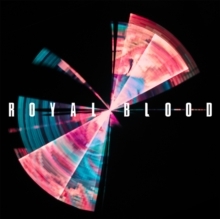
Many of the purists of the duo may have been concerned when they opted to change direction and sound like a combination ofFranz Ferdinand with their disco-punk and Tame Impala with their psychedelia. Still, they didn’t have much to fear because it hadn’t affected Royal Blood all that much sonically. You can still hear their fundamentals shining through and their spirit. There is something for everyone on this latest album, four years on from “How Did We Get So Dark?” For example, ‘Boilmaker’ sounds like your typical Royal Blood song.
‘All We Have is Now’ is a piano ballad that closes out the record, ‘Either You Want It’ is a track right out of the Tame Impala psychedelia manual, and ‘Million and One’ is a moody love song that is uplifted by the disco akin to Franz Ferdinand with synths included to the mix to give the track flesh.
Mike Kerr was inspired to experiment with this album after quitting alcohol and talking to Josh Homme from Queens of the Stone Age about what sort of new elements he and Ben could do on the next Royal Blood record. Through this newfound confidence since becoming teetotal and the advice given by Josh, Mike removed the direction from the second album. Once again, the lyrical content is strong across all subjects, ranging from self-reflection love, despair, and hope.
I preferred the final track, ‘All We Have is Now,’ as my favourite, with its sense of calm and melancholy. It is a piano ballad and the only one on the record. As the album starts with ‘Trouble’s Coming’ and maintainsthat energy level consistently, although some psychedelia might be chucked in, it is apt to end on a soft and calm note. I would like to see this added to the encore’s final song on the forthcoming tour (Whenever that is) to temper the fans before theyhead home. As for the direction? It hasn’t soured their identity, and nor will I think the purists will be pissed off with it. You can still tell it’s Royal Blood.
Song recommendations: ‘All We Have is Now’, ‘Either You Want it’, ‘Million and One’
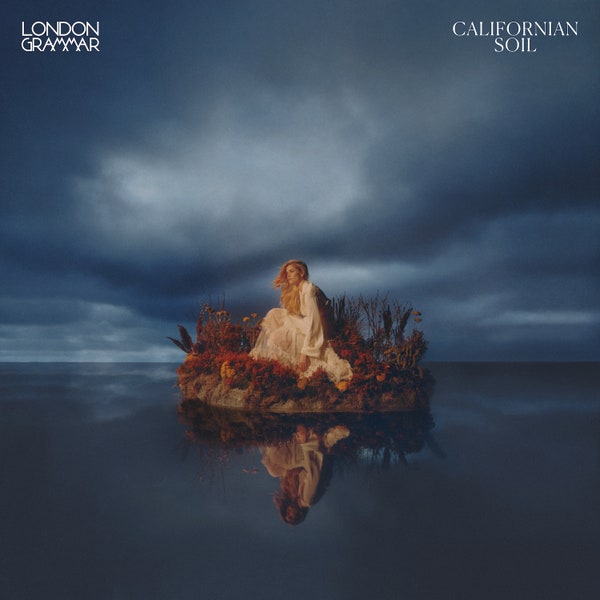
As you can imagine, Hannah Reid is once again a critical group member, and I especially liked her vocal performance on ‘Intro’. Many told me before I got the chance to listen and review this album that it had a hint of Clannad about it. Considering Hannah’s Celtic roots, this didn’t surprise me, but I’m afraid I have to disagree with most of their assumptions about this record sounding like Clannad. Yes, ‘Intro’ does sound like a Clannad track used for a soundtrack or otherwise, but I didn’t see much else resembling Clannad’s inspiration. Another three to four songs, but that’s about it.
It differs from the last album from 2017 because it flirts with experimentation more, adding more orchestral, Celtic, and cinematic sounds. There is a touch of ambience in the album, too. Now, remember I spoke about ‘Intro’ sounding like Clannad earlier? Here’s why. Although Hannah doesn’t sing, she still uses angelic vocalising with her voice while chiming bells, strings, vinyl crackles, and a haunting Celtic ambience dances with her vocalising. Its cinematic feel is glorious to listen to in surround sound and sends chills down your spine with its haunting. It would be ideal for a film based on Celtic folklore. Clannad may have heard this track and might be interested in working with Hannah.
Hannah’s vocals do not deviate much during the entire album. The record then goes from ‘Intro’ to the ‘Californian Soil’ title track. Many have drawn comparisons with Massive Attack on this.
Still, as always going against the grain, I found some other artists I felt drew more comparison in Alanis Morrisette. Why? Because to me, the riff sounded more like her 90s hit ‘You Oughta Know’ not because of the aggressive vocals or subject matter, but just that.
After that, a record is packed with Hannah’s trademark vocals, sometimes angelic vocals, synths that are sorelaxing you fall into a trance, strings, Clannad-inspired melodies, and sometimes the guitar riff makes an appearance.
Because of the calming and light instrumentation, you could also draw comparisons to My Morning Jacket. Like the American band, London Grammar has allowed you to sit back, stare at the ceiling, or close your eyes and dream of entering another realm.
Of course, aside from their generic sound, ‘All My Love’ is a cinematic ballad, and ‘Closer America’ is more melancholic than what they usually do. The latter is about chasing the American dream and crushing it with brutal honesty.
However, I will close on the trackside of the review with ‘Missing’. When I heard this, I instantly thought of Zero 7’s ‘Destiny’ with its downtempo, which felt precisely like the 2001 track. Still, Hannah’s vocals mirrored Sophie Barker’s and Sia Furler’s (Yes, THAT Sia Furler. She came over to England in 1998 from Australia. In fact, it is worth listening to some of her earlier work like ‘Little Men’ and ‘Drink to Get Drunk’). Not only have you got a sense of Sophie and Sia in it, but I am going to say the great Sadé, too.
The lyrical content is centred mainly around Hannah’s fight with feminism and the sexism and misogyny she has encountered many times since joining the industry. It gives more energy and passion to the record because it lets her emotionsshine through with conviction.
The record is quite melancholic for the group, more mature than the previous records, with some tracks fit for a film soundtrack, inspired by Hannah’s Celtic roots and subject matters that need urgent addressing, like the sexism towards women that isstill experienced by many within the industry to the present day. As for the Clannad connection? It was less heavily influenced than some people have made out. Like I said, three to four tracks at the maximum.
Song recommendations: ‘Intro’, ‘Californian Soil’, ‘Missing’
Ah, the luxury of not researching the history of an artist for once. Why? I reviewed her 2017 album “Lust for Life”, where she wasn’t holding back when she went after the former president on issues such as racism and class division. The title of her latest record will raise a few eyebrows, significantly since “Chemtrails” has been dropped in. That is controversial in itself because she’s aware that chemtrails are chemicals dropped from planes into the atmosphere that are used to decrease population or for mind control. You already sense that Lana will touch on some interesting subjects that the world superpowers will not like. The “Country Club” part is just a place where you are more than likely to play Golf or go Horse riding. Other things to enjoy include Tennis, the gym and a health spa. Anyway, onto the review…
This is Lana’s (Or Lizzie Grant’s) seventh studio album, where the sound is inspired more by the mid-west than the glitz and glamour of Los Angeles. Once again, Jack Antonoff is on production. You might recall I mentioned him in the recent review of Taylor Swift’s “Folklore”, and Jack has taken away a lot from those sessions and added them to Lana’s album. The record starts with the piano ballad ‘White Dress’, which I prefer out of most of the tracks with Lana’s almost whispered vocals and the subject of when she started in the music business. You have an essence: Lana has grown tired of LA and is looking for a much slower pace at this juncture in her life and maybe her career. I hope not because she makes good music, and it would be a shame if she decides to have a hiatus for five years.
There’s even room for a Joni Mitchell cover (Which is the final track.), with her first features over the Americana and country-inspired record spanning over eleven tracks. I am not sure what the contributions of Nikki Lane and Weyes Blood are because I only hear Lana’s vocals with backing vocals in the chorus. Of course, maybe I needed to listen more carefully to the aforementioned featured artists in the verses. The album, with its lyrical content, subjects, delivery, excellent drumming, and the brilliance of Jack’s production, seems to be about Lana looking for the simple things in life, like swapping diamond earrings for tan wood earrings and Beverley Hills for Mammoth Spring State Park.
Song recommendations: “White Dress”, “Let Me Love You Like a Woman”, “For Free”
What a turnaround in fortunes for Tom. Once, he had a budding football career that caught the attention of his local club, Luton Town, but he was let go at a young age. He then embarked on his next passion, singing, and his debut album, “Lighting Matches”, was very successful. Indeed, Tom’s song “Found What I’ve Been Looking For” became the official anthemfor Sky Sports Super Sunday coverage and was featured on the FIFA 18 soundtrack. However, he had another final chance atfootball when Luton Town’s former manager Graeme Jones offered him a trial in August 2019, just as Luton Town was starting the campaign in the SkyBet Championship since 2008. He is still singing and has released his second tells me that it wasn’t a fruitful trial at the Brache training ground.
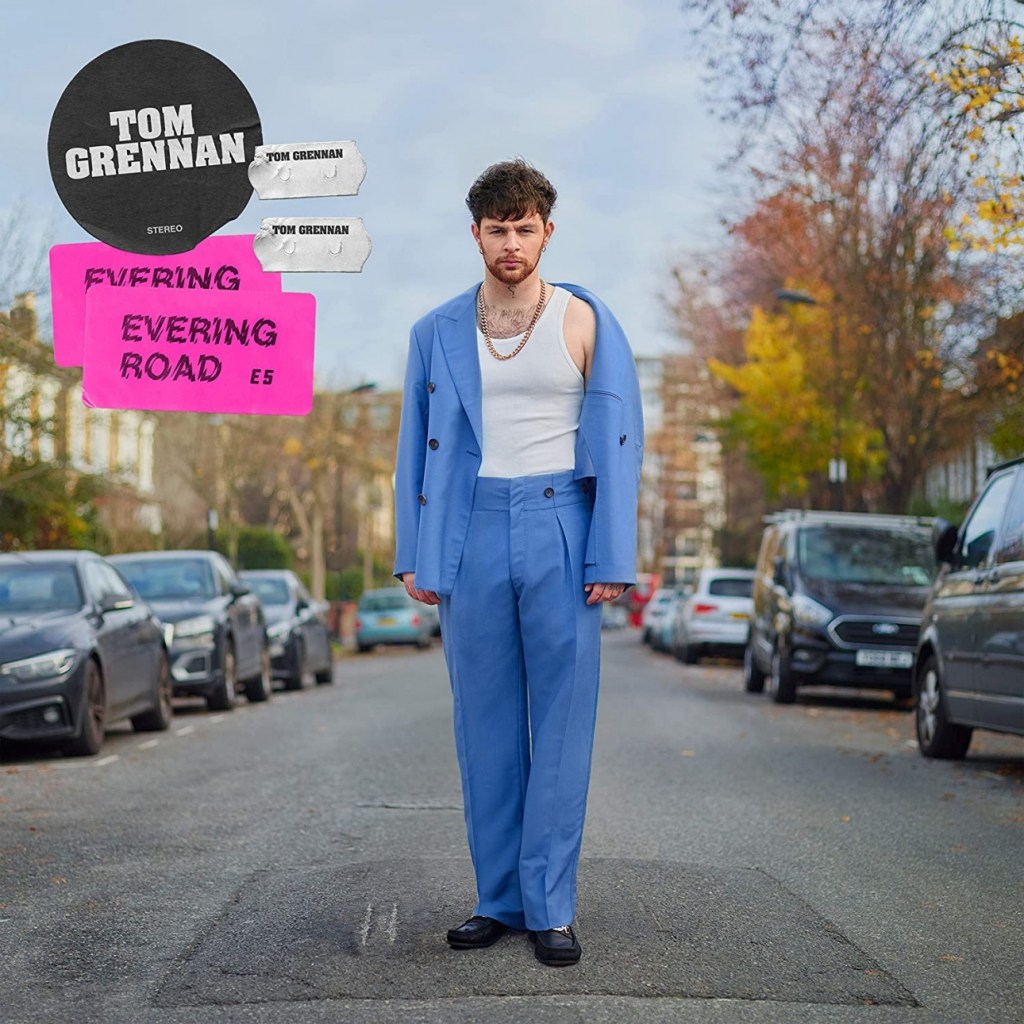
The second album is called “Evering Road”,named after a street in Newham, East London. It is also where Tom lived with an ex-girlfriend. Was that before he got fame or after? However, he grew up in London as well as Bedford. As Tom hit his mid-twenties, he changed it up with “Evering Road” and made this record about his break-up with his ex-girlfriend from Newham, with whom he spent three years. He candidly discusses his toxic behaviour and thanks her for helping him learn the errors of his ways in this audio letter of apology that spans over 14 tracks. The record reflects the volatile relationship rather than Tom passing blame or asking for sympathy for his diabolical attitude. Tom has laid this record out to perfection; it is laid out in the order a story of the events that took place would have happened.
So, not only is this album an audio letter of apology, but it is also an autobiography. In other words, it is more like reading a book on this period of his life and, therefore, flows. Imagine when the live music world opens up again and hearing Tom perform these songs at Capital Radio Summerball 2022 at EE Stadium. Songs like “Little Bit of Love” are one of his singles, and they are very punchy pop that’ll get the crowd singing along. Then, you have “Something Better”, with its jumpy piano and soulful backing vocals, with the latter adding layers to the track, making it sound fuller.
In “Amen”, Tom has an almost gospel-like texture when discussing never going to church. Still, the Hozier-esque track is more about his struggles to make decisions that his heart is in rather than just making them without consideration. The song starts to lose its power towards the end, but then Tom turns it back on with his vocals and a message that’ll be open to interpretation by the listeners. When the tracks seem waning, Tom plays to his strengths to keep the listeners engrossed. “Oh Please”has a funk vibe, but the lyrics make the track stand out because Tom’s attitude has changedfor the better. Rather than being angry and having a chip on his shoulder, he becomes more mature and shows humility.
Of course, you have an album that sounds familiar to the debut; Tom has drawn on many artists who inspired him this time, on many genres and producers. As we have discovered, “Evering Road” is an audio letter of apology, and that comes across with pinpoint accuracy on “Sweeter Then”, which is a reflection on the many beautiful summer days he spent with her, and “Make up My Mind”, which is about confessing that he didn’t know what he wanted from the relationship. Instead of being honest, hetried to fight on without knowing how he felt. However, my favourite might be somewhat of a cliché is “Let’s Go Home Together”, featuring Ella Henderson.
This song was co-written by Ella with James Arthur and performed live with the two writers in question, but for some reason (Let’s face it, it isn’t a bad choice.)Ella elected to do it in the studio and on Tom’s album. You can hear an acoustic guitar playing while Ella exchanges verses with Tomand then sings the chorus in unison while playing a gentle piano ballad. As much as the track is romantic, it is laced with cheeky lyrics andinnuendos. What is odd about the song is that it is about a couple who have met in a bar/pub/nightclub and, upon exchanging a few words, find that they haven’t much in common, but once they are tipsy, they find each other quite attractive. Maybe this is how Tom felt about his ex,or he has discovered a new love interest in this manner.
Nevertheless, I enjoyed this track, and the cheekiness of it all was a lovely refrain from the usual heavy subject. It’ll be interesting to see where Tom goes from here because this is night and day compared to “Lighting Matches”. A more mature approach shows another side of him and for the better. He has addressed the issue and is learning what it is like to be an adult.
Song recommendations: “Let’s Go Home Together”, “Sweeter Then”, “Amen”
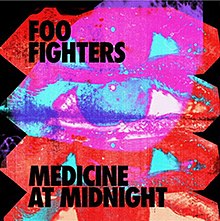
Here is a track-by-track review of the band’s latest album:
Making a Fire:
Some might say it is a typical Foo Foos track, but not quite. Although you have the usual elements that make that up, I would also classify it as “cheesy pop”, including its hand-clapping and “Na na na” refrain. Despite the element of cheese infused with regular Foo Fighters, it is a very upbeat track.
Shame Shame:
The band recently played some of the material for some lockdown sessions, with this included, so the listener should be familiar with it. We go from a pop chart-friendly song into a full-on rock that will make the setlist when the record is toured, I’m sure of it. The track in question was also used to promote the album and has had an astronomical amount of airplay, which saw it rise to no.1 in the Rock chart in America in record speed.
Cloudspotter:
This one is not a track I associate with the band; I am struggling to think of a song where they have gone into something the likes of the Jimi Hendrix Experience or Led Zeppelin would have made. Yes, this song is inspired by the psychedelic rock of the 1970s. Greta van Fleet would put this on an album rather than the Foo Fighters. It is brilliant that the band has decided to experiment on the record and made a song ready for the floor. Now, I mention him quite a bit in every review, but has the band drawn inspiration from the likes of Noel Gallagher to step back into the 70s and make music with an upbeat vibe?
Waiting on a War:
You think this track is purely acoustic, but as it swells, it turns into a full-on rock track that will shake the foundations of the arenas, especially with Dave Grohl’s in-your-face vocals.
Medicine at Midnight:
The title track is undoubtedly experimental, where the band dips into funk, acoustic, raw sound, and just like “Cloudspotter”, another song ready for the disco. I’m curious if the fans who know them for the natural rock sound will be impressed, but the band has shown how versatile they can be.
No Son of Mine:
They take it back to what the people have come to love them for with this punk-fuelled track sprinkled with Motorhead, whom they are highly inspired by. Indeed, the late Lemmy had joined them on stage as a guest. The message is also one that we can allrelate to. I mean, who the fuck wants war?
Holding Poison:
Dave opts to use reverb for his vocals over choppy riffs and rhythms. It is not a great song on the record, but that’s purely academic when you consider even the shit ones on their strong albums are probably much better than what some of the other artists/bands churn out for most of their records.
Chasing Birds:
This is likely to be the second single and will probably fare better than “Shame Shame” because it is, in effect, the second instalment of their classic and my favourite song, “Everlong”.
Love Dies Young:
The final song off the album, which so far is unbelievably short. All the songs have yet to be near the five-minute mark, which is the norm nowadays for tracks. The record clocked in at just over 36 minutes, a relatively short listen. Also, there are only nine tracks, which is unusual, especially for the Foos. Now, this track might be a typical FF track. Still, I could hear a bassline inspired by New Order or Peter Hook and the Light. It also reminded me of their acoustic ballad that builds into their usual rock style, “One of These Days”, so if you do feel underwhelmed by the shortness and tempo of the tracks, you can be won over at the end of the album, just as you were at the offset. If you buy the deluxe edition of the record, there is a listening party complete with commentary from the band after each track. Usually, this type of thing is saved for DVDs, but you have to admit, it isquite an interesting approach from the Foo Foos.
Song recommendations:“Love Dies Young”, “Making a Fire”, “Cloudspotter”
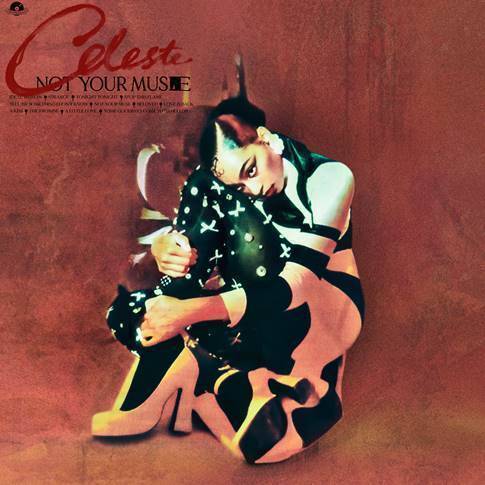
I might put this in the bio somewhere because this is getting to be something of a soundbite on my reviews (Albeitit is utterly authentic.), but once again, it was through Later…with Jools Holland that I discovered Celeste. I remember she performed “Lately” and “Strange” with just her incredible vocals and the piano to accompany her (I’m pretty sure that Jools joined her on one of the tracks.). At the same time, the likes of Liam Gallagher looked on, on that October night in 2019 at the original home of the Later series. From there, Celeste would go on to more extraordinary things. In the year just past, she won BBC Sounds Artist of the Year, joining the likes of Adele, Ellie Goulding, and Michael Kiwanuka, and that’s an excellent accolade to claim to look at the success it has brought for the artists. I wouldn’t be at all surprised if Celeste followed their path. Since her debut, she has featured on Later twice to discuss the music she likes and what inspires her in the lockdown editionof the last series and the socially distanced 2021 Hootenanny on New Year’s Eve.
Of course, this long-awaited album has seen her popularity soar, and you hear her songs everywhere, from the supermarket to the radioto the television. If anyone complains about that, I don’t know why; she has such a fantastic voice and reminds me of a rising star back in 2006 called Corinne Bailey Rae, who was heading to the top until a setback put her career on hold. She is now steady in her career and will soon release an album that attracts mainstream listeners. My point is that Celeste sounds like her, and I will also throw in Lianne La Havas. I hear that when Celeste sings a mixture of Corinne Bailey Rae and Lianne La Havas, respectively. It’s not a bad combination if I say so myself.
When I was referring to Celeste’s tracks being pretty much everywhere, here are two examples I mean: You have “Stop ThisFlame”,a track with a piano riff that, when I heard it, felt very familiar to Rhythm is Rhythm’s “Strings of Life”, which in turn inspired Noel Gallagher to write “AKA…What a Life!”, so, yeah, the track sounds like those two combined. It is also very commercial, and one mightbe categorised under pop. It is also very different from the kind of music Celeste has sung or put out in the past. The uplifting tempo and optimistic lyrics encouraged Sky Sports to use it to open their Super Sunday programme since the start of the 2020/2021 football season. Of course, an advert was released in October last year to promote the Christmas period. The advert in question was for John Lewis/Waitrose, and the company chose Celeste’s “A Little Love”. You can certainly hear Lianne La Havas coming through in that one. The fantastic thing about Celeste is even if you are unaware of her, I guarantee you have listened to her wherever you have been, heard on the radio, or watched on the television. You might have bought a magazine, and there’s been an interview, article, or even an advert promoting her music. She is very much like her fellow winners of BBC Sounds because she can cause an earthquake with her vocals, be tender with almost a whisper, and sound fragile whiledelivering a song about heartbreak. For example, “Stop This Flame” shows off her ability to sing with passion and loud, “A Little Love” to sing very quietly and softly, and “Strange” where she can sing with a fragile voice and appear broken-hearted to match the song’s subject.
I disagree with the comparisons to Adele in terms of the vocals. I think elements of this album sound more like what the late Amy Winehouse would do (I should have mentioned her earlier in what this record sounds like. I felt it had Amy Winehouse-esque songs, sonically.), I can also imagine Mark Ronson teaming up with Celeste at some point and producing an album with her. Jamie Hartman is one of the producers on the album and has worked with the likes of Rag n Bone Man. The only comparison I can draw with Adele is how the record goes from pop to ballads with Celeste, just like Adele, singing with just an acoustic guitar to accompany her. Funnily enough, the album starts just like that. Celeste is singing “Ideal Woman” over just an acoustic guitar. Another comparison would be her ability to be melancholic and tracks of that nature. She doesn’t fake the delivery on the more sombre tracks. Just like an actor, she goes into character effortlessly.
Some have argued that this album is too safe and Celeste hasn’t taken any risks, but I beg to differ. I never expected her to try something like “Stop this Flame” or “Tonight Tonight”. I didn’t expect a Mark Ronson-inspired production with “Love is Back”. It was an outstanding effort by Celeste, and there are a few surprises along the way on the album. I listened to the deluxe edition, so the record ends on her rendition of “Twinkle Twinkle Little Star”, which is an unusual way to end an album, but it works. I recommend buying or listening to “Not Your Muse” because Celeste is an incredibly talented artist, and more is to come from her.
Song recommendations: “Stop This Flame”, “Ideal Woman”, “Strange”
Here is my track-by-track review of her 9th studio album and her second album release of the current year:
Willow:
This isn’t just the opening track of the album, but it is also the leading single. This is Taylor returning to her roots when she was gigging constantly across America to get herself noticed within the industry by basing herself on country music. It’s a bizarre choice as a single, as it hasn’t any of those typical pop traits to chart that high. It is pure country with its delicately plucked acoustic guitar. Her vocal delivery synchronises with the subject of being in love with someone, and you’re trying to make them feel the same way. Taylor expresses this by how we would feel in those moments. From feeling high and excited to feeling low and being unable to breathe from the panic that they don’t love you. There are also some deep lyrics within, so listen carefully.
Champagne Problems:
This piano ballad was written with her boyfriend, who uses the alias William Bowery (Of course, his real name is Joe Alwyn.). Is the subject matter supposed to be about their current relationship? Rather than about a couple in college who share very different views about a night where one wants to break up and the other wants to propose. I don’t know how happy they are, but I can’t see them dropping hints while writing a song together. I also learned that “Champagne Problems” is a phrase (I guess only in America.) that means when an individual’s troubles are genuine but, when put into perspective, are less important than how much others are suffering. Like with “Folklore”, Taylor touches on the very fragile subject of mental health. In this song, the female character mentions her problems with mental health and how the break up of her relationship has further impacted it. I am going to quote some compelling lyrics taken from the male character in this, as he is the one who has been left heartbroken. “Sometimes you just don’t know the answer til someone’s on their knees and asks you; she would have made such a lovely bride, what a shame she’s fucked in the head, they said, but you’ll find the real thing instead”. As you can see, the song is very emotional.
Gold Rush:
Wasn’t this also a song on “Folklore”? I can’t remember, but someone will tell me when they visit my archives this year. Bizarrely, the producer of this track only features once on the record when you consider Jack Antonoff has produced half of her songs over the past three albums. This song is more chart-friendly compared to the previous tracks on the record. This time, the leading character starts falling for someone popular among several others. Unfortunately for the leading female character, the other women chases the man in question. Still, just like the leading female, they are also looking for gold in California, which, when you think about it, makes the title make sense. The leading character becomes jealous and longing to have him, and she decides she can no longer chase him because she has no fight left in her and feels it is futile. Again, some lyrics stood out for me, and they are intense by the lead character. “At dinner parties, I call you out on your contrarian shit, and the coastal town we wandered round had never seen a love as pure as it, and then it fades into the grey of my day-old tea, cause it could never be”.
Tis the Damn Season:
What I found about Taylor’s songwriting is she can tell fables about fictional characters based on actual events or fables about her own life experiences. It is challenging to do the former, as you must design the characters and build the fable around them, but Taylor does this effortlessly. Once again, on this album, she has devised a character from Tupelo, Mississippi, who is leaving her town to achieve her dreams in Hollywood on the big screen. You may be wondering where the Christmas element comes into it. The lead character returns home to enjoy the festivities, where she stumbles across an ex-lover. As one of the lyrics depicts over this electric guitar track, she says how she is breaking her own heart by returning to Los Angeles, where everyone she meets is superficial, including the way she smiles, rather than remaining in Tupelo to get back with her ex-lover and feel loved and happy once more.
Tolerate it:
There appears to be a trend with Taylor and the obsession with the fifth track; the fifth track always seems to be a ballad with a heart-wrenching confession. “Evermore” doesn’t buck the trend. Again, the song is seen from the female perspective. She is sick and tired of devoting her life to her lover, and she is not getting much compassion or any form of emotional connection in return, so she is starting to hate and resent him for that. She has tolerated this behaviour for far too long from him, and now she is ready to confront him. This track perfectly depicts when love fades away from one perspective and turns sour from the other.
No Body, No Crime:
HAIM features on this, but it is based more on the country music scene, from what I recall, rather than the usual rock-based music from HAIM. As you can tell from the title, Taylor, with HAIM doing backing vocals, has gone for a topic about committing a murder. However, it is a double homicide told from different perspectives. The first verse is the narrator’s friend bringing up in a conversation that she thinks her husband is seeing another woman; in the second verse, her friend disappears, and the narrator is sure that the husband killed her and to avenge her friend’s death in the third verse, she kills the husband, but by doing this she compromises the case. Again, this is another powerful fable told by Taylor on this record.
Happiness:
The calibre of this song is quite astonishing when you consider it was the last one to be written in just under a week before the album was due to be released. Most might panic and therefore not put much effort into the last song they are writing just in case they miss the deadline by taking too long, but Taylor has managed to create a good song under that pressure and have it all done and ready to be included on the album. The story is both one of despair and optimism. The individual is going through the agony and six degrees of separation phase of splitting up with their lover, but they show signs of optimism, knowing that happiness will return once this phase has passed. The production complements the lyrics with its slow tempo and melancholic tone. Is the individual Taylor? It shows a mature approach to handling a breakup compared to her as a teenager, where she attacked every ex with venom over wax. If the character is indeed Taylor, then she has shown that as she has got older, she can move on and enjoy the next one to enter her life.
Dorothea:
Remember the track “Tis the Damn Season” earlier on and the unknown female? Well, this is her name and the continuation of the story. However, this is not told from Dorothea’s perspective but by her ex-lover. He was devastated when she moved to Hollywood and longed to be with her. He also ponders, now she is in L.A. chasing her dreams, whether she pauses to think about him. Although the subject is deep and emotional, the song has a relatively upbeat tempo.
Coney Island:
Now, I expected HAIM to feature, but the National? I wasn’t expecting that. Nor was I expecting a duet between Taylor Swift and Matt Berninger. However, I discovered that the National’s Aaron Dressner produces most of the tracks on this album, so it makes sense for Taylor to collaborate either by request or suggested by Aaron. The subject matter is once again that of broken love. This time, it is about a couple reminiscing on the relationship and how it fell apart because the levels of commitment were not balanced. The song also appears to be the couple trying to work out what went wrong and trying to see if they can try again. Taylor’s melodic vocals complement Matt’s customary raspy yet deep vocals.
Ivy:
The banjo is the main instrument this time. It features the first of two collaborations with Justin Vernon of Bon Iver (Later on, the entire band feature.) over a story about a wife committing adultery and subsequently falling in love with her secret lover. Even though she continues the affair as she enjoys the attention, she is trying to stay faithful simultaneously. It is similar to the story in “illicit Affairs” from the previous album and is also freakishly the tenth track.
Cowboy Like Me:
Another song inspired by her roots in country, the story is that of gold diggers who, instead of chasing those with wealth, end up falling for each other. Marcus Mumford from Mumford and Sons provides backing vocals. The song is also typical of a song likely to be composed by Mumford and Sons with guitars, mandolins, harmonicas, and anything from country music you can think of.
Long Story Short:
From an album steeped in country, this track departs from that with its catchy pop chorus, drums, and guitars out of indie rock. You can see this being on her albums before her current two. Taylor goes after the media and the misogynists who tried to ruin her career a couple of years ago (See my first review on the album where she goes fucking ballistic on those people for the whole story.). However, rather than getting herself worked up, Taylor’s vocals are balanced and calm. Even the lyrics are about not sweating the small stuff. She displays happiness knowing she is content in her relationship and that she is way past all this petty bullshit from her enemies. She writes lyrics to her past self to let these things slide and let her enemies defeat themselves by being starved of her attention and reaction. Taylor has shown a lot of maturity so far on the record.
Marjorie:
I am starting to wonder if “Evermore” is the continuation of “Folklore” with the topics, sound, and production. It seems like it is. Still, it doesn’t bother me a jot because I prefer Taylor when writing music in the genre her heart belongs to. Pop was to get a wider audience, but country is where her heart is. Also, there is another reason this is a continuation, and it is related to the thirteenth track of the respective albums. “Folklore” was an ode to her grandfather, who fought in World War II, and “Evermore” focuses on her grandmother, Marjorie Finlay, an opera singer whom Taylor didn’t appreciate until she passed away when Taylor was just a teenager. Taylor regrets this and wishes she could go back and fix this with her grandmother. It is also a grand, haunting gesture, that Taylor used her late grandmother’s vocals for the backing track. Sends chills down your spine.
Closure:
Many of us can relate to the topic here. I’m sure we have all been in a relationship where it ended badly, and we wanted to explain ourselves later on after the dust had settled as to why, but our ex simply refuses the closure and doesn’t want to know. This song describes that. In this case, it’s a male looking for closure from the female, but she has moved on and doesn’t find it necessary to explain it, rather than doing something to avenge the hurt he caused. The lyrics mention that he wants to remain friends after the closure and that he’s angry she won’t hear him out.
Evermore:
The closing and my favourite track. Sorry, but it’s got Bon Iver on it. What more is there to say? Justin Vernon and the rest of the band produce good music. I love this piano-based song with Taylor and Justin doing a cypher and harmonising together, which touches on depression with a mix of dark and optimism to end the album. The highlight is the cypher for me; it is scarce to see vocalists go bar-for-bar like they were rapping or sharing a poem.
Song recommendations: “Evermore”, “Coney Island”, “Long Story Short”.
I just had to do a track-by-track review for the Boss:
One Minute You’re Here:
This is just Bruce being alone in a bubble with his soul (This is what I call playing an acoustic guitar in a room all by yourself.) in a reflective mood with the lyrics remembering his friends lost over the years—aptly named.
Letter to You:
The album gets going with this track, and the E Street Band are once again proving that they still have the juice on this intimate and fragile ballad with Bruce, where he talks about what he always was and will remain to be.
Burnin Train:
In a nutshell. Fire.
Janey Needs a Shooter:
You’ll never guess who is on this track. But it does make sense, considering it is his first profession over being an actor. It isSteve van Zandt who played Silvio in the Sopranos. He provides backing vocals during the chorus. I don’t know if he is a new member of the E Street Band, but there are plenty among the original members. It works, though, and both stand out at each point of the song.
Last Man Standing:
Rumour has it, the Boss uses his usual three chords, but this one is leaning towards melancholy as he remembers his former Castilles bandmate George Theiss, and the title reflects that.
Power of Prayer:
A typical E Street Band accompaniment with its trademark saxophone solo. It’s a song ready for when Bruce can finally take this album on the road and have the crowd join in on a hot summer evening as the sun sets.
House of a Thousand Guitars:
I am seeing reviews of this track as the worst on the album when I found it the best on the record. I also found it ironic that the piano featured heavily, and the guitar, the weapon of choice for the Boss, is seldom used.
Rainmaker:
Ah, this is Bruce attacking the American government. It was written during George Bush Jr’s time in charge but has remained relevant to the current presidency of Donald Trump. So far, there have been no political songs on the record that go after the government. It’s good to see that Bruce has still kept his values.
If I Was the Priest:
It’s not one of his best songs, and the rhyming is very basic for someone of Bruce’s ability at songwriting.
Ghosts:
Again, this is another track ready for the road, with the E Street Band putting all their energy into it.
Song for Orphans:
It transpires that this is part of a trilogy that includes “Janey Needs a Shooter” and “If I Was the Priest” and were written when the great Bob Dylan highly inspired Bruce, so these songs were quite obviously written back in the 20th century, rather than just purely new songs for this album. It contains a plethora of words, which is a very Dylan trait.
I’ll See You in My Dreams:
The album doesn’t end on a high note. It is similar to how the album began. Hopefully, this isn’t the last record released by the boss, or this is not a good way for him to sign off. I can’t imagine Bruce timidly ending his studio career.
Song recommendations: “House of a Thousand Guitars”, “Last Man Standing”, “Ghosts”
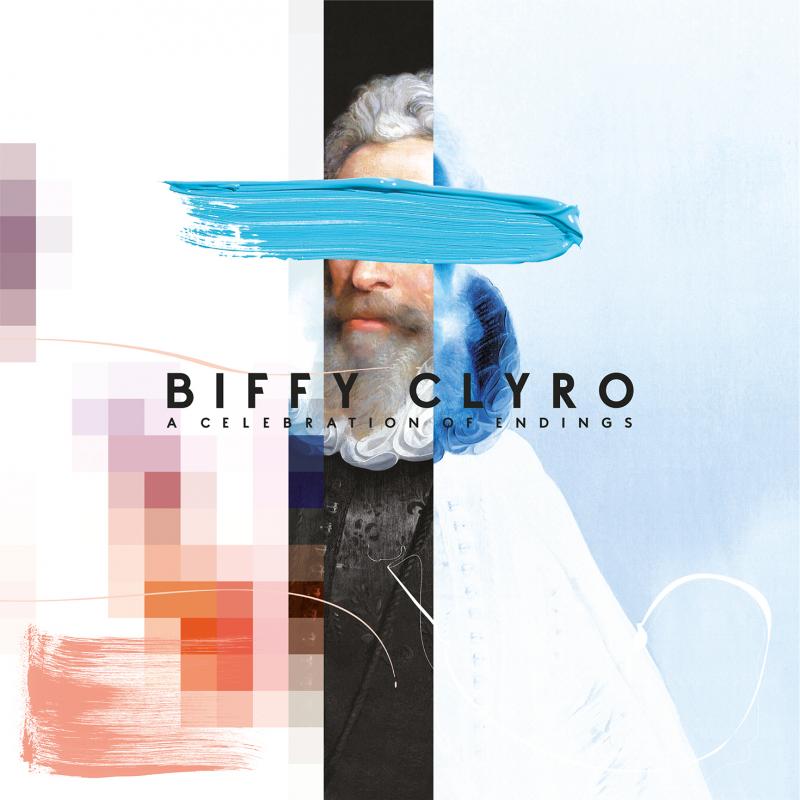
Upon doing my research, I was astonished to discover that the band from Kilmarnock, Ayrshire, has been around since 1995, with their debut album “Blackened Sky” released in 2002. I didn’t know of them when the 2008 single “Mountains” was their first to break into the top ten of the singles chart. I only started to know of them after their 2009 album “Only Revolutions” and singles called “Many of Horror” and “the Captain”. Indeed, I was taking my mind off a particular personal matter and helping out a mate DJing and going clubbing, and Biffy Clyro was played almost anywhere I went back in 2010. They have constantly reminded me of A Day to Remember and Alkaline Trio, albeit with an American sound mixed with original Scottish vocals. Since then, their stock has risen, and they are regulars on the festival scene.
This is their ninth studio album, and they were only well-known in the mainstream after 2008. When you listen to this record, you can recognise straight away that you are listening to Biffy, albeit they have given new hope to budding musicians (Especially guitarists and guitar bands.) to show that guitar music is still alive and, therefore, will encourage people to play the instrument still. They have decided to go experimental, too, which is always a good idea for music; it’s always good to freshen up your ideas and sounds. “Celebration” is a testament to that. I never have and never will believe that guitar-based music is dead. From what I see and hear upon discovering new music, it tells a very different story to what the critics have you believe.
“North of No South” opens the album and is gargantuan in sound. It starts with a ferocious tempo that, for the majority of the record, features heavily with crashing drums, rapid guitar riffs, dramatic orchestral sounds, and angelic choirs. “The Champ” is the only reflective moment with this fable of a relationship falling apart wrapped around a piano ballad, and “Space”, which you can see is the moment the phones are held aloft when the band finally get to tour this album to an audience in packed out arenas, stadiums, and festivals.
As the album ends, we enter “Cop Syrup”, which is six minutes and the longest track on the record, with just seventeen seconds of the hidden track “Less is More”, where Simon Neil sings a bit before the song ends. The first six minutes felt like listening to Tame Impala with its psychedelic and experimental feel. If I didn’t know I was listening to Biffy, I would think it was Tame Impala playing an instrumental track. It’s quite refreshing to hear that material by Biffy because it isn’t what they are known for and might indicate the next project.
Song recommendations: “North of No South”, “Celebration”, “Cop Syrup”
I remember hearing about the buzz of this band from Dublin a few years back from some folks I follow from Scotland on Twitter, so I first assumed they were an up-and-coming band from Glasgow or Edinburgh. Imagine my surprise when I finally listened to one of the many videos shared on that platform via YouTube. The track, funnily enough, was also the title of their debut album “Dogrel”. I have to say, I loved the energy, but the lyrics were…beyond basic. Their lead vocalist, unfortunately, didn’t impress me much, and I wondered what was the point of having Grian Chatten in the first place. His vocals sounded like a drunk punter slurring through a song on the karaoke machine. Despite that, his flat vocals work pretty well in the punk genre. Let’s face it: Johnny Rotten was hardly blessed with amazing vocal ability. I can’t think of many punk vocalists who can sing. Billie Joe Armstrong, maybe? After hearing the title track, I gave their debut album a full listen and was impressed with the picture they painted of their beloved Dublin City. I found the album had more structure lyrically than just that one song. Even if you’ve never been to Dublin or Mother Ireland, you have a good idea of what life is like from “Dogrel”. As much as I have never found the lyrical content impressive, I appreciate the energy the music provides; it is a bit like IDLES. There are minimal lyrics but fantastic energy in the instrumentation.
That’s enough brief history on the band and their debut; let’s review their second and latest album, funnily enough, also named after the track “A Hero’s Death”. They didn’t bother relying on the success of “Dogrel”; as you can imagine, they decided to intentionally head into another direction with the whole instrumentation and lyrical content. After all, writing about living in Dublin becomes quite challenging when you last visited before being on the road to promote your previous work. Grian has said that the band would have felt like they were frauds talking about life in Dublin again, as they haven’t been there much to experience it the past year, and therefore, it wouldn’t be fair on the listener to buy an album, which didn’t represent anything
authentic, thus making the listener lose interest in the band.
Instead, the band has talked about the places they have been on the road and what they have experienced and seen. As you can imagine, life on the road isn’t always sweet when you’re constantly sharing space on a tour bus, and this album certainly shows that as it discusses their excessive drinking, loneliness, depression, and fighting with each other because you are sick of the sight of each other during a long and arduous tour. I recommend a good documentary on life on the road and how this is depicted perfectly. It’s about Keane, so go and look online or buy their DVD. This album is more downbeat and lacks the energy of “Dogrel”, but I suppose that would always be the premise to replicate their mood on tour. For example, “Living in America” is very slow and melancholic. Then the tempo is switched up on “A Televised Mind.” the latter is not great lyrically, but you can feel the energy from the rhythmic pulsing of the guitar and the thumping bass of the drum. Once again, the title track is minimal with its lyrics (I believe, from what I remember hearing, it just repeats “Life isn’t always empty” for the duration?), but the instrumentation does it justice.
The band does not apologise for their change in direction and even know they may lose fans by not keeping in line with the debut. They even acknowledge that some people will be disappointed with the second record, but unfortunately, life has changed, and this is who they now are, so they cannot write songs about living in Dublin anymore. In fact, “A Televised Mind” is a dig at those who want to be appeased. “A Televised Mind” seems to be about people stuck in their ways and refusing to accept change. It is like some Oasis fans who can’t take that Noel does the music he wants to do.
Dan Carey’s services proved very successful on “Dogrel”, so the band chose him again. This time, as mentioned in this review, the sound would be very different in line with the band’s fresh outlook. The first record was very compact, but Dan gives more of the spotlight on the music this time, so you can fully appreciate Carlos O’Connell and Conor Curley on the guitars and Tom Coll on the drums. There is also room for ballads like “Sunny” with a gothic-like sound.
It is also worth noting to get the sound they wanted, and they were listening to quite a lot of the Beach Boys while they were touring stateside. The band wanted to make a record that wasn’t straight down the line, and that the Beach Boys heavily inspired “A Hero’s Death”.
As much as I liked the record, I am once again left unimpressed with the elementary lyrics that anyone could make up on the spot and the flatness of Grian’s vocals. Now, he is quite passionate about his profession, but it doesn’t come through in his studio performances and onstage performances. It’s quite sad. The music has the energy, albeit at times on this record brings it down, but Grian remains at the same tempo throughout. It is good that the band is willing to experiment so early in their career, but they are in danger of losing their identity, which accrued them fans. They must maintain sight of what made them unique, or they will fall into the generic bands they are frequently associated with.
Song recommendations: “Sunny”, “No”, “A Televised Mind”.





 Honest Opinions